REVIEW · DUBROVNIK
Mostar and Medjugorje Day Trip from Dubrovnik
Book on Viator →Operated by Super Tours · Bookable on Viator
Two countries, one long day. I love the smooth border-to-UNESCO flow and the mix of guided stops with real free time, but the tradeoff is a long day with hills and some slippery spots in Mostar and around Medjugorje.
You’ll ride in an air-conditioned vehicle with an escort and an English-speaking driver, usually in a small-group setup (max 50), so the day feels more human than a big-bus rush.
In This Review
- Key points at a glance
- Two Countries, One Long Day From Dubrovnik
- Price and Value: What $102.12 Buys You
- The Border Run: How the Day Moves North and South
- Medjugorje Time: 90 Minutes in a Pilgrimage Powerhouse
- Počitelj UNESCO Stop: A Medieval Town With a Hilltop View
- Mostar’s Old Town and Old Bridge: Cobblestones, Color, and Bridge Jumps
- Small-Group Feel: Escorts, English Support, and Real Driver Personality
- What You’ll Notice On the Ground (Not Just the Big Sights)
- Money, Timing, and Footwear: The Practical Stuff That Saves the Day
- Who This Tour Is Best For (And Who Might Prefer Less)
- Should You Book Mostar and Medjugorje From Dubrovnik?
Key points at a glance
- Hotel pickup at Pile Gate: easy meeting, right where Dubrovnik’s Old Town traffic rules start
- Medjugorje for pilgrims, not just photos: 90 minutes to choose your own pace
- Počitelj UNESCO stop with a hilltop viewpoint: a quick culture break on the return drive
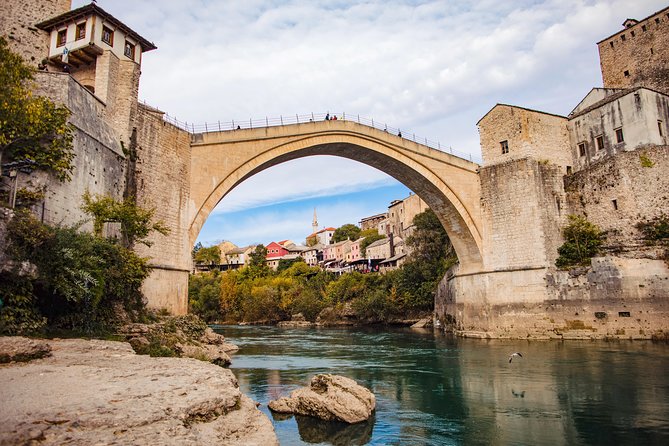
- Mostar Old Town plus the Old Bridge: UNESCO sight at the center, with time to wander cobblestones
- Bring cash: many Mostar shops don’t take cards, and euros are widely accepted
- Footwear matters: the Old Bridge can be slick, and Medjugorje’s steeper areas aren’t for flip-flops
Two Countries, One Long Day From Dubrovnik
This is the kind of day trip that makes sense if you’re staying in Dubrovnik and you don’t want to add an entire overnight to your itinerary. You cross into Bosnia and Herzegovina for three major stops: the pilgrimage town of Medjugorje, the UNESCO medieval site of Počitelj, and Mostar with its famous Old Bridge.
I like that the pacing is practical. You get an escort for context, then you’re released often enough to actually look around, grab a snack, and take photos without feeling like you’re constantly herded.
The main thing to know upfront is time. Around 11 hours means you’ll be on the road a lot, and you’ll have limited flexibility if you want to do extra climbing in Medjugorje or linger late in Mostar.
You can also read our reviews of more tours and experiences in Dubrovnik
Price and Value: What $102.12 Buys You
At about $102.12 per person, this tour is priced like a “full transport day” rather than a cheap bus excursion. What you’re really paying for is the whole package: air-conditioned transport from Dubrovnik, a tour escort, an English-speaking driver, and hotel pickup and drop-off.
You also get three high-impact stops that are hard to stitch together on your own—plus a guided handoff between them so you’re not guessing about timing. Food isn’t included, so you should budget for meals and snacks separately, but the big cost driver here is transport and guided coordination.
If you already planned to spend time in Bosnia anyway, this price often feels like good value because the tour covers logistics. If Bosnia is only a “maybe,” it can feel like you’re spending all day on the road just to check a few boxes.
The Border Run: How the Day Moves North and South
Your day starts with an early pickup in Dubrovnik, typically around Pile Gate (Old Town area). Since Dubrovnik’s Old Town is pedestrian, pickup is coordinated in the central zone that works with local access rules.
From there, the vehicle heads north through the Dalmatian region toward the Bosnia border. You’ll need a valid passport for the crossing. Border checks can add unpredictability, but the process is usually quick enough that you’re not standing around for hours.
I like that the tour keeps the structure clear: drive to Medjugorje, then Mostar, then the return with a cultural stop in Počitelj. Even when traffic or weather changes, you know what’s next.
Medjugorje Time: 90 Minutes in a Pilgrimage Powerhouse
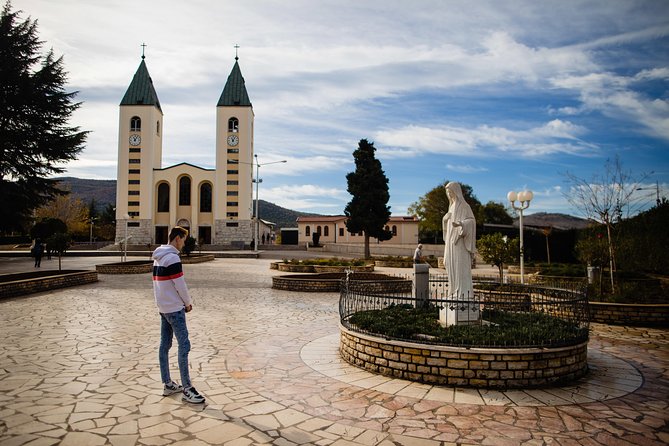
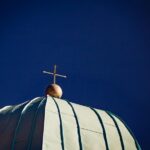
Medjugorje is famous for its religious significance. The story traces back to 1981, when six children reported visits from the Virgin Mary. Since then, it has become a major Catholic pilgrimage destination, and you’ll feel that immediately once you arrive.
You get 1 hour 30 minutes of time in Medjugorje, with admission free. This is enough time to do the basics slowly: walk around the town center, step into the church area, and soak up the atmosphere. Some people also plan a visit to areas outside the main core, like the hill and viewpoints connected to the apparition sites.
Here’s the practical catch: if you’re planning steeper climbs, 90 minutes can feel tight, especially in summer heat. One important piece of advice from real-world pacing: if you want to climb more than just the immediate church area, give yourself extra time and wear proper footwear. The ground can be uneven, rocky, and slippery.
Also, you’ll be sharing this experience with people who came for prayer and reflection. Even if your goal is sightseeing, keep your voice low and your movements respectful.
Počitelj UNESCO Stop: A Medieval Town With a Hilltop View
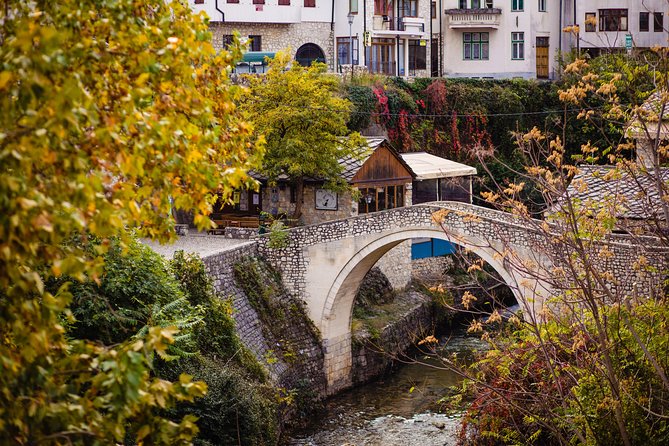
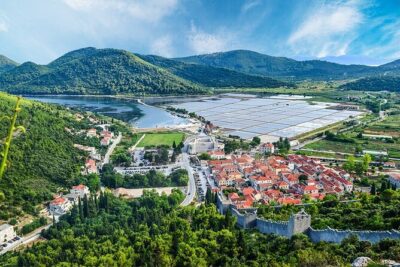
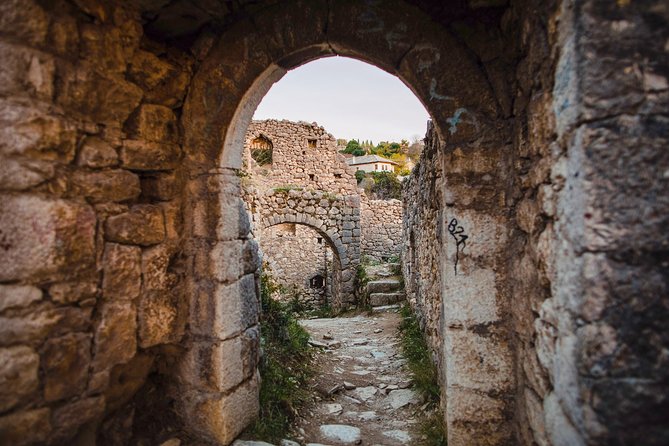
On the return drive, you stop in Počitelj, a UNESCO-listed medieval town. It’s a shorter stop—about 30 minutes—but it works well as a decompression break from the long bus ride and as a culture “reset” between Medjugorje and Mostar.
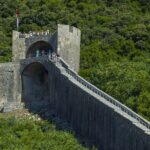
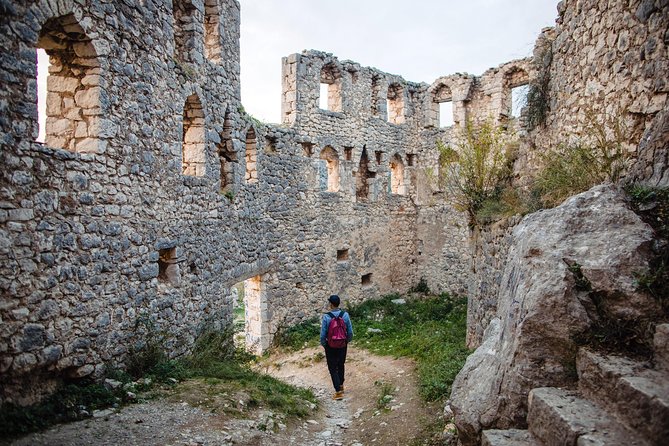
Počitelj isn’t just pretty from the outside. There’s a strong sense of history tied to specific landmarks you’ll be directed toward, including the Haji-Ali Mosque and Sahat-kula, a silo-shaped fort on a hill above town. Even in a brief visit, you can usually get the rhythm: a quick stroll, a few minutes to look up at the fort, and some time for photos from the higher viewpoints.
The tour includes a break where you climb up to a tower overlooking the Neretva river. With limited time, keep your pace steady. If you slow down too much at one viewpoint, the clock can run before you feel satisfied.


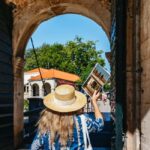
Mostar’s Old Town and Old Bridge: Cobblestones, Color, and Bridge Jumps
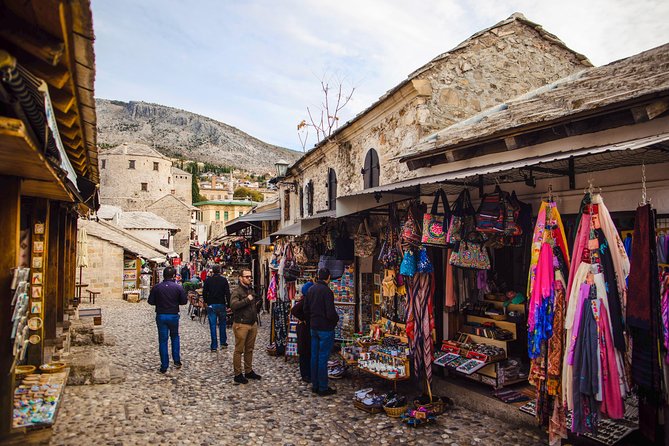
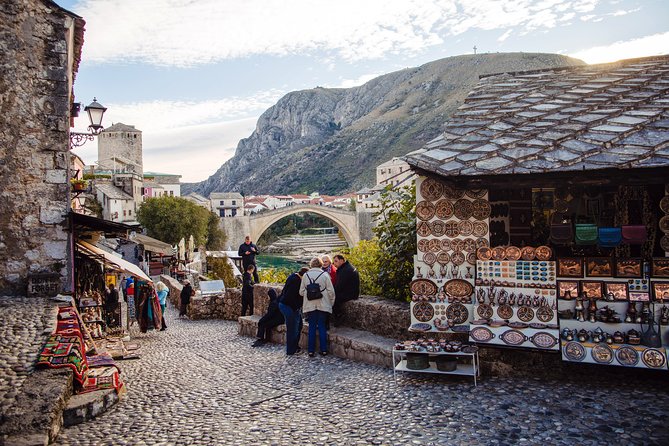
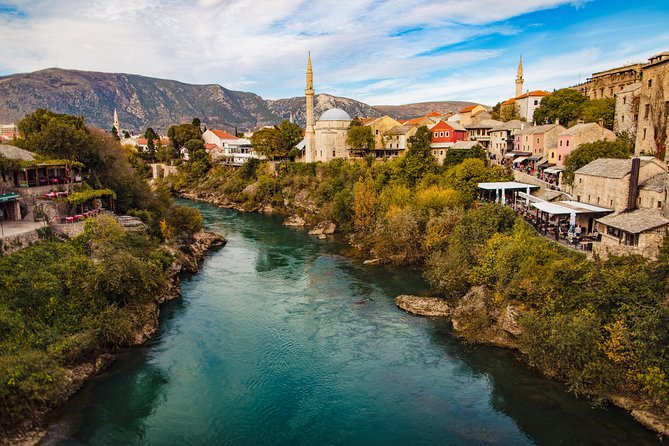
Mostar is where the day turns from “historical context” into “you’re here, now look around.” You get an Old Town walk through narrow cobblestone streets, with the Old Bridge at the center. The Old Bridge is a UNESCO World Heritage Site, so it’s not just a local landmark—it’s one of the most recognized sights in the region.
A big part of Mostar’s street-level energy comes from the tradition of bridge jumps from a height of 24 meters into the Neretva below. You’ll see the jumpers in action at the bridge area, and the vibe is part show, part local ritual.
You’ll have about 2 hours 30 minutes in Mostar, and that’s a real advantage. Most people need time to wander because Mostar is best when you wander a bit between photos: the side streets, the small storefronts, and the river views take a while to absorb.
Two practical cautions:
- The Old Bridge can be slippery, so watch your footing.
- Many shops and restaurants in Mostar don’t accept credit cards. Have cash on hand, and euros are widely accepted.
If you want souvenirs or want to stop for lunch without hunting for the one place that takes cards, you’ll feel more relaxed if you carry enough small money.
Small-Group Feel: Escorts, English Support, and Real Driver Personality
This tour runs with a tour escort and an English-speaking driver, and it’s capped at a maximum of 50 people. A smaller vehicle setup is often used, and several guides listed by name in people’s accounts made a noticeable difference in how the day felt.
You might get guides such as Adnan, Bo, Milos, Dejan, Danny, Filip, or Peter. The common theme in accounts tied to these names is that they made the information feel connected to everyday Bosnia, not just a list of dates.
That said, there’s one caution worth taking seriously: on any day trip where the guide is speaking while driving and in a moving vehicle, sound matters. If you know you’ll struggle to hear, sit where you can hear clearly and be ready with a plan to catch details during the walking stops.
In a few cases, people reported a harder-to-follow experience due to driving comfort or audio issues. Most of the time, though, the tone seems to be calm and organized, and the day moves smoothly.
What You’ll Notice On the Ground (Not Just the Big Sights)
I like that the itinerary isn’t only “three postcard stops.” The route is designed around how people actually experience the region:
- You’re driving through small coastal villages, then inland.
- You get a medieval micro-stop in Počitelj on the way back.
- You get enough time in Mostar to treat it as a town, not a checkpoint.
One of the underrated parts of days like this is the contrast. Medjugorje brings a quiet, devotional rhythm. Počitelj adds texture and scale with its hilltop structures. Mostar brings motion: river views, market streets, and the ongoing bridge-jump spectacle.
That contrast is often what makes the day stick in your memory.
Money, Timing, and Footwear: The Practical Stuff That Saves the Day
Here’s how to set yourself up for an easier experience.
Cash rules in Mostar: Many places don’t take cards. Euros are accepted in many spots, so plan on carrying at least some. If you’re counting on card-only spending, you’ll waste time hunting.
Footwear: In Mostar and in Medjugorje’s steeper areas, the ground can be slick and uneven. For the bridge area, choose shoes with real grip. For Medjugorje climbs, go for sturdy, supportive footwear.
How to use your free time smartly:
- In Medjugorje, decide early whether you’re doing only town-and-church areas or whether you’re aiming for hill viewpoints. If you choose the hill, don’t plan on doing it “quick.”
- In Mostar, put the Old Bridge at the center of your walk, then branch out from there. Cobblestones are charming, but they also slow you down if you wear sandals.
If you do these three things, you’ll feel like you got more out of the day without stressing about every minute.
Who This Tour Is Best For (And Who Might Prefer Less)
This tour is a strong fit if you:
- Want to see Medjugorje and Mostar in one day from Dubrovnik
- Prefer a structured itinerary but still want time to wander
- Are okay with a long day and hills
It’s not the best fit if you’re:
- Limited by mobility or knees that don’t handle steep, rocky ground well
- Determined to squeeze in extra climbs around Medjugorje beyond the main church area within the short stop
- Looking for a slow, relaxing vacation pace
If your top priority is Medjugorje itself, you might feel like splitting it into a dedicated full day would suit you better. But if you want Mostar’s bridge and Old Town too, this combo day is the straightforward way to do it.
Should You Book Mostar and Medjugorje From Dubrovnik?
Book it if you want a high-impact Bosnia hit with real sightseeing time in Mostar and a chance to experience the Medjugorje atmosphere without planning your own logistics across the border. The tour’s value comes from that structure: transport, escort support, and enough free time to feel like you’re not stuck in a bus.
Skip or reconsider if you’re hoping for a casual day. This is a long push, and the terrain can be tough in places. If you’re traveling with mobility concerns, plan your time carefully and focus on the areas you can walk comfortably.
Bottom line: for most Dubrovnik visitors, this is one of the most efficient ways to visit Bosnia from the coast. Just show up ready for the clock, bring cash for Mostar, and wear shoes with grip.