REVIEW · DUBROVNIK
Dubrovnik: Old Town Walking Tour
Book on GetYourGuide →Operated by Dubrovnik Walks & Sea Kayaking · Bookable on GetYourGuide
Dubrovnik’s Old Town feels like living history. This 90-minute walking tour pairs a licensed local guide with headsets, so you can follow the stories even when the streets get crowded. You start at Pile Gate and walk the classic core of Dubrovnik at an easy pace.
I especially like the way the guide ties the sights to real cause-and-effect. You’ll hear how Dubrovnik grew into one of the most prosperous maritime republics, with Republic of Ragusa context that makes the buildings make sense fast. I also like the stop selection: you see the major landmarks (like Onofrio’s Fountain, Orlando’s Column, and Sponza) without getting stuck in churches or museums.
One possible drawback: it is a walking tour with outdoor time, so plan for sun, cobblestones, and casual delays when crowds thicken. Bring comfortable shoes and water, and treat it as an introduction rather than a deep museum visit.
In This Review
- Key highlights to know before you go
- Where to meet and how the 90-minute rhythm works
- Pile Gate to Stradun: the city’s “why” before the “wow”
- Onofrio’s Fountain and Orlando’s Column: landmarks that explain civic life
- Sponza Palace and Rector’s Palace: trade power you can actually see
- Gundulićeva poljana and Dubrovnik Cathedral pass-by: what you’ll notice with context
- Old Port finish: linking the Republic to the sea
- What you’ll hear: 1,400 years in a walkable story
- Price and value: why $23 for 90 minutes can work
- Who should book this tour, and who might skip it
- Should you book this Dubrovnik Old Town walking tour?
- FAQ
- FAQ
- Is this tour inside churches or museums?
- Where do I meet the guide?
- How long is the tour?
- Are headsets included?
- Can I record video or audio?
- What should I bring?
Key highlights to know before you go
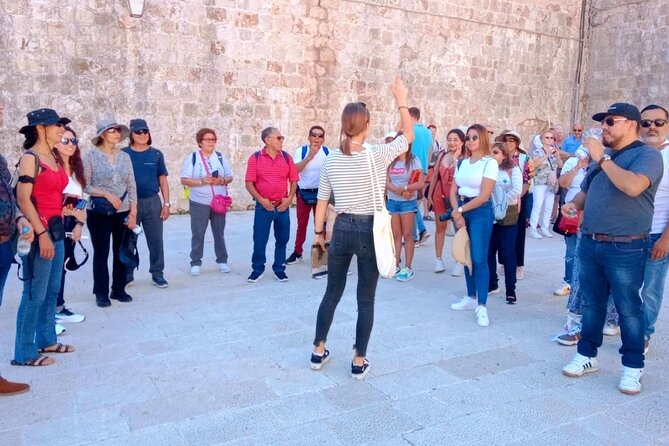
- Pile Gate start, Old Port finish: a clear, walkable loop through the historic core
- Headsets included: hear your guide clearly even in busy sections
- Major landmarks, no museum stops: you’ll pass key sites without going inside
- Stories spanning 1,400 years: the tour focuses on how Dubrovnik changed over time
- Guide style matters: expect humor, pacing that supports questions, and memorable anecdotes
- Clear rules on recordings: no video or audio recording during the tour
Where to meet and how the 90-minute rhythm works
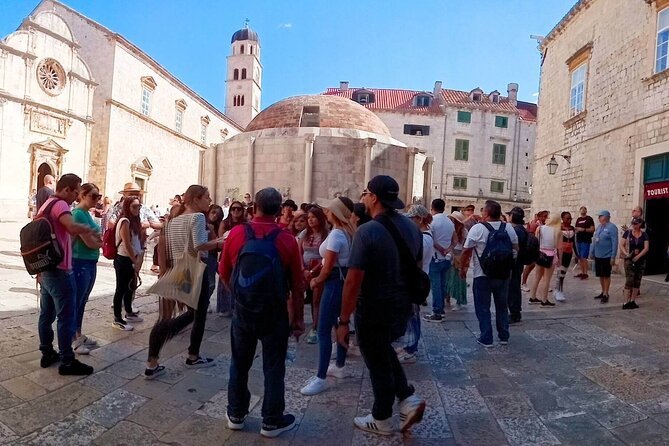
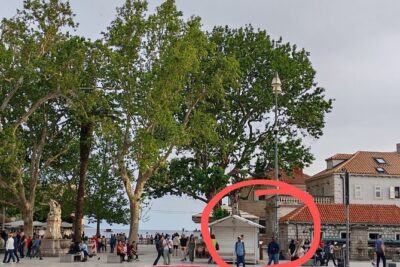
Meet your group at Dubrovnik Walks, Brsalje 8, by the Pile local bus stop area (the last stop before you step into the Old Town). Look for staff holding an orange umbrella. Arrive about 10 minutes early; Dubrovnik’s Old Town approach areas can be easy to mix up, especially if you’re also finding a place to exchange money or grab a coffee.
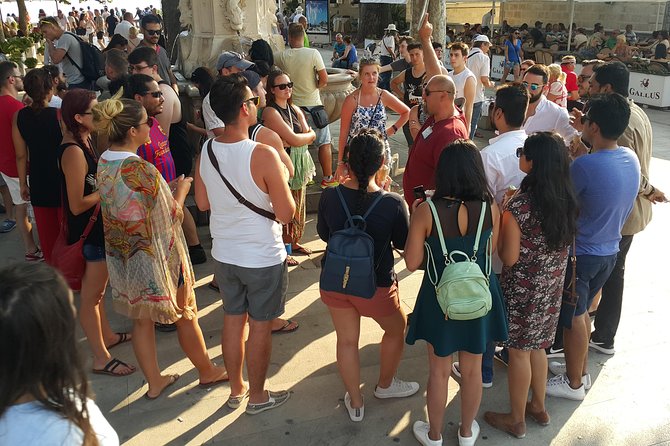
The tour runs 90 minutes and stays focused on orientation and context. You’ll move station to station with short stops for explanations, then step on again. Since you get headsets, you’re not relying on shouting over other tour groups or street noise.
Also note the boundaries: this is a walk-and-talk experience. You won’t enter churches or museums, and you won’t be recording video or audio. If you’re the type who wants to photograph every detail up close, that limitation can feel a bit restrictive—but it keeps the group flowing.
You can also read our reviews of more walking tours in Dubrovnik
Pile Gate to Stradun: the city’s “why” before the “wow”
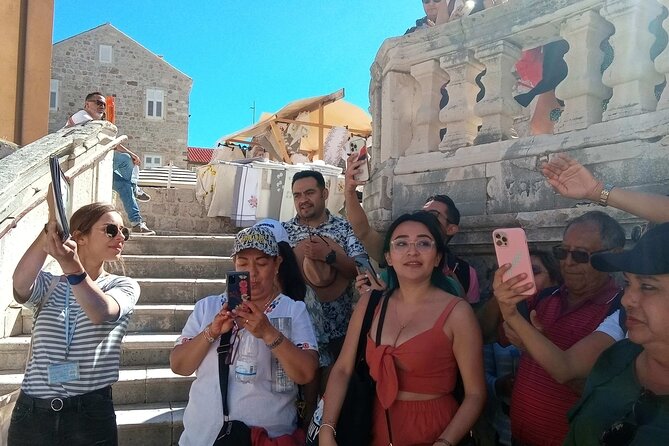
The tour begins at Pile Gate, the western entrance that frames how you first experience Dubrovnik. Your guide uses this moment to set the big picture: Dubrovnik’s power wasn’t just about pretty stone and sea views. It was about trade, diplomacy, and a system that kept the city prosperous.
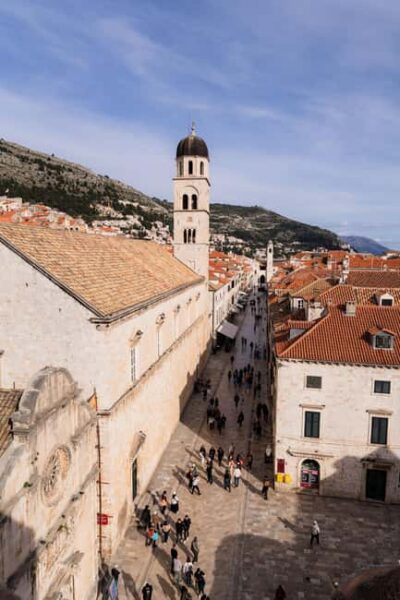
From there you’ll walk through Old Town and onto Stradun, Dubrovnik’s main spine. Stradun is the kind of street that looks straightforward until you start noticing how buildings and street lines reflect the city’s priorities. Your guide points out details that are easy to miss when you’re only sightseeing, like where the city’s public life naturally concentrated.
This first stretch matters because it helps you stop treating Dubrovnik like a movie set. After the guide’s opening, you start seeing it as a working city in different historical eras—just with impressive architecture.
Onofrio’s Fountain and Orlando’s Column: landmarks that explain civic life
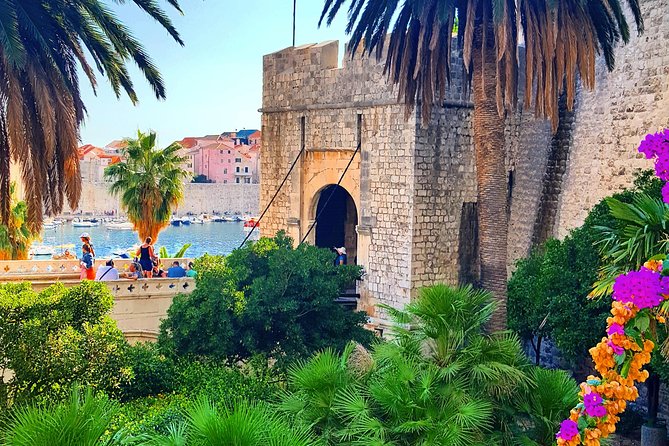
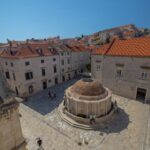
Next up is Large Onofrio’s Fountain, a standout stop that instantly becomes more than a photo spot. Your guide uses the fountain as a starting point to talk about urban planning and everyday life—how a city like this managed the practical stuff alongside big political ambitions.
Then comes Orlando’s Column, another quick stop that pays off if you listen closely. It’s one of those objects that can feel decorative until you learn what it represented and why it mattered in civic identity. Your guide connects these kinds of landmarks to the Republic’s public voice: Dubrovnik wasn’t only governed behind palace walls. It had symbols and messages meant for everyone walking the streets.
Even if you only have an afternoon, these two stops are a smart use of time. They’re compact, but they help you read the city’s messages.
Sponza Palace and Rector’s Palace: trade power you can actually see
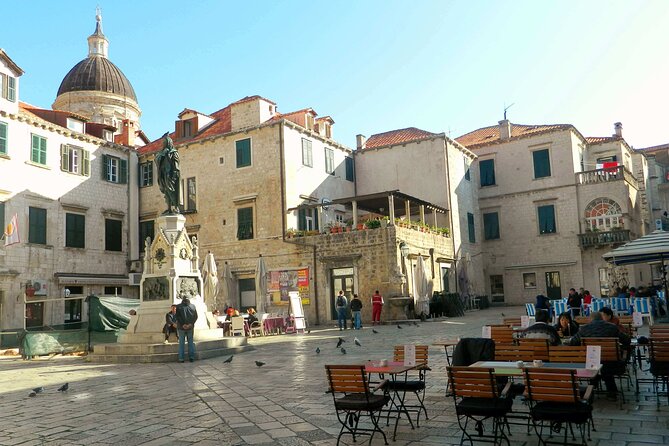
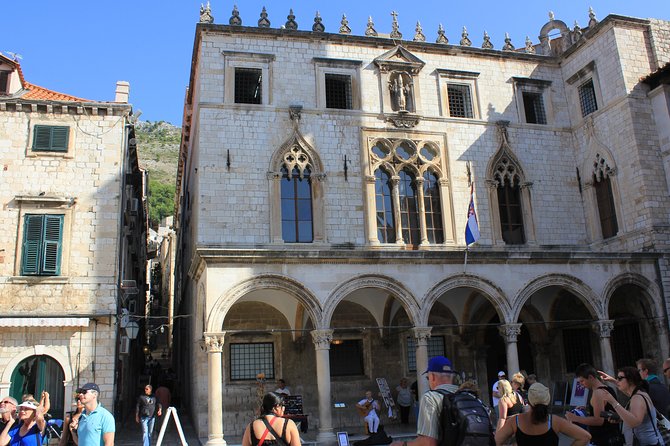
If you want the strongest “this is why Dubrovnik mattered” section, it’s the stretch featuring Sponza Palace and the Rector’s Palace area.
At Sponza Palace, your guide frames what you’re looking at in terms of the city’s economic engine. Dubrovnik’s wealth wasn’t accidental. It came from maritime trade and a careful approach to stability. When the guide explains the purpose of buildings like Sponza, you start noticing how architecture can function like branding for a government.
Then you pass by Rector’s Palace. You won’t go inside, but the outside viewpoint still tells a story: authority, administration, and the way power was organized. Your guide’s explanation helps you connect the palace’s role to the larger theme of Dubrovnik as a republic with systems—social, economic, and political—that supported long-term prosperity.
This is the part of the tour where the city stops feeling like a collection of sights and starts feeling like a place with decisions behind it. You’ll likely find yourself looking at windows, entrances, and street positioning differently afterward.
Gundulićeva poljana and Dubrovnik Cathedral pass-by: what you’ll notice with context

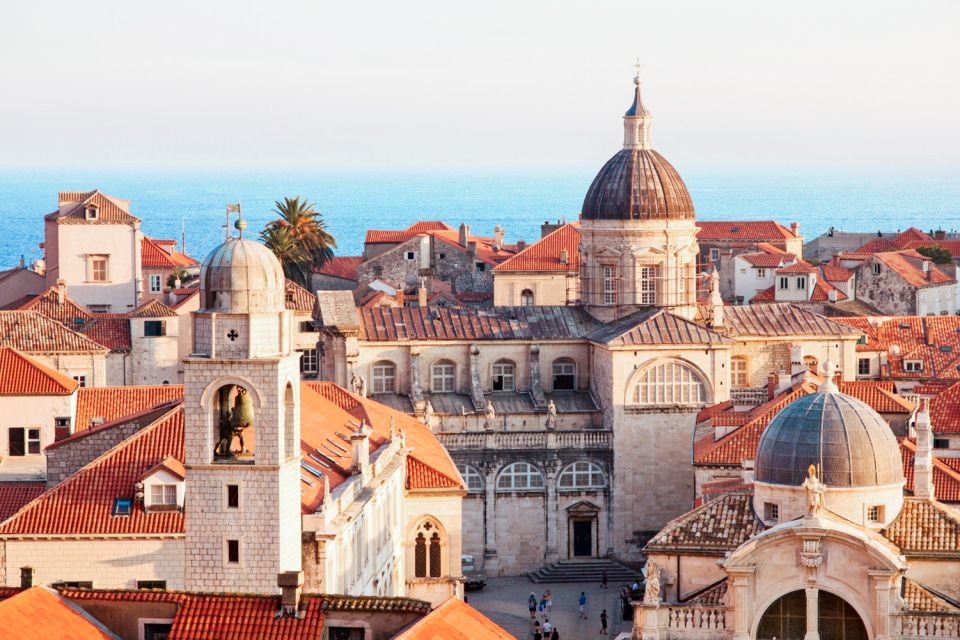
After the palace area, the walk continues through Gundulićeva poljana and then toward Dubrovnik Cathedral (viewed from the outside). Because you’re not going inside, the cathedral moment works best as a comparison point.
Your guide uses these pass-by stops to keep the timeline moving. You get a sense of how different eras left their mark without turning the tour into a checklist of interiors. If you prefer to spend your limited time choosing what to enter later, this approach is actually helpful. You’ll leave with enough understanding to decide whether you want to go back for a specific church visit on your own.
A practical note: these sections can involve more people stopping for photos. Keep your expectations realistic. The tour is guided, but you still share the street with the city’s daily rhythm.



Old Port finish: linking the Republic to the sea
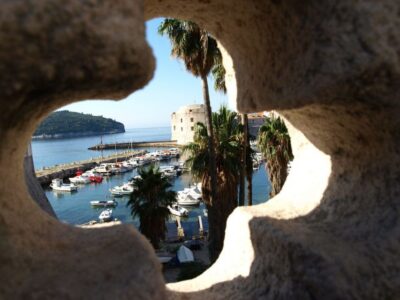
The tour ends near the Old Port, with a final stretch of sightseeing time. This ending location is smart because it closes the loop. You’ve heard about Dubrovnik’s maritime identity and the role of trade and diplomacy, and then you’re standing near where ships and commerce would have mattered most.
Even if you’re not planning to sail today, the Old Port finish helps you understand Dubrovnik’s obsession with the sea. The guide’s talk on Dubrovnik’s historic role gives the port area a new layer—less like scenery and more like the city’s reason for being.
What you’ll hear: 1,400 years in a walkable story
The tour is built around the idea that Dubrovnik’s history is the key to appreciating what you see. You’ll get stories spanning over 1,400 years, including the classical period of the Republic of Ragusa. In plain terms, you’ll learn how the city became prosperous and how it maintained influence despite shifting regional pressures.
You’ll also hear how history shaped modern Dubrovnik—how cultural identity and local values grew out of those long centuries. Several guides mentioned by recent groups (like Antun, Lana, Alex, Branko, Davor, and Goran) seem to share a similar strength: blending timeline facts with human stories. That’s why people consistently mention that the tour never feels like a boring lecture.
One small detail you may notice as you go: pacing differs a bit by guide. Some speak quickly, but most of the time the headsets help keep the important points clear. If you need slower speech, ask questions at natural breaks. The guide should be receptive.
Price and value: why $23 for 90 minutes can work
At about $23 per person for 90 minutes, the best value here is not just the walking route. It’s the combination of three things:
- A licensed local guide who explains how the sites connect
- Headsets (a real upgrade in a crowded Old Town)
- A tight focus on the city’s big story, from early identity through the Republic of Ragusa
If you’re trying to decide between wandering on your own versus paying for context, this tour is a strong middle ground. You’re paying to save time: you get an organized orientation and you learn what to look for next. Then you can spend the rest of your visit choosing what to enter, what to revisit, and what to photograph without feeling lost.
Also, you’re not spending extra money on museum tickets as part of the experience. Since the tour doesn’t require entering churches or museums, your time and budget stay predictable.
Who should book this tour, and who might skip it
This works especially well if:
- You’re visiting Dubrovnik for the first time and want fast orientation
- You like history told through stories, not just dates
- You want help spotting what matters on Stradun, Sponza, and the palace areas
- You’d rather get context than spend hours researching before you arrive
You might consider a different option if you:
- Want to go inside multiple churches or museums during one guided experience
- Expect the tour to function like a photo workshop with lots of close-up stops
- Don’t enjoy walking in the Old Town’s busy pedestrian flow
Should you book this Dubrovnik Old Town walking tour?
If you like structure, stories, and a fast way to understand what you’re seeing, I’d book it. This is a smart first-stop tour because it helps you read Dubrovnik instead of just looking at it.
My decision checklist:
- If you want a guided introduction that starts at Pile Gate and ends near the Old Port, book it.
- If you care about hearing clear explanations in a crowded area, the headsets are worth the price alone.
- If you’re okay with seeing major landmarks from the street (not entering them), this fits your time well.
FAQ
FAQ
Is this tour inside churches or museums?
No. You’ll focus on the Old Town walking route and view major landmarks from outside. The tour notes that you won’t enter churches or museums.
Where do I meet the guide?
Meet at Dubrovnik Walks, Brsalje 8, near the Pile local bus stop area. Look for representatives holding an orange umbrella.
How long is the tour?
The tour lasts 90 minutes.
Are headsets included?
Yes. You’ll receive headset devices to help you hear the guide clearly.
Can I record video or audio?
No. Video recording and audio recording are not allowed during the tour.
What should I bring?
Bring comfortable shoes, sunscreen, and water. The tour involves outdoor walking in the Old Town.