REVIEW · DUBROVNIK
Mostar & Međugorje Full-Day Private Tour from Dubrovnik
Book on GetYourGuide →Operated by Super Tours Travel Agency · Bookable on GetYourGuide
Cross into Bosnia for a moving day of contrasts. This private tour strings together Pocitelj’s medieval stone lanes, Medjugorje’s pilgrim atmosphere, and Mostar’s rebuilt Old Bridge, all while your guide explains how Herzegovina layers religions, wars, and daily life into the same streets.
I especially like the way the day starts with big-sky scenery: you head out from Dubrovnik across the bridge for panoramic photos, then you break up the drive with coffee around Neum. I also love the practicality of a luxury, air-conditioned vehicle plus an English-speaking guide/driver, so you get context without losing time to guesswork.
The trade-off is simple: it’s a long day. With border formalities and a 12-hour schedule, you’ll want a patient mindset—plus a valid passport—so the travel time doesn’t feel like the main attraction.
In This Review
- Key highlights at a glance
- From Dubrovnik Bridge to Neum: the drive that sets the tone
- Pocitelj’s 15th-century hill town: wandering the stone streets
- Međugorje: pilgrim calm at your own pace (and watch your stuff)
- Mostar’s Old Bridge and Ottoman streets: what to look for
- Mosque of Mostar and the city’s layered faiths
- Food, timing, and the reality of 12 hours in one loop
- Price and value: $530 per group up to 3 people
- Who should book this Mostar and Međugorje day trip
- Should you book the Mostar & Međugorje Private Tour from Dubrovnik?
- FAQ
- How long is the Mostar & Međugorje full-day private tour?
- What is the price of the tour?
- Is this a private tour or a shared group?
- Does the tour include transportation from Dubrovnik?
- Do I need a passport for this tour?
- Which places are included in the itinerary?
- Does the guide speak English?
- Is there time to explore on your own in Međugorje?
- Are pick-up times flexible?
- What is the cancellation policy?
Key highlights at a glance
- Private group for up to 3: your pace, your questions, your timing.
- Photo-stop views from Dubrovnik Bridge and a stop in Neum for a morning break.
- Pocitelj’s 15th-century hill town: remarkably intact stone streets with time to wander and shop.
- Međugorje at your own pace: spiritual sites and calm time to stroll.
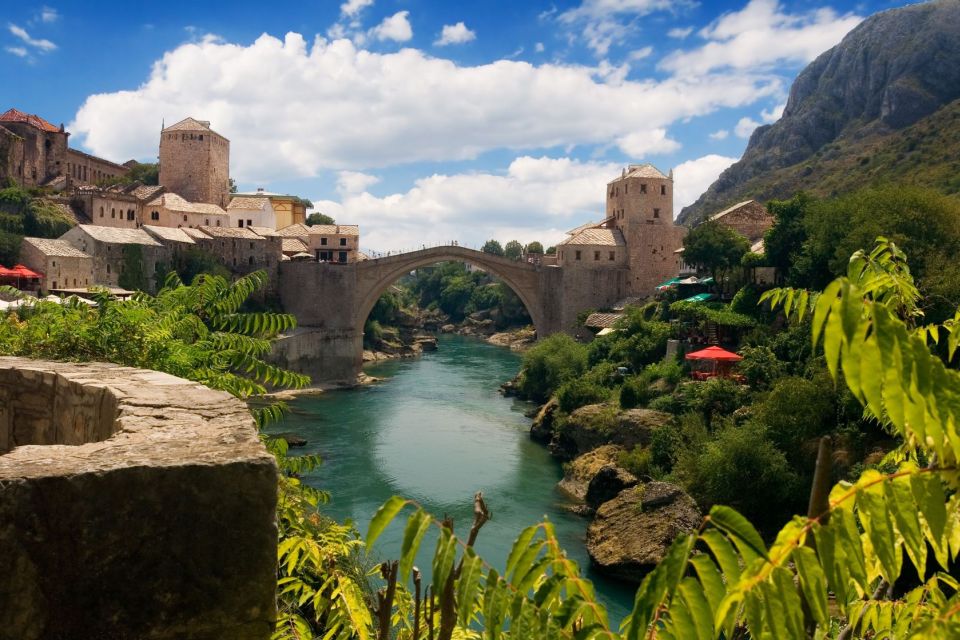
- Mostar’s Old Bridge story: built/standing for centuries, damaged during the Balkan Wars, then restored.
- Mosque of Mostar visit: Ottoman-era architecture and a chance to see the city’s faiths side by side.
From Dubrovnik Bridge to Neum: the drive that sets the tone
This tour is built like a long, comfortable “day trip that actually feels like a journey.” You leave Dubrovnik in a luxury, air-conditioned vehicle with an English-speaking guide/driver, and the early drive matters because it transitions you from coastal Croatia into Herzegovina’s different rhythms. The first big moment is the stop around Dubrovnik Bridge for panoramic photos—worth doing even if you think you’ve seen it all. The view helps you understand what kind of terrain you’re about to enter: coast, then hills, then river valleys.
A little farther along, the route continues to Neum, noted as the only coastal town in Bosnia and Herzegovina. This is one of those practical stops that also breaks the emotional monotony of being in transit. You get morning coffee, you stretch, and you reset before the longer internal drive.
The big thing here is expectation management. Road time is real on this route. One of the best things you can do for yourself is come ready for a full day: comfortable shoes, water, and a mindset of “this is a circuit of places” rather than “I’m rushing between checklists.” If you like having your guide talk through what you’re seeing—some guides like Daniel, Mateo, or Ivan are specifically praised for being informative—you’ll enjoy this part even more.
You can also read our reviews of more private tours in Dubrovnik
Pocitelj’s 15th-century hill town: wandering the stone streets
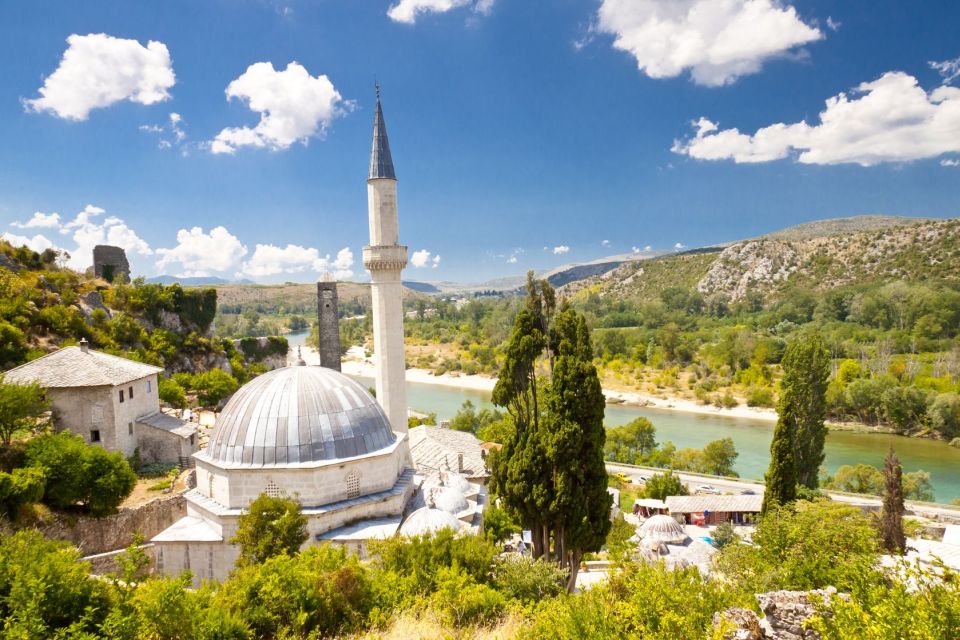
After the coffee and the drive through the River Neretva delta area, you reach Pocitelj, described as one of the most beautiful settlements from the 15th century. This stop is not about a single monument you rush through. It’s about walking. Pocitelj’s charm comes from its hill-town layout and the sense that the town has kept its shape through centuries—“remarkably intact” is the phrase that fits.
You’ll have time to wander the hilly streets, and you can also shop if you’re in the mood for small local finds. Even if you’re not into shopping, the walking time is useful because it gives you room to slow down and look at the textures: stone, shadows, steps, and doorways built for a different pace of life.
What I like about adding Pocitelj to a Mostar-and-Međugorje day is balance. Mostar is big, busy, and visually dramatic. Međugorje is focused and devotional. Pocitelj is neither crowd-zoom nor spiritual rush. It’s a quiet counterweight. Think of it like a pause button—one that also sets up Mostar because you start noticing Ottoman-era and regional design patterns in the stonework and street layout.
One practical note: Pocitelj is on hills. If you’re traveling with mobility limits, wear shoes with grip and plan for some uphill steps. The tour is private, so you can often move at a comfortable speed with your guide, but the geography still has the final say.
Međugorje: pilgrim calm at your own pace (and watch your stuff)
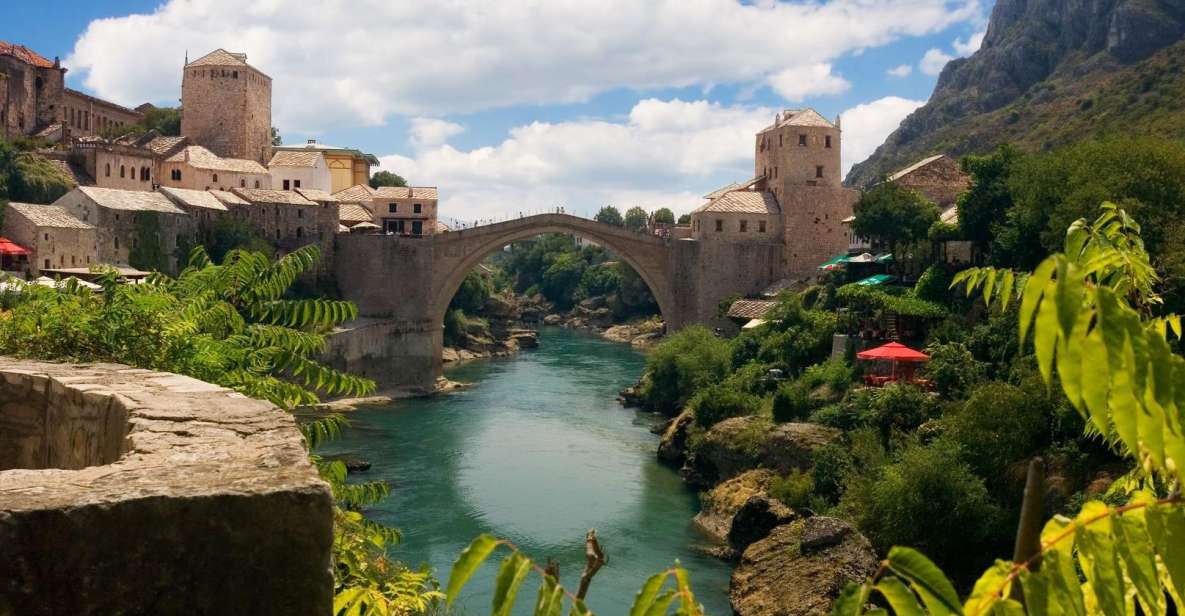
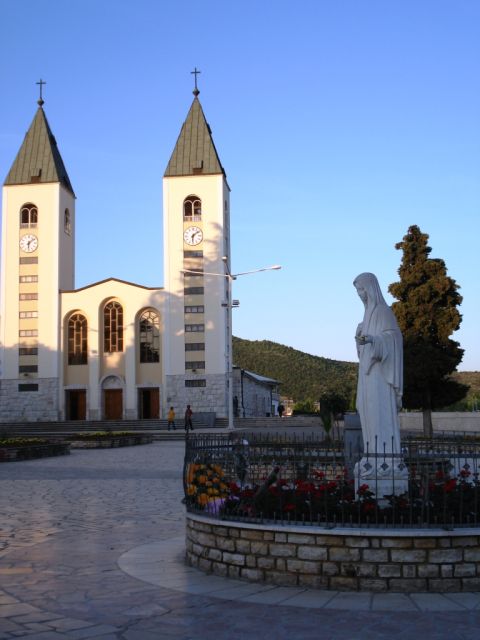
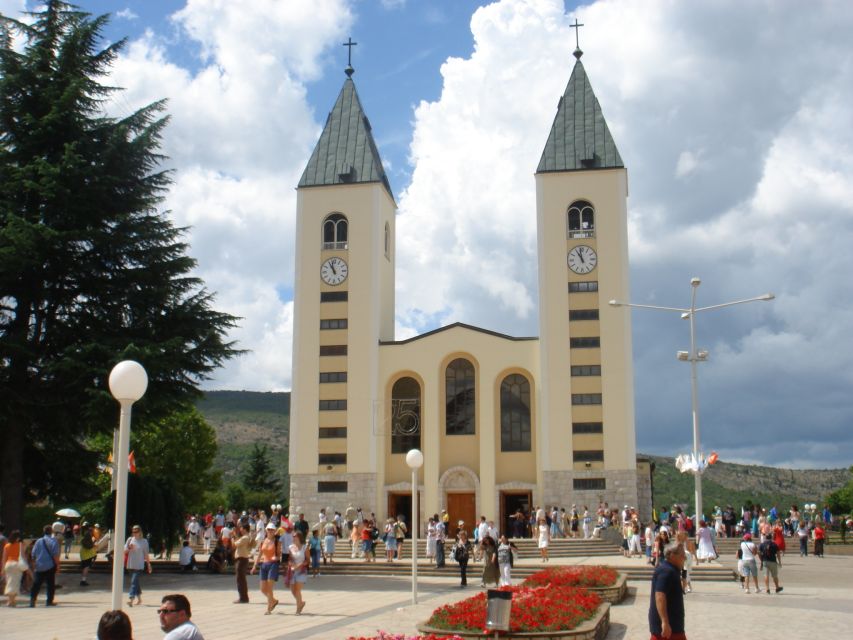
Then you’re on to Međugorje, one of the most famous Catholic pilgrimage sites in the world, especially after the controversial apparition connected to Our Lady of Peace in 1981. The tour doesn’t try to cram you into a strict script here. Instead, it’s time at your own pace, so you can experience the spiritual ambiance the way you want—stroll, reflect, or focus on specific sites.
This is the kind of stop where your behavior matters. If you’re even slightly distracted, you can miss the point and just feel like you’re walking around a busy tourist moment. So I recommend treating it like a “mindset stop.” Slow down. Keep your phone away when you’re maneuvering through crowds. And keep a close eye on your belongings, because pickpocketing incidents have been mentioned in this area. Use a crossbody you can feel, and keep your valuables zipped and secure.
Your guide can help you understand what you’re seeing, but the appeal of Međugorje is that it’s personal. Some people want quiet; others want context. Either way, having the flexibility to choose what to do with your time is a real advantage versus a tight group tour that herds you from one church door to the next.
If you’re the kind of traveler who likes asking questions, you’ll probably enjoy hearing how your guide explains the history and the modern reputation of the town—without turning it into a debate club. The best guides treat it as human and spiritual, not as a trivia contest.
Mostar’s Old Bridge and Ottoman streets: what to look for
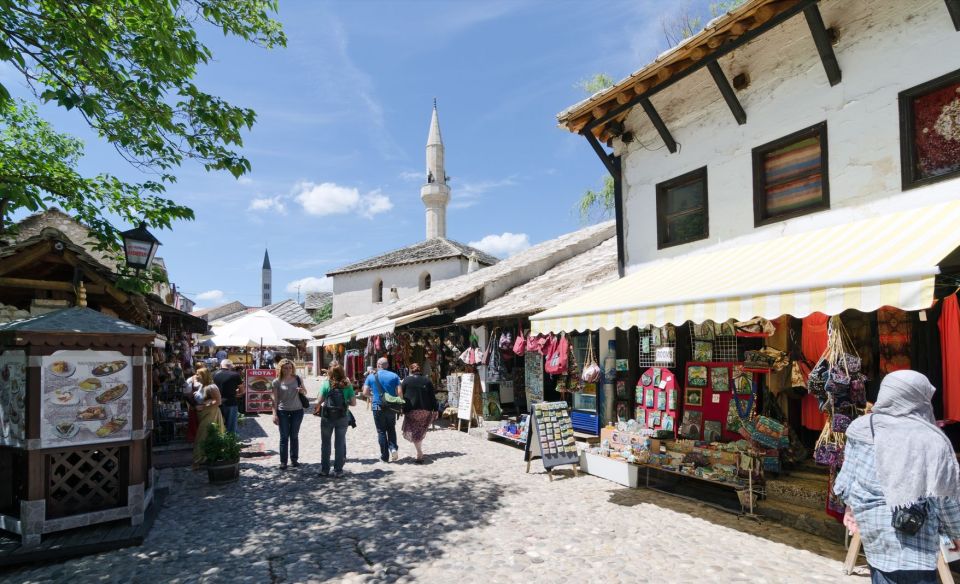
Mostar is the emotional center of the day. It’s often described as a meeting point of cultures and religions for centuries, and once you walk into the old-town area, you can feel why. The streets are atmospheric. The stone is old. And the city’s layout makes you pay attention—because everything is close enough to see, but different enough to keep you turning your head.
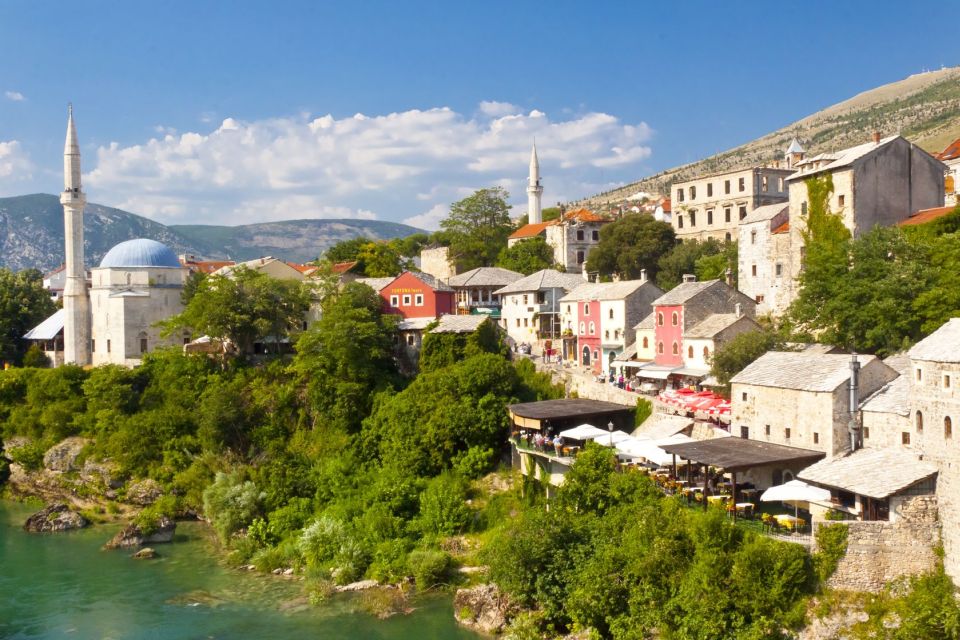
The headline is the Old Bridge of Mostar, rebuilt after the ravages of the Balkan Wars. Your guide will point out the symbolic weight of that bridge: it stood for 427 years until it was bombed, and today it’s been lovingly restored. When you’re looking at it, pay attention to the craftsmanship and the way the bridge fits the river bend. It’s not just a photo spot. It’s a reminder that the city has had to rebuild itself—and that the rebuild is now part of Mostar’s identity.
Beyond the bridge, you’ll wander the old streets and look at Ottoman-era architecture. The trick is not to treat it like a theme park. Instead, let the details guide you: windows, street arches, the feel of the lane widths, and how buildings front the street. Mostar can be intense, especially in the old-town core, but it’s more rewarding when you slow down enough to notice patterns rather than just chase landmarks.
One extra detail you might find on the timing of your day: Mostar has the famous tradition of jumpers into the Neretva River from a high bridge. The water is cold—around 6 to 7 degrees Celsius is what’s been reported—and it’s a thing people watch as a city attraction. If your schedule lines up, you may catch the jumpers from the river area. Don’t build your whole day around it, but it’s good to know it’s part of the Mostar atmosphere.
Mosque of Mostar and the city’s layered faiths
After the Old Bridge, the tour includes a stop at the Mosque of Mostar. This matters because it keeps the story balanced. Mostar isn’t just architecture for pictures. It’s a living city where faiths share space in ways that feel visible in street design and daily movement.
The Mosque visit gives you a chance to admire traditional Ottoman architecture in a setting that isn’t “museum quiet.” You’ll likely see people passing through the area and the everyday rhythm that comes with a major religious site.
What I find valuable here is that it connects the abstract idea of historical mixing to something tangible. Mostar’s bridge shows cultural and architectural ambition. The mosque shows how religious life shaped the city’s built form. Put together, these stops help you read Mostar like a place, not just a set of highlights.
If your guide is from the region—some guides are, and it shows—ask them to point out how different eras left marks. Guides like Luka, for example, have been praised for coming from Mostar and answering questions with real personal context. Even if you’re not a deep history person, your understanding will grow simply because you have someone pointing out what to look at.
You can also read our reviews of more tours and experiences in Dubrovnik
Food, timing, and the reality of 12 hours in one loop
Let’s talk time, because the day is long. The tour is listed as 12 hours, and that full-day structure can be wonderful—if you accept that a big chunk is transit. The route itself links coast, delta area, hill town, pilgrimage town, and finally Mostar, so the schedule has to do a lot of work.
In practice, road time can change based on how things go that day. One guest experience notes delays that made the drive to Međugorje longer than expected, which reduced the time actually spent on foot. Another experience points out that the schedule can feel compressed if you compare “hours of tour” to “hours of walking.” So I suggest you plan your energy like this: enjoy the driving as part of the experience, but treat the walking time as the main event.
For lunch and food, the tour doesn’t list a specific meal stop. That means you’ll rely on your guide’s judgment for timing and recommendations. Some guides have offered memorable extras—Ivan, for instance, is reported to have stopped on the way back to sample fresh from the sea oysters. That’s not guaranteed as a standard feature, but it’s a good example of how flexible a skilled guide can be when time allows.
On a comfort level, the vehicle is air-conditioned and meant to be comfortable for a full day. Still, if you’re sensitive to noise or prefer quiet time, it’s worth having a quick conversation early. One experience describes a guide who talked a lot and made the drive feel less comfortable, which is the one kind of issue you can often avoid by setting expectations up front.
Price and value: $530 per group up to 3 people
At $530 per group up to 3, the pricing makes sense in a very specific situation: when you can fill the seats. If you split it among three people, you’re looking at roughly $177 per person for a private, long-day route with hotel pickup, a luxury vehicle, and an English-speaking guide/driver. If you’re traveling as a duo, it’s closer to $265 per person. If you’re solo, it’s effectively the full $530.
So the real question is value, not just cost: are you getting private attention and meaningful stops that fit your interests? This itinerary does offer “more than one town” value—Pocitelj for medieval atmosphere, Međugorje for spiritual ambiance, Mostar for the rebuilt Old Bridge and Ottoman streets, plus the Mosque of Mostar. You also get the practical comfort of crossing borders with a guide handling the flow.
The private format is a big deal for this route. Bosnia and Herzegovina has its own pace and logistics, and a guide who’s used to the day helps you avoid wasting time. The praise for guides like Mateo, Daniel, Dena, Ivan, and Luka points to a consistent theme: people feel cared for and informed, and the vehicle time is used well.
Still, private tours can’t eliminate the biggest constraint: it’s a full day. If you want a relaxed, slow, half-day plan, you might feel the pressure of travel time. If you’re a “one big day of sights is worth it” traveler, this price can feel fair—especially with three people sharing the group cost.
Who should book this Mostar and Međugorje day trip
This tour fits best if you like structure with flexibility. You get guided context, you get the important monuments, and you also get time to wander—especially in Međugorje and Pocitelj. It’s also a strong match for couples or small families who want control over how long they stay in each place.
You’ll likely enjoy it if you care about:
- Walking historic old towns (Pocitelj and Mostar)
- Architecture tied to real events (the Old Bridge’s story after the Balkan Wars)
- Religious and cultural landmarks (Međugorje and the Mosque of Mostar)
If you’re traveling with someone who needs comfort and predictable logistics, the luxury vehicle and pickup from Dubrovnik hotels help a lot. And because this is a private group, you can often adjust your pacing when you hit a place you really love—without fighting a crowd.
If you hate long car days, consider your energy. This is not a quick hop. One reason people love the tour is because they get to see three places that most itineraries split across multiple days.
Should you book the Mostar & Međugorje Private Tour from Dubrovnik?
I’d book this tour if you want one big, meaningful Herzegovina day with minimal hassle. The Old Bridge of Mostar plus the Mosque visit give you two sides of the city’s identity—historic and cultural, not just scenic. Add Pocitelj for atmosphere and Međugorje for spiritual presence, and you get contrast you can feel in your day.
Don’t book it if your priority is max time on foot and minimal time in the car. Also, be honest about how you handle crowd environments and personal safety in pilgrimage towns: keep your belongings secure in Međugorje, and stay aware.
Most importantly: come with your passport ready and a calm attitude about travel time. If you do that, this is the kind of private tour that turns a long day into a story you remember.
FAQ
How long is the Mostar & Međugorje full-day private tour?
The tour duration is 12 hours.
What is the price of the tour?
The price is $530 per group, up to 3 people.
Is this a private tour or a shared group?
It’s a private group tour.
Does the tour include transportation from Dubrovnik?
Yes. Transportation by a luxury air-conditioned vehicle is included, and pickup is included from hotels and accommodations in Dubrovnik.
Do I need a passport for this tour?
Yes, a passport is required to cross the border.
Which places are included in the itinerary?
The tour includes Pocitelj, Međugorje, and Mostar, plus visits to the Old Bridge area and the Mosque of Mostar.
Does the guide speak English?
Yes. The guide/driver is English-speaking.
Is there time to explore on your own in Međugorje?
Yes. You’ll be able to explore Međugorje at your own pace.
Are pick-up times flexible?
Pickup happens from your accommodation in Dubrovnik, and you should be ready about 15 minutes before the scheduled pickup time.
What is the cancellation policy?
Free cancellation is offered up to 24 hours in advance for a full refund.