REVIEW · DUBROVNIK
Dubrovnik Homeland War Private Tour
Book on Viator →Operated by My Dubrovnik Tours · Bookable on Viator
A walk that lands harder than you expect. This private Dubrovnik tour pairs the Homeland War story with classic old-town sights, led in English by a professional guide who brings real, personal context to the 1991–1992 siege.
I especially like the mix of places that are both beautiful and meaningful: Luza Square, the clock tower area, Rector’s Palace, and the Church of St. Ignatius of Loyola. Then the tone shifts in the Homeland War Memorial Room at Sponza Palace, where you’re not just seeing history on stone—you’re seeing it through videos and photos connected to Dubrovnik’s defenders.
One possible drawback: this is serious subject matter, and you’ll be walking around the compact old city for about 2 hours 30 minutes, with a requirement for good weather.
In This Review
- Key moments you shouldn’t miss
- A private Dubrovnik Homeland War story you can actually feel
- Revelin Fortress: getting your bearings at the fortifications
- City Walls and harbor views: where protection meets power
- Luza Square and Sponza Palace: the Homeland War Memorial Room
- Stradun, Buža Gate area, and the city’s main street logic
- Rector’s Palace and the Cathedral area: government and identity
- Jesuit Staircase and Minčeta Tower: the old city’s tricky vertical maze
- Church of St Joseph and the quiet streets between landmarks
- Franciscan Church and Monastery plus Onofrio’s Fountain energy
- Ending at Pile Gate: fortresses and the sea
- How much is $120.16 worth for 2 hours 30 minutes?
- Who should book this Dubrovnik Homeland War private tour?
- Should you book it?
- FAQ
- How long is the Dubrovnik Homeland War Private Tour?
- What language is the tour offered in?
- Where does the tour start and end?
- Is the Homeland War Memorial Room entrance included?
- Is this tour private?
- What happens if the weather is bad?
Key moments you shouldn’t miss
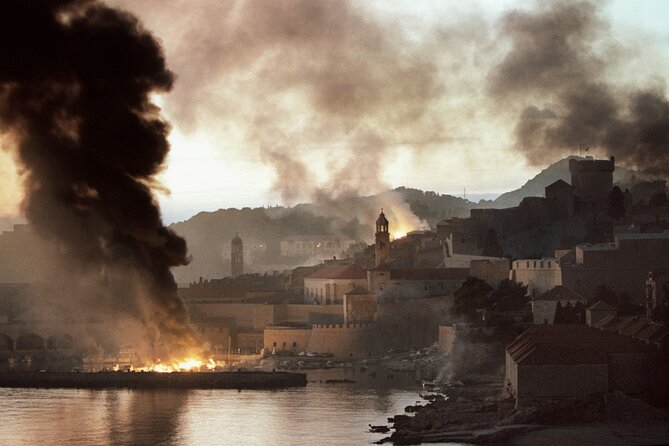
- Veteran-led perspective on the siege: firsthand stories make the war feel local and human, not distant.
- Revelin Fortress start: you begin with fortifications that set the defense context right away.
- Luza Square to Sponza Palace: you hit Dubrovnik’s civic heart and then move into the memorial room.
- Stradun and the Buža Gate area: you walk the classic main street stretch that also connects to the city’s defensive layout.
- Jesuit Staircase and hidden streets: St. Ignatius stairways plus small lanes and viewpoints like Minčeta show how the old town is shaped.
A private Dubrovnik Homeland War story you can actually feel
Dubrovnik can be postcard-perfect, even a little too perfect. That’s exactly why this tour works. You’re guided through familiar streets, then pointed at the places where safety, government, and survival mattered.
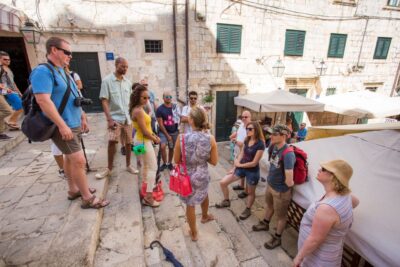
The tour is private, so it’s just your group. That matters here because the guide can pace the story to your questions, and the walk doesn’t feel like a rushed script. In past experiences with guides like Mato and Vlaho, the common thread is how openly they share personal connections to what happened—moving, sometimes heavy, but never vague.
If you’re the type who likes to understand why a place looks the way it does—how walls, gates, and civic buildings connect—you’ll get more than sightseeing value. You’ll get a map in your head.
You can also read our reviews of more private tours in Dubrovnik


Revelin Fortress: getting your bearings at the fortifications
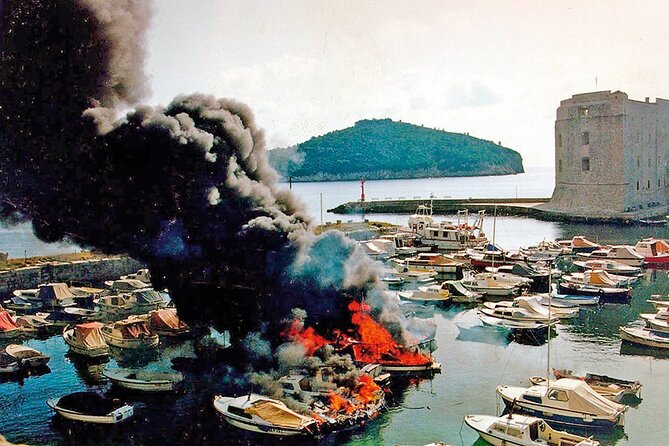
You meet at Ulica Vrata od Ploča, a practical starting point for connecting the old town to its defensive edge. The first stop is Revelin Fortress. Even if you’re not a fortress nerd, you’ll quickly see why Dubrovnik’s defenses weren’t decoration.
This early moment is about framing. Before you wander through squares and narrow lanes, you get a sense of where threats would have come from and why the city relied on layered protection. The tone is also set right away: this is not a casual photo walk.
At this first step, expect a short orientation and a welcome that helps you connect the later stops—city walls, gates, and the memorial room—into one coherent story.
City Walls and harbor views: where protection meets power
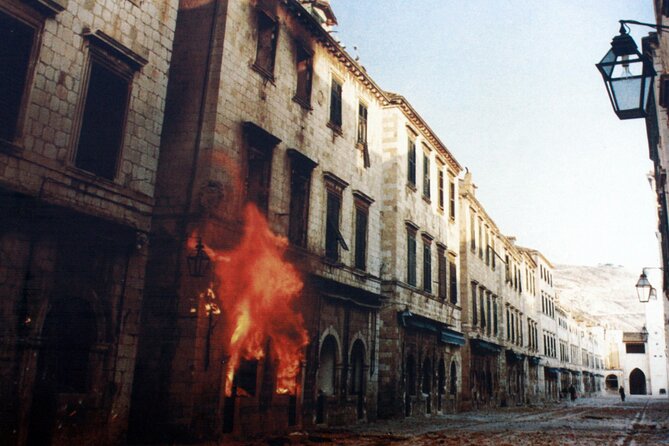
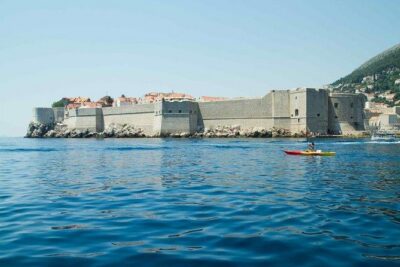
Next you move toward Dubrovnik City Walls. This is one of the best ways to understand Dubrovnik because the walls are both literal and symbolic. They show what the city invested in survival, and they also explain why the old town feels self-contained.
As you listen, you’ll be pointed toward major defensive and strategic sights:
- the old city harbor area
- Fortress of St. John
- fortifications of St. Luke
- the Dominican Monastery area
Even if you’ve seen Dubrovnik walls from afar, walking through this section with war context changes what you notice. You start thinking like the city had to: lines of defense, choke points, and how the geography affects what’s possible.
Timing here is short (about 20 minutes), so treat it as orientation plus narrative—not a long wall hike. You’ll still come away with a clearer picture of the siege geography.
Luza Square and Sponza Palace: the Homeland War Memorial Room
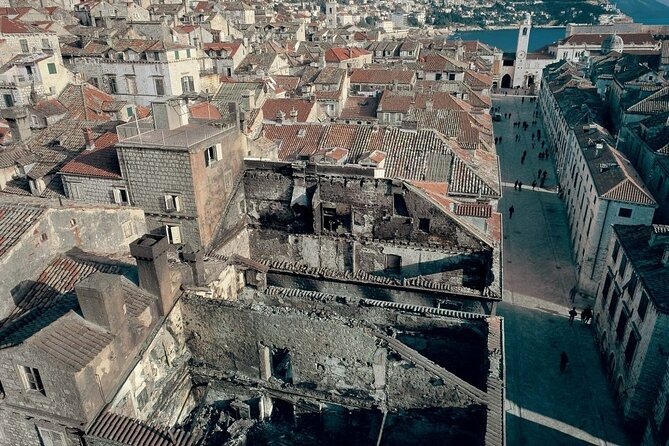
Luza Square is Dubrovnik’s central stage: clock tower energy, government presence, and the feeling that people gather here because this is where life happens. You’ll also pass recognizable landmarks in this area like City Hall and the Church of St. Blaise, plus the Small Onofrio’s Fountain.
Then comes the stop that turns the whole tour: the Homeland War Memorial Room in Sponza Palace. The entrance here is included, and this is where the story gets grounded in evidence—videos and photos connected to Dubrovnik’s defenders.
This part is valuable because it bridges two ways of learning:
- You’re seeing the city’s official buildings and public squares.
- Then you’re stepping into a space designed to explain what those places meant during the siege.
If you want your visit to Dubrovnik to include meaning, not just views, this is the heart of the experience.
Stradun, Buža Gate area, and the city’s main street logic
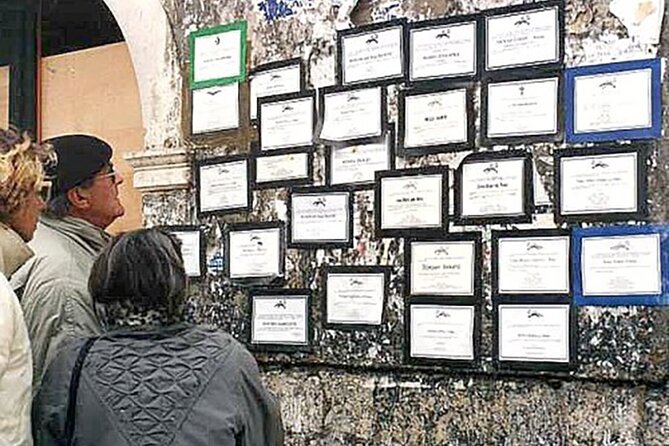
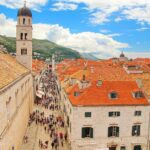
After Sponza, the tour shifts to movement through the old-town flow. You’ll walk Stradun, Dubrovnik’s famous main street, plus the Ruđera Boškovića street of the Buža Gate area.
This is a smart transition. Stradun is where Dubrovnik’s everyday life vibe shows up—so you can contrast that with what the city endured. The practical takeaway for you: you start recognizing the old town not just as a beautiful set, but as a living place that continued to function under pressure.
Short stops like this are also good if you like variety. In about 10 minutes, you’re getting a “feel” of the city’s rhythm without getting stuck in one spot too long.




Rector’s Palace and the Cathedral area: government and identity
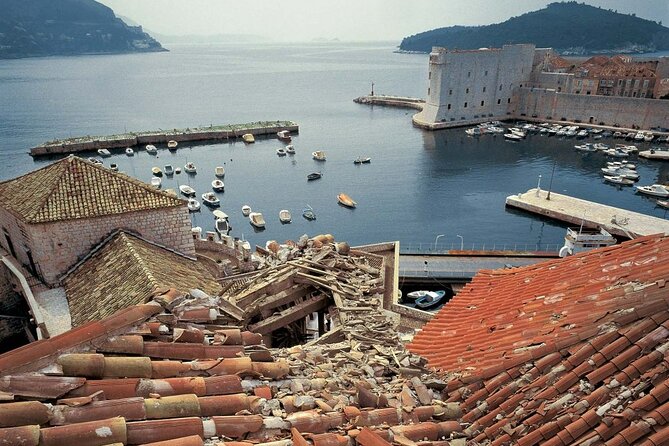
Next up is Rector’s Palace. This is the seat of government of the Republic of Dubrovnik, and it’s one of those buildings you understand better once you know the city’s political stakes.
You’ll then move toward the Cathedral of the Assumption of the Virgin Mary. Around this broader stop you may also notice the Treasury of the Republic, the Bishop’s Palace, and Ponta Gate.
Here’s what I like about this sequence: it keeps you from thinking of the Homeland War as a separate chapter that has nothing to do with the earlier centuries. Dubrovnik’s identity has always been tied to governance and protection. When you connect that idea, the city’s architecture starts to make more sense in your head.
This is also where the guide’s storytelling really matters. If they’re the kind who links places to how people lived and organized themselves, you’ll get more meaning out of the stone-and-doorways than you’d get from a standard walkthrough.
Jesuit Staircase and Minčeta Tower: the old city’s tricky vertical maze
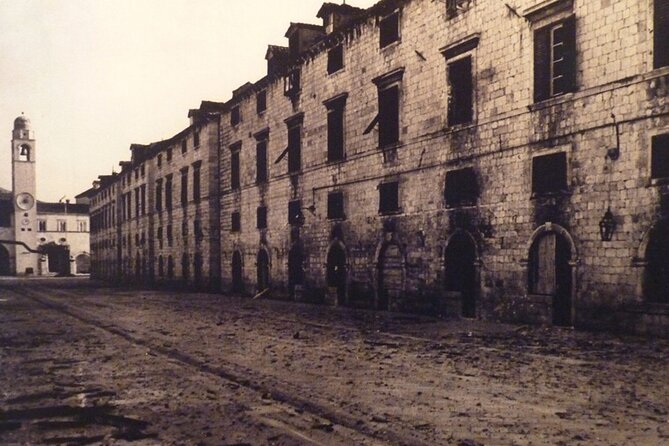
Now you get into the part of Dubrovnik that feels like you’re discovering it, even if you’ve seen it in photos. The Jesuit Staircase is next, centered on the Church of St. Ignatius of Loyola and the stairway.
But the value is wider than the stair itself. You’ll also pass through the surrounding streets (the kind of lanes where the city feels like a puzzle), plus the Great Granary and the Tower of Minčeta area.
This stop is a great reset after the heavier memorial moment. It gives you a change of pace while still staying grounded in the city’s defensive shape. Dubrovnik isn’t flat, and those vertical routes helped people move through the city efficiently—something that becomes more meaningful once you’ve been told how life and danger worked.
It’s also one of the better places to pick up small orientation cues. When you later look back at Dubrovnik from viewpoints, you’ll start mentally labeling where you’ve been.
Church of St Joseph and the quiet streets between landmarks

The tour then goes to Church of St Joseph, including the Placeta area. You’ll also spend time around the Wide Street and the House of Ivo Grbić.
This is the “in-between” Dubrovnik part—where the city feels less like a checklist and more like an actual place people walk through daily. Even with only about 15 minutes here, you get a sense that the old town’s history isn’t only in the big monuments.
I like these smaller stops because they make your overall experience feel personal. They also help if your group wants balance: history plus human-scale street life.
Franciscan Church and Monastery plus Onofrio’s Fountain energy
Next: the Franciscan Church and Monastery. You’ll also see the Large Onofrio’s Fountain and the Church of the Holy Saviour.
These are the kinds of sights that attract people because they’re visually memorable. But with the war framing of this tour, they take on an extra layer. Sacred and civic spaces weren’t just part of the skyline—they were part of how communities held together.
This stop is about contrast too. After learning about siege survival, it’s striking to stand at places that represent long-term continuity. The fact that these sites still matter today is part of why this kind of story stays with you.
Ending at Pile Gate: fortresses and the sea
You finish at Pile Gate, the west gate. The walk ends around this key defensive point, including St. Lawrence and Bokar Fortresses and the Kolorina Bay area.
Ending at a gate is smart. It makes the tour feel like a loop: you start at one edge of defense thinking, and you end at another edge—both times with the city’s relationship to safety and strategy in mind.
If you still have energy after the tour, this is a good spot to continue exploring on your own. You’ll have a clearer sense of where you are relative to the walls and gates, and that makes the rest of your Dubrovnik time more enjoyable.
How much is $120.16 worth for 2 hours 30 minutes?
At $120.16 per person for a private, English-guided experience, this is not a bargain-basement deal. But it also isn’t priced like a generic city tour.
Here’s why it can still feel like good value:
- You get professional tour guidance throughout.
- The entrance to the War Memorial Room is included.
- The “why” behind the city is the main product here, not just walking between sights.
- Private means your group can ask questions and get time spent in the areas that matter to you.
If you roughly think in cost-per-hour terms, you’re paying around the mid-$40s per hour range, depending on how close you stick to the 2 hours 30 minutes timing. For a guided story with a memorial component, that can be a solid trade—especially if history is your priority.
Who should book this Dubrovnik Homeland War private tour?
This tour is a strong fit if you want:
- a Homeland War perspective from someone with firsthand connection
- a meaningful old-town walk that doesn’t ignore the city’s hardest chapter
- English guiding with time for questions inside the story
It may be less ideal if you want a light, purely scenic experience. The memorial room and personal accounts can be emotionally heavy, and the pacing still includes multiple landmarks in a relatively short walk.
One more practical note: the experience requires good weather. Dubrovnik’s old streets can be pleasant or slippery depending on conditions, so plan for sun or mild conditions and bring what you need for comfort.
Should you book it?
I think you should book this tour if your goal is to understand Dubrovnik beyond photos. The war memorial moment at Sponza Palace gives your visit weight, while the City Walls, gates, and civic buildings keep everything connected to how the city actually works.
If you’re unsure, use this quick rule: if you’d rather learn why the city matters than just see it, this is your best bet. If you’re only in it for beaches and views, you might prefer a lighter sightseeing option.
FAQ
How long is the Dubrovnik Homeland War Private Tour?
It runs about 2 hours 30 minutes.
What language is the tour offered in?
The tour is offered in English.
Where does the tour start and end?
It starts at Ulica Vrata od Ploča and ends at Nautika, Brsalje ul. 3, in the area of the west gate of Pile.
Is the Homeland War Memorial Room entrance included?
Yes. Entrance to the War Memorial Room is included.
Is this tour private?
Yes. It is a private tour/activity, so only your group participates.
What happens if the weather is bad?
This experience requires good weather. If it’s canceled due to poor weather, you’ll be offered a different date or a full refund.