REVIEW · DUBROVNIK
Dubrovnik: Ancient City Walls & Wars Walking Tour
Book on Viator →Operated by Dubrovnik Walks · Bookable on Viator
Dubrovnik’s walls tell a story with teeth. This guided Walls & Wars walk mixes medieval defenses, UNESCO Old Town streets, and the political backstory of an Adriatic power that refused to bend. I love the smart pacing for a 2-hour format, plus the way the guide turns stonework into a timeline you can actually remember. One heads-up: it’s a stairs-heavy experience, and in summer the sun can feel relentless.
You also get real value from the guide. Whether the storyteller is Davor, Goran, Mara, or Andrea, the tone is practical and clear, and you spend your time learning the why behind what you see. I also like the small-group feel (max 35) and the use of audio headsets when the group is larger, so you’re not constantly craning your neck. The trade-off is that there are no restroom stops, so plan ahead and don’t treat this like a casual stroll.
In This Review
- Key Things I’d Pay Attention To
- Meeting at Pile Gate and Getting Oriented Fast
- The City Walls Walk: Minceta, Revelin, and the Shape of Defense
- The Wars and Independence Story Behind the Stone
- UNESCO Old Town Views and Why the Sea Side Matters
- Price and City Walls Entry: What You’re Really Paying For
- How the Tour Paces in Real Life (2 Hours, But With Stairs)
- Who Should Book Walls & Wars in Dubrovnik
- Should You Book Dubrovnik Ancient City Walls & Wars Walking Tour?
- FAQ
- Is the City Walls entrance fee included in the tour price?
- How long is the Dubrovnik Walls & Wars tour?
- Where do I meet the guide?
- Is the tour in English?
- What should I know about kids and City Walls admission?
- Are there restroom stops during the tour?
- What kind of fitness level is required?
Key Things I’d Pay Attention To

- Pile Gate start: you jump right into the Old Town rhythm and get oriented fast.
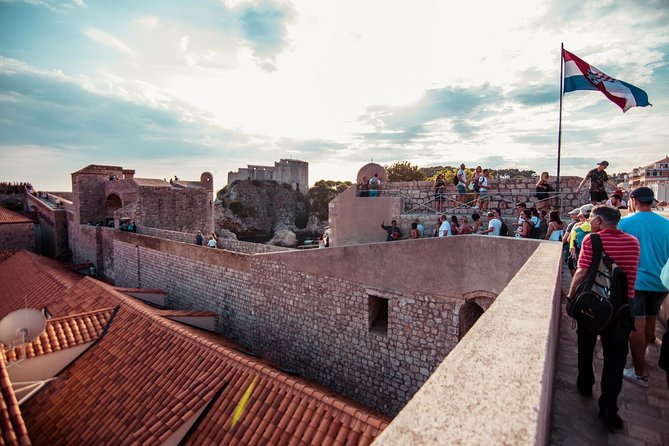
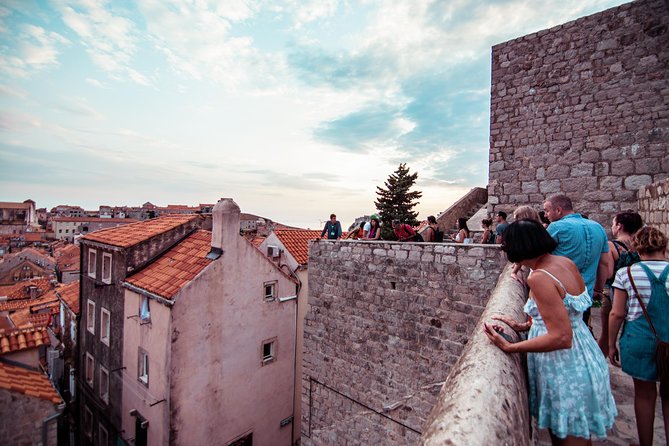
- Real wall views: the walk delivers port-and-rooftop perspectives you don’t get from street level.
- Forts explained: you see Fort Revelin and Minceta Tower, plus Fort Lovrijenac in the distance.
- The sea-channel backstory: you learn how changes in the shoreline shaped the city’s defenses.
- City Walls ticket is extra: you’ll need to budget for entry on top of the tour price.
- Stairs and heat matter: good for solid walkers; not for everyone with knee or mobility issues.
Meeting at Pile Gate and Getting Oriented Fast
The tour starts with a meet-and-greet near Pile Gate at the Dubrovnik Walks spot marked by an orange umbrella. From the first minutes, the point is simple: you’re not just “touring.” You’re getting a mental map of Stari Grad (Old Town) so the walls later make sense.
This early section moves through limestone-paved lanes and key landmarks tied to the city’s identity—churches, monasteries, and palaces—without turning the day into a museum lecture. If you’ve been to Dubrovnik before, you’ll still feel that difference: the guide helps you connect streets to strategy.
Practical note: the Old Town center can be crowded, and this start helps you get your footing before the main wall climb. You’ll want comfy shoes with good grip. The stone is real, and when you’re climbing, you’ll appreciate traction.
You can also read our reviews of more walking tours in Dubrovnik



The City Walls Walk: Minceta, Revelin, and the Shape of Defense
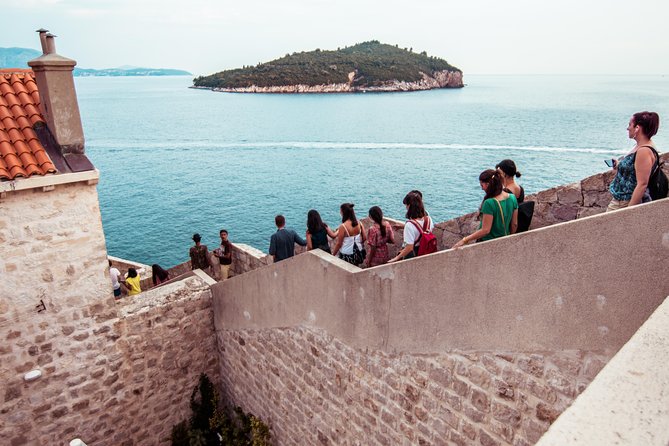
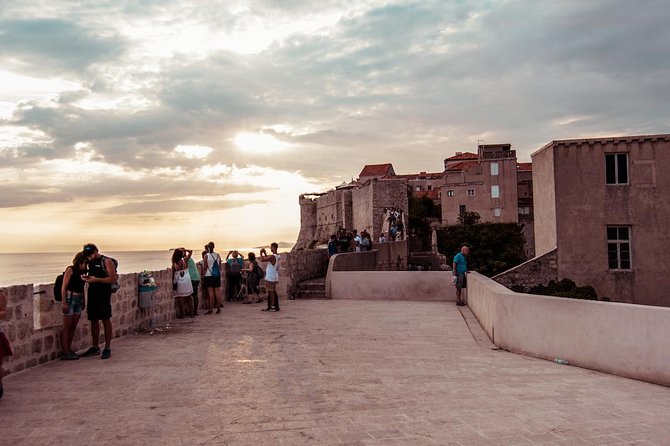
Once you’re at the City Walls entry, you’ll buy tickets and then step onto the actual system of fortifications. The walk covers about 2 km (1.2 miles) along the walls, but the bigger reality is the vertical work—there are stairs, and there’s more effort than the distance alone suggests.
Here’s what makes the route worth paying for with a guide: you’re not just seeing wall sections. You’re learning how the wall functions. The city tells its story through towers and forts, and the guide points them out in a way that makes the whole defensive ring feel logical.
Inside the walls, you’ll focus on:
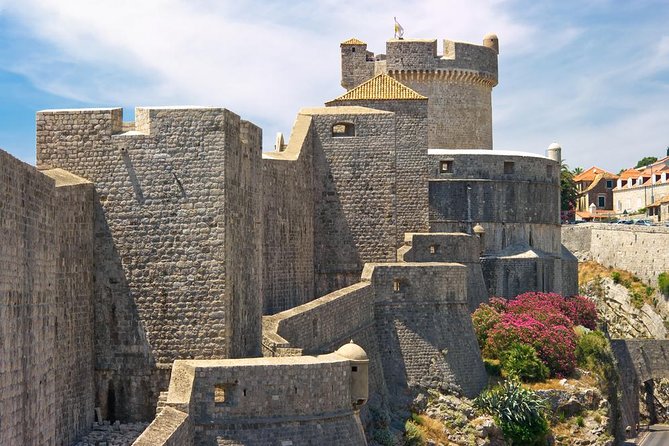
- Minceta Tower, a key point along the circuit
- Fort Revelin, a fortification tied to controlling access and pressure points
Then you get a wide-angle lesson from the walls themselves. You can spot Fort Lovrijenac in the distance. It’s a famous one because it belongs to the broader defense system but sits physically separated from the main wall line. That separation isn’t just a quirk. The guide connects it to how Dubrovnik defended from different angles over time.
Also pay attention to how the walls look today. They were first built in medieval periods (you’ll hear the 12th century starting point), and they were later restored several times to resemble earlier appearances. So when you see different sections or repairs, it helps to know you’re looking at layers of history, not one static wall.
The Wars and Independence Story Behind the Stone
The big reason to book Walls & Wars instead of doing the route alone is the narrative. Dubrovnik isn’t only “pretty walls.” It’s a case study in survival, power, and diplomacy.
Your guide explains how the city became an autonomous republic and how that shaped everything from fortifications to foreign pressure. You’ll hear how Dubrovnik had to play the long game while dealing with major regional forces like the Ottoman and Venetian empires.
You’ll also get a specific geographic story that makes the rest click. In the 11th century, the sea channel that separated the city area from the mainland was filled in. That change influenced how a single enclosed defensive wall could protect what became the present-day Old Town. When the guide connects shoreline changes to the defensive layout, suddenly you understand why the walls sit where they do.
There’s also a human element to this tour. Some guides bring personal perspective when discussing the more recent war and what it meant for the city. You don’t get fluff. You get context and emotion handled in a way that keeps moving with the walk.
If you care about how politics shows up in architecture, this is the moment when the tour earns its name.
UNESCO Old Town Views and Why the Sea Side Matters
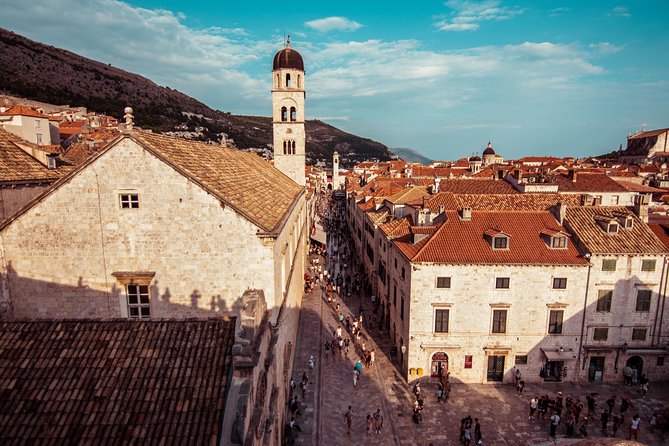
Yes, you’ll take photos. But the more useful part is how the views explain the city’s priorities.
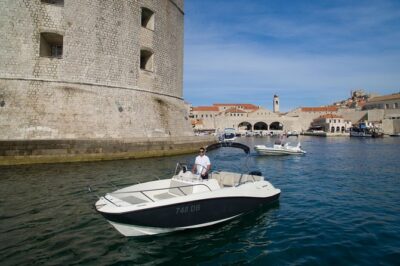
From the walls, you get sweeping outlooks over the port and the Old Town, which is a UNESCO World Heritage Site. The Adriatic is often described as a shimmering blue from a distance, and you’ll feel how the water acts like a protective boundary and a potential threat at the same time.
You’re also getting perspective on the city’s position in the Adriatic corridor—why ships, access routes, and coastal control mattered. Street-level Dubrovnik looks like a fortress city because it is one, but the walls make the fortress logic visible.
One practical tip: if you can choose timing, go earlier or later in the day to beat the heat. Starting around the early morning or opting for a later slot (people often love the 6pm-style timing for cooler air and sunset light) can make the wall walk feel less punishing.
Price and City Walls Entry: What You’re Really Paying For
The tour price is $30.23 per person, and that covers the guided experience. What it does not cover is the City Walls entrance fee—and that’s important for value.
Plan for:
- 40€ per adult and 15€ per child (age 7–18) as the listed City Walls entrance fee.
- The tour also notes you may pay 35€ per adult on spot, plus 15€ for children age 7–18.
So yes, you’re adding a meaningful extra cost. But the trade-off is you’re paying for a guided route that helps you interpret towers, forts, and the war-and-republic story while you walk the wall circuit with a licensed local guide.
Another money-saver option: the Dubrovnik Pass covers one City Walls visit. If you already plan to use the pass for other sights, it may be the cleanest way to keep costs down—just be sure you collect and purchase it in advance, since the tour materials stress that.
For kids, the details matter:
- Children 0–11 can join the tour for free.
- For the City Walls entrance itself, children 0–6 can have free entrance, but children 7–11 are not eligible for free walls entrance.
So if you’re traveling with children, check those age brackets early so you don’t get surprised at the gate.
You can also read our reviews of more city tours in Dubrovnik




How the Tour Paces in Real Life (2 Hours, But With Stairs)
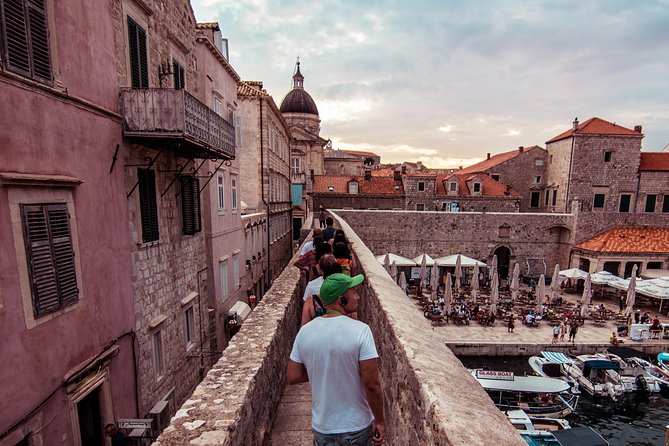
On paper it’s about 2 hours. In practice, it feels like a 2-hour workout plus sightseeing, because the walls route includes climbs and repeated step sections.
The tour uses audio headsets in groups of 4+, which helps if the guide is a bit ahead. That said, audio range can vary, so don’t assume you’ll hear every word perfectly from the back of the line. Stay close enough that you can follow landmarks and questions.
There’s also:
- No restroom stops
- Limited shade, especially in summer since the walls are built with sun exposure in mind
- A recommended moderate fitness level
- Not recommended if you “don’t like walking stairs” or have knee and mobility concerns
Heat is a real factor in Dubrovnik. The tour materials are direct: if you can’t stand the heat, consider choosing a cooler season or a start time that keeps you out of the harshest sun. Even with breaks, this is outdoors and exposed.
Good news: many people find the pacing manageable because the guide keeps the walk moving, but slows down when needed for questions and photo moments.
Who Should Book Walls & Wars in Dubrovnik
Book this tour if you want:
- A guided interpretation of the walls (towers, forts, and strategy), not just scenery
- Clear historical context that ties streets, shoreline changes, and fortifications together
- Views plus stories—Port Old Town views from above, with real political and war background
Skip it or think hard first if you:
- Have trouble with stairs or uneven climbing
- Need frequent restroom stops (there aren’t any)
- Want a mostly flat, easy walking experience
It’s also a great choice if you’re short on time and want the best of Dubrovnik’s defenses in one day. The format hits the key points without dragging you around for hours.
And if your travel style is “I like facts, but I also like questions,” this is the kind of tour where your questions actually get answered.
Should You Book Dubrovnik Ancient City Walls & Wars Walking Tour?
If you’re coming to Dubrovnik and you’re serious about understanding why the city looks the way it does, I’d book it. The City Walls are already impressive on their own, but the guided story turns them from a photo stop into a living map of survival, politics, and conflict.
Just go in with eyes open: stairs and heat are part of the deal, the City Walls ticket costs extra, and there’s no restroom stop. If you can handle that, the experience is one of the best ways to see the city’s most iconic views and leave with a real sense of what Dubrovnik had to defend.
FAQ
Is the City Walls entrance fee included in the tour price?
No. The City Walls ticket is not included. You purchase it separately at the walls entrance (and it can also be covered by the Dubrovnik Pass).
How long is the Dubrovnik Walls & Wars tour?
It’s about 2 hours (approx.), with a wall walk of about 2 km (1.2 miles).
Where do I meet the guide?
Meet at Dubrovnik Walks under the orange umbrella at Brsalje ul. 8, 20000 Dubrovnik, Croatia, near Pile Gate.
Is the tour in English?
Yes. The tour is offered in English.
What should I know about kids and City Walls admission?
Children age 0–11 can join the tour for free. For City Walls entrance, children 0–6 may have free entrance, but children 7–11 are not eligible for free walls entrance. Children 7–18 pay the listed child entrance fee.
Are there restroom stops during the tour?
No. There are no restroom stops on this tour.
What kind of fitness level is required?
It’s recommended for travelers with moderate physical fitness, and it includes stairs. It’s not suitable for everyone, especially if you struggle with stairs or heights.