REVIEW · DUBROVNIK
2 hrs Guided Tour to CAVTAT a Small Place for Great Art
Book on Viator →Bookable on Viator
Cavtat has big-art energy in a small town. In a tight 2-hour guided loop, you get St Roch Cemetery views plus real stories tying painters and seafaring to this corner of Croatia. I like how the route is simple and scenic, and I like that it mixes art, architecture, and shipwreck-era facts without turning it into a lecture. One thing to consider: you’ll be walking at a steady pace on uneven outdoor paths.
If you’re sensitive to stairs or long stretches outdoors, plan accordingly. Stop 3 includes a walk that leads you toward the mausoleum, so comfy shoes matter, and it can feel warm during midday sun even if parts of the promenade stay in shade.
In This Review
- Key highlights you should not miss
- Cavtat in two hours: why this “small place” works
- St Roch Cemetery: views, local names, and Meštrović’s mausoleum
- Cavtat Old Town: from Roman Epidaurum to shipwreck stories
- Kari’s Walking Path on the Rat Peninsula: shade, sea air, and the mausoleum approach
- Price and value: $60.21 for a focused art-and-history circuit
- Meeting point, timing, and how to set yourself up
- Who this tour suits (and who might prefer something else)
- FAQ
- FAQ
- How long is the Cavtat guided tour?
- What price do I pay, and what does it include?
- What language is the tour offered in?
- Where do I meet the group, and when does it start?
- Is there a mobile ticket?
- What’s the group size limit?
- Can I get a refund if my plans change?
- Should you book this Cavtat art-and-history tour?
Key highlights you should not miss
- St Roch Cemetery viewpoints from the highest spot on the Rat Peninsula
- Ivan Meštrović’s Račić family mausoleum and the art connection
- Cavtat Old Town stories back to Roman Epidaurum (about 2,000 years ago)
- Shipwreck talk at Cavtat Port, tied to why the sea shaped the town
- Kari’s Walking Path: a mostly shaded, by-the-sea promenade
Cavtat in two hours: why this “small place” works
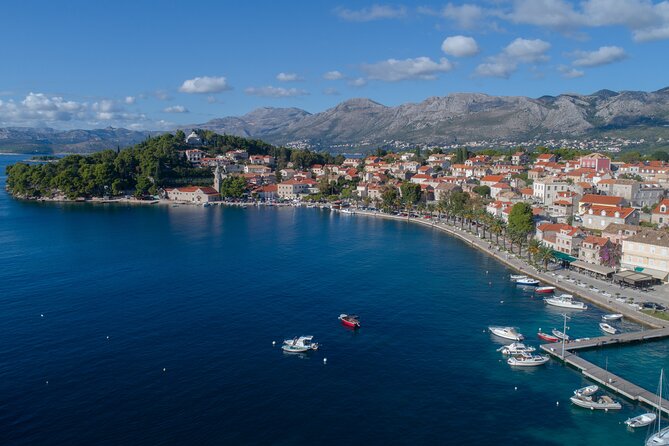
Cavtat is the kind of town where you can feel the scale right away. It is not trying to outshine Dubrovnik. It does something smarter: it gives you art, history, and sea life in a walkable package.
This tour is built for that. You move through three focused zones—cemetery, old town, and the Rat Peninsula promenade—so your brain keeps a clear thread: people, art, and the coastline. You get the art in a literal sense at St Roch Cemetery, and you get it as a cultural habit in Old Town, where the town’s creative streak is a big part of the story.
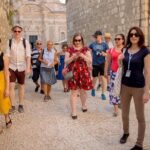
I also like the small-group feel (up to 30 people). It makes it easier to pause for photos and questions, especially if your guide is the type to adjust the pace.
You can also read our reviews of more guided tours in Dubrovnik


St Roch Cemetery: views, local names, and Meštrović’s mausoleum
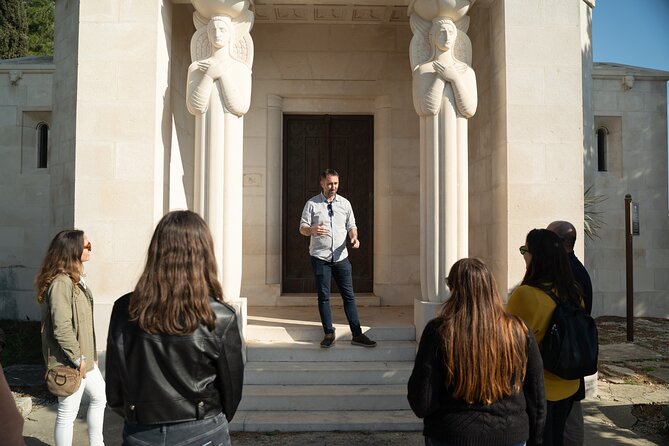
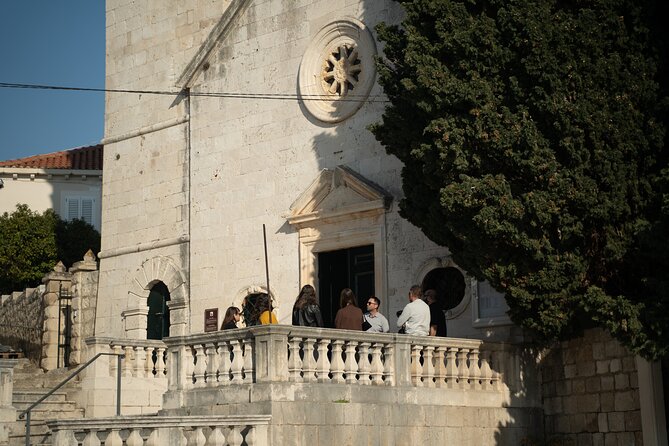
You start at St Roch Cemetery, on the highest ground of the Rat Peninsula. The pay-off is immediate: you’re up high enough to see Cavtat clearly, and you get that classic Adriatic sense of open space between buildings and sea.
This stop lasts about 30 minutes, and the cemetery admission is included. That matters because it is not just a scenic walk. You’re also learning how this place works as a memory bank for the town. The cemetery is the final resting place of many prominent Cavtat citizens, and the guide explains why certain family stories became part of the town’s identity.
The star here is the Račić family mausoleum, made by Croatian sculptor Ivan Meštrović. Even if you do not know the name, you’ll get why it is discussed on tours like this: Meštrović’s work sits at the intersection of craft, fame, and local pride. You’re not just looking at a tomb. You’re seeing how art can become part of public storytelling, in stone.
One practical consideration: cemeteries can involve uneven ground and short climbs. If you have limited mobility, tell your guide early. A good guide will handle pacing, and the best local guides in Cavtat tend to be thoughtful about walking limits.
Cavtat Old Town: from Roman Epidaurum to shipwreck stories
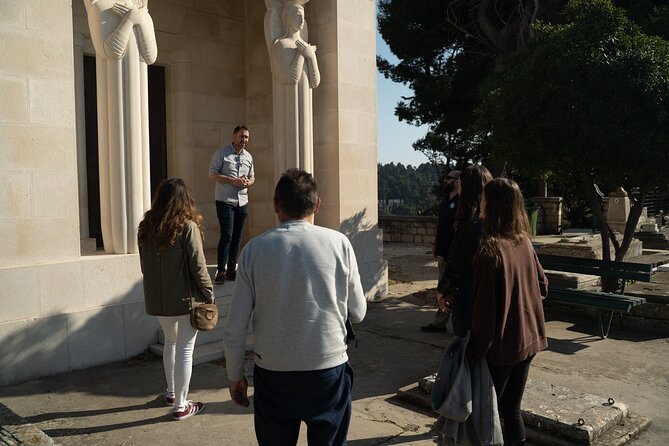
Next comes Cavtat Old Town, about an hour. Here the tone shifts from art-and-viewpoint to history you can picture.
The guide takes you about 2,000 years back to when Cavtat was the Roman colony of Epidaurum. You hear what happened to the city and why so few traces remain. That part is important: you are not always guaranteed to see obvious ruins. Instead, you’re learning how to interpret what you can see, and why absence still tells a story.
Old Town is also where the artistic thread tightens. You’ll learn about how two major Croatian artists helped turn this small town into an important creative hub on the national scene. One painter produced over 1,000 works. The sculptor is linked to an architectural masterpiece described as a testimony of love and death. Those details are more than trivia. They help you understand why Cavtat talks about art as something inherited, not imported.
Then the tour connects history to the sea. You’ll hear about shipwrecks in front of Cavtat Port and how those events fit into Cavtat’s colonial-era development. The point is not doom. It’s cause-and-effect: seafaring shaped trade, shaped risk, shaped settlement patterns, and shaped the way Dubrovnik and the wider coast influenced Cavtat.
If you enjoy walking and hearing stories that explain the visible town, you’ll like this stop. If you prefer museums and indoor pacing, you might wish there were a bit more time here. But for a two-hour tour, it’s a smart balance.
Kari’s Walking Path on the Rat Peninsula: shade, sea air, and the mausoleum approach
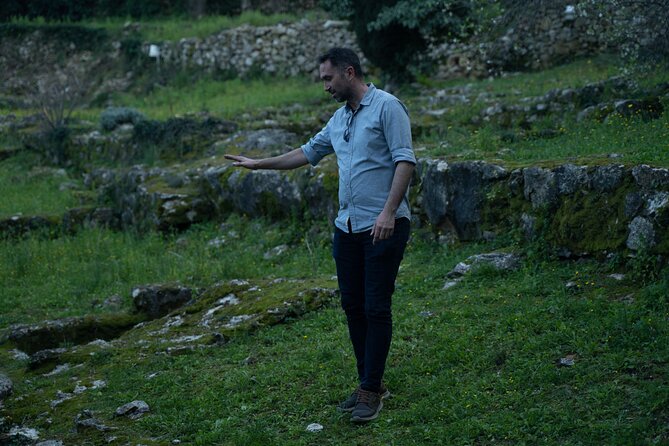
Stop 3 is Kari’s Walking Path, roughly 30 minutes. This is the “get your bearings fast” part—mostly shaded, along the water, and designed for an easy sightseeing flow.
The promenade aspect is the point. You get a clear look at why seafaring matters to Cavtat, and you also see the town’s centuries-old connection with Dubrovnik. Even without a map lesson, you start to feel the logic of the coastline: towns like these did not grow in isolation. They grew in relation to sea routes, ports, and nearby centers.
Another practical reason for this walk: it gives you the easiest access to the mausoleum. That means you’re not just climbing for the sake of it. You’re approaching the monument area with a route that’s meant to be comfortable and scenic.
Because this is an outdoor walk, bring shoes that can handle uneven pavement and stone. Also bring water if you’re going in warmer months. The path is mostly in shade, but shade does not eliminate heat.
Price and value: $60.21 for a focused art-and-history circuit

At $60.21 per person for about two hours, the value comes from what’s actually built into the time.
First, you get admission included at the cemetery stop. That helps justify the price versus purely guided city-walk tours. Second, you’re getting three different “angles” of Cavtat—art at St Roch Cemetery, Roman-era framing in Old Town, and coastal context on the Rat Peninsula—without feeling like you’re dragging yourself from one distant spot to another.
Third, the group size cap (up to 30) matters in a town this small. It reduces the chances of feeling like you’re moving through crowds just to hear a few facts. And based on how local guides run their Cavtat routes, the best part is usually the pacing—stops for photos, breaks when needed, and explanations that stay clear even on a walking schedule.
If you’re doing Dubrovnik as your base, this tour is a good way to get out of the main tourist rhythm. You’ll see a calmer town with a distinct identity, and you’ll come back with specific stories rather than a blur of views.




Meeting point, timing, and how to set yourself up
You meet at Šetalište Rat 2, 20210 Cavtat, Croatia with a 10:00 am start. The tour ends at the Spinaker Restaurant & Lounge Bar, Frankopanska ul. 10, 20210 Cavtat, Croatia.
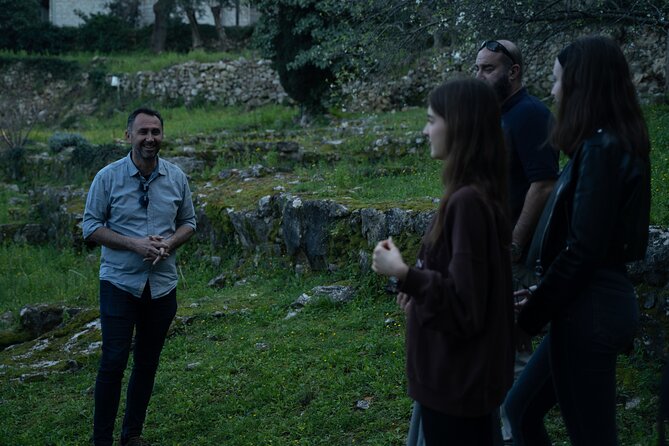
The description also notes that the meeting/end area relates to the garden on the north side of Hotel Croatia, connected with the remains of ancient Epidaurus. In plain terms: you’re starting close to the layer of Roman-era context, which helps the stories land better later in the walk.
I’d suggest arriving a few minutes early, not because you’ll be rushed, but because you’ll settle in faster. The route starts with a viewpoint-focused stop, and it helps to be ready when the guide begins laying out the thread.
Also, you’ll likely receive a mobile ticket, which saves time at check-in. Service animals are allowed, and the tour is listed as near public transportation—useful if you are pairing Cavtat with other plans.
Who this tour suits (and who might prefer something else)
This tour fits best if you like guided walking tours that tell you what to look for and why it matters. It’s especially good if you want a blend of:
- art history made tangible (Meštrović at the mausoleum),
- Roman context without needing heavy archaeology,
- and sea-focused storytelling tied to real places like the port and the Rat Peninsula.
It is less ideal if you hate walking or want long museum-style indoor time. Even though the pace is manageable, you are outdoors across all stops. And the cemetery plus peninsula sections do involve uneven ground and short climbs.
If you do have mobility limits, check with the operator. The experience is listed as one where most travelers can participate, which usually means the guide can work with different comfort levels. In Cavtat, guides like Vedran Mezei (Three Keys Guided Tours) are known for keeping the walking considerate, with stops for photos and adjustments for limits.
FAQ
FAQ
How long is the Cavtat guided tour?
It’s listed as approximately 2 hours.
What price do I pay, and what does it include?
The price is $60.21 per person. Admission is included for the St Roch Cemetery stop, and the other stops are listed as free admission.
What language is the tour offered in?
The tour is offered in English.
Where do I meet the group, and when does it start?
The start is at Šetalište Rat 2, 20210 Cavtat, Croatia, with a start time of 10:00 am. The tour ends at Spinaker Restaurant & Lounge Bar, Frankopanska ul. 10, 20210 Cavtat, Croatia.
Is there a mobile ticket?
Yes, the tour includes a mobile ticket.
What’s the group size limit?
The tour lists a maximum of 30 travelers.
Can I get a refund if my plans change?
Yes. Free cancellation is available up to 24 hours in advance for a full refund.
Should you book this Cavtat art-and-history tour?
Yes, if you want a tight, walkable way to understand why Cavtat punches above its weight in art and seaside history. The St Roch Cemetery viewpoint plus Ivan Meštrović’s Račić family mausoleum gives you a real visual anchor, and the Old Town portion adds the Roman Epidaurum and shipwreck context that makes the town feel more than scenic.
I’d book it especially if you like guides who keep stories clear and pace the walk well—Cavtat fans often highlight exactly that kind of thoughtful guidance (for example, work attributed to Vedran Mezei). Just make sure you wear good shoes and plan for some outdoor walking, including the approach toward the mausoleum on Kari’s Walking Path.