REVIEW · DUBROVNIK
Dubrovnik Food and Drink Walking Tour with a Local Guide
Book on Viator →Operated by FABULA RAGUSEA · Bookable on Viator
Food plus walls in Dubrovnik sounds simple, but this tour turns a 3-hour walk into a guided tasting. I love that food and drinks are included in the price, and I love the small-group size (max 12) that keeps it social without turning into a herd.
One thing to plan for: you’ll spend plenty of time standing on busy streets while the guide explains what you’re seeing, so pack patience (and good walking shoes).
In This Review
- Key things to know before you go
- What You’re Paying $175.35 For (and Why It Feels Fair)
- Meeting at Poljana Paska Miličevića: Starting Where Locals Move
- Onofrio’s Large Fountain: Cool Water, Big Engineering Stories
- Ruđer Bošković Square: A Tiny Stop With a Big Name
- Rector’s Palace: Where Ragusa Power Lived
- Church of Saint Blaise: Patron Saint, Baroque Details, Dessert Finish
- Stradun and the Orlando Column: The Heartbeat of the Old Town
- Sponza Palace, Gundulić Market, and Dubrovnik’s Marketplace Side
- Porat Dubrovnik, the Cathedral, and the Bell Tower You Can’t Ignore
- How the Tastings Actually Work in Real Life
- Weather, Pace, and the Standing-Stories Tradeoff
- Dietary Options: What’s Available and What Isn’t
- Who Should Book This Dubrovnik Food and Drink Tour
- Should You Book It or Skip It?
- FAQ
- FAQ
- What is the duration of the Dubrovnik Food and Drink Walking Tour?
- What’s the price per person?
- Are drinks and food included in the tour price?
- How many tastings are included?
- What dietary options are available?
- How big is the group?
- What language is the tour offered in?
- Where does the tour start?
- What if weather is bad?
Key things to know before you go
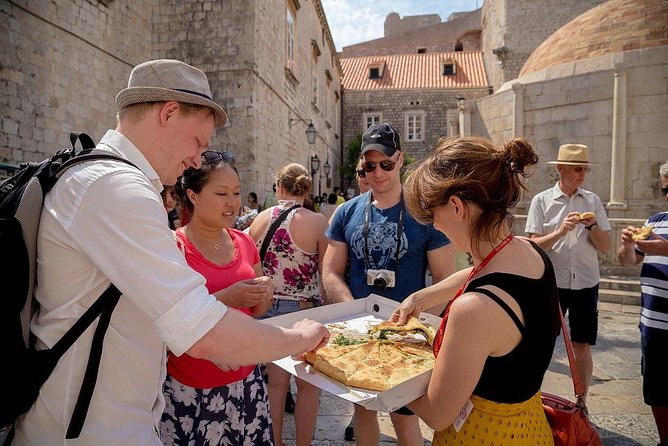
- Included pairings, not add-ons: wine at multiple tastings plus a final glass with dessert, and an extra local spirit or liqueur at the end.
- A tight history route: the walk links sights like Onofrio’s Fountain and Stradun with what you’re eating and drinking.
- Small-group conversations: with up to 12 people, you’ll actually have time to ask questions, not just listen.
- Real Dubrovnik landmarks, not detours: you pass through the UNESCO Old Town core and important markers like Sponza and the bell tower area.
- Diet flexibility is limited: vegetarian options are available, but vegan isn’t offered, so check your needs early.
What You’re Paying $175.35 For (and Why It Feels Fair)
At $175.35 per person for about 3 hours, this isn’t a budget snack stop. You’re paying for a local guide, a small group, and—most importantly—meals plus drinks already built into the schedule.
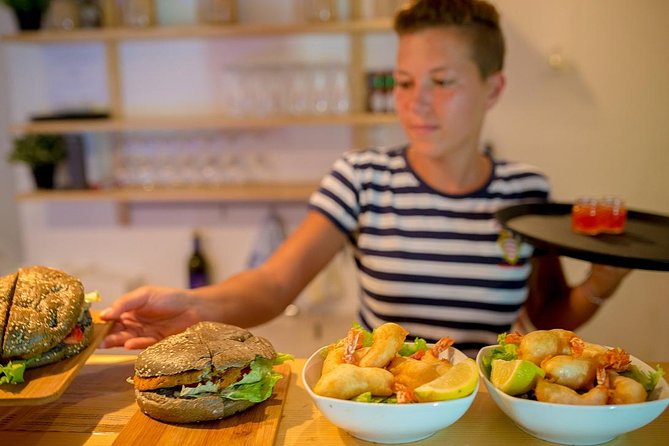
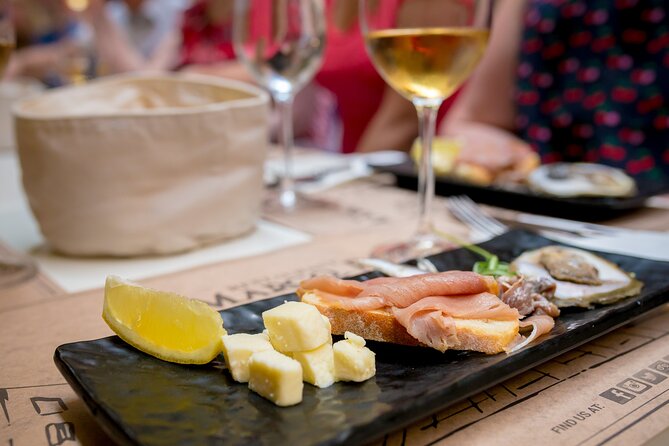
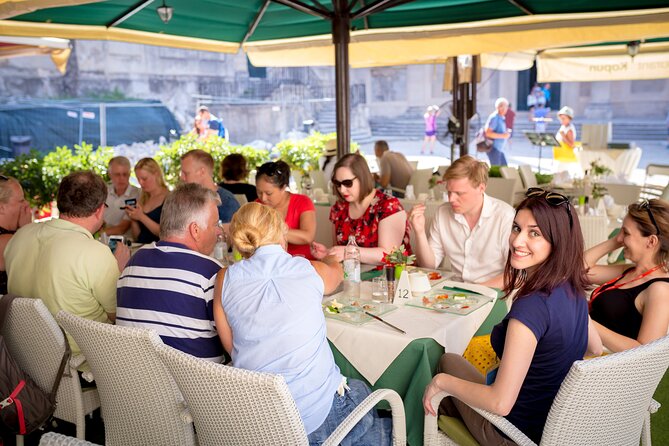
The included tastings are structured like a real meal: a starter at the first tasting stop, two main courses at the next two stops, and dessert at the final tasting stop. You also get coffee or tea, bottled water at three stops, and wine at three stops plus a dessert pairing with one additional liqueur/spirit. For wine drinkers, that alone can change the math in Dubrovnik, where a single “just one drink” can quickly add up.
You can also read our reviews of more walking tours in Dubrovnik
Meeting at Poljana Paska Miličevića: Starting Where Locals Move
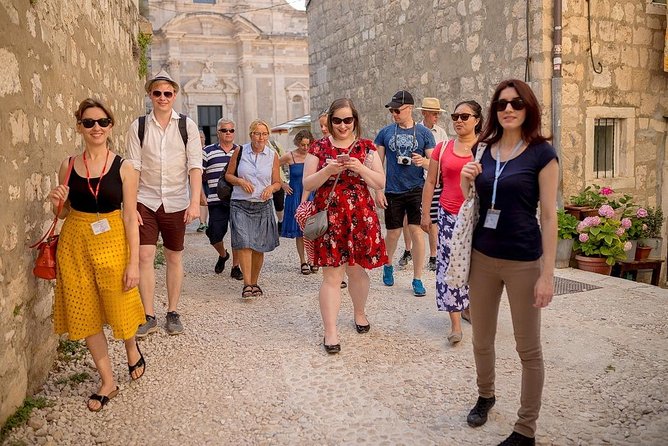
The tour begins at Poljana Paska Miličevića in Dubrovnik Old Town. That matters because you start already inside the walking loop that most visitors try to navigate on their own later.
You’ll get a mobile ticket, and the route is designed as a walk through the historic core rather than a ride between distant sights. If you like exploring with a plan, this is the kind of tour that gets you oriented fast.
Onofrio’s Large Fountain: Cool Water, Big Engineering Stories
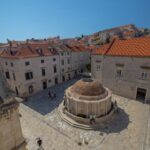
Your first major stop is Onofrio’s Large Fountain, near the Pile Gate entrance area. This circular landmark was built in 1438 by Italian engineer Onofrio della Cava and was part of a water system that brought water from a spring more than 7 miles away.
It also survived a lot: earthquake damage in 1667, and later damage during the Croatian War of Independence in the 1990s, followed by restoration. While you’re standing there (and yes, it’s a busy meeting point), the guide’s story gives you context for why Dubrovnik cared so much about infrastructure long before modern tourism existed.
Food moment here: you’ll start with a starter charcuterie board, along with the first round of drinks (including wine at the scheduled tasting stops) and water.
What I liked: this start location anchors the walk with a practical Dubrovnik detail—water—and then turns into a history lesson without feeling like a museum lecture.
Ruđer Bošković Square: A Tiny Stop With a Big Name
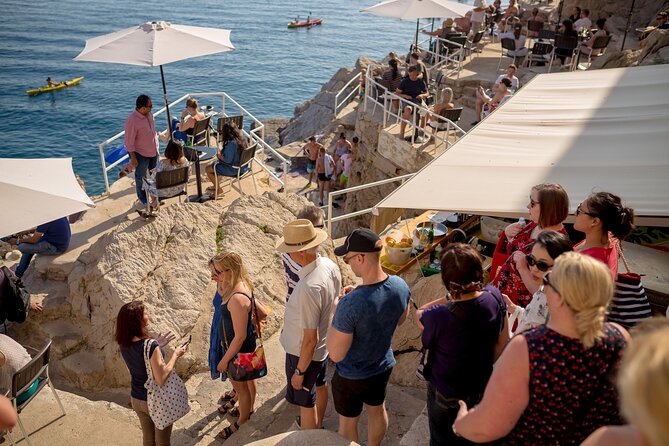
Next you reach Ruđer Bošković Square, a public space in the UNESCO-listed Old Town area. The square is named after Ruđer Bošković, a figure described through his many roles—physicist, astronomer, mathematician, philosopher, diplomat, poet, theologian, and Jesuit priest.
Even if you don’t remember every specialty from school, the point sticks: Dubrovnik produced people who shaped thinking far beyond the city walls. The square’s position among narrow lanes lined with old stone buildings also helps you feel the “street-level” Dubrovnik vibe.
Food moment here: this is where you get your first main course tasting. The tour’s sample menu includes a dish like creamy barley with Adriatic shrimps, served with cheese from the island of Pag, which is exactly the kind of regional mix that makes the meal feel Croatian instead of generic.
Watch for: if you’re sensitive to seafood, ask about what’s included in the specific tastings before the tour starts.
Rector’s Palace: Where Ragusa Power Lived
At Rector’s Palace, you’re looking at the seat of the Rector of the Republic of Ragusa, Dubrovnik’s medieval maritime republic name. The building blends Gothic-Renaissance elements, and it’s the kind of structure that makes you understand how a trading city needed both law and theater—ship money funded big symbols.
This stop is short on paper, but it sets up the rest of the walk. When your guide connects the palace to the city’s rules and identity, the streets stop feeling like scenery and start feeling like a lived-in system.
Food moment here: you’ll get your second main course tasting at the next stop in the tasting sequence. Expect a second regional plate that complements the seafood-forward option mentioned earlier, and in the tour’s sample menu you’ll also see ideas like kopun salad paired with seasonal fresh vegetables and fruit.
You can also read our reviews of more food & drink experiences in Dubrovnik

Church of Saint Blaise: Patron Saint, Baroque Details, Dessert Finish
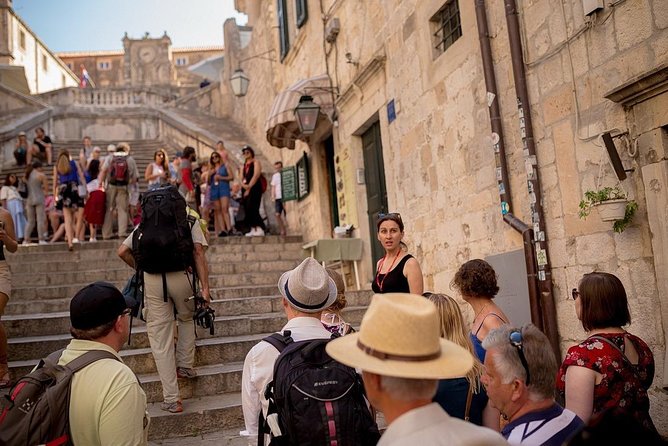
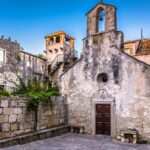
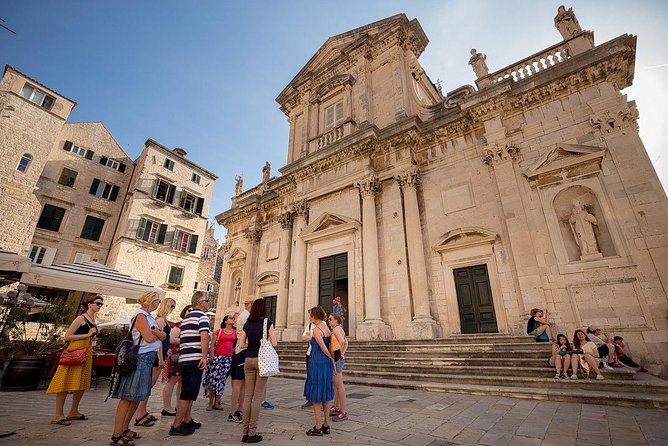
Your next big landmark is the Church of Saint Blaise, a celebrated Baroque church dedicated to the city’s patron saint (Sveti Vlaho). Saint Blaise is woven into Dubrovnik’s identity, and the guide usually uses this stop to explain why patronage matters in cities that built their futures on trade.
The church also gives you a visual reset. After palace and squares, this is where Baroque style shows up loud and clear, and the focus shifts from civic power to spiritual protection.
Food moment here: this is the dessert stop, and it’s a proper one. The sample menu lists Dubrovnik carob cake with wild bitter orange jam, plus a glass of wine at the dessert stop and a final liqueur/spirit included with dessert.
Stradun and the Orlando Column: The Heartbeat of the Old Town
Once tastings are rolling, the walk becomes more about moving through the city’s famous spine.
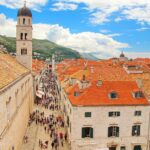
You’ll pass Stradun (also called Placa), Dubrovnik’s main pedestrian street. It’s about 300 meters long and links the Pile Gate and Ploče Gate through the center of the UNESCO Old Town. If you only do one main street in Dubrovnik, Stradun is usually it—though it can feel packed, so expect crowds while you’re there.
Then comes the Orlando Column (Orlando’s Pillar / Roland’s Column). Erected in 1418, it features a statue of the medieval knight Orlando/Roland, a figure tied to Dubrovnik’s ideas of freedom and endurance. The column also served practical roles over time—public announcements, a symbol of justice, and even a unit reference for local cloth sellers.
These stops are quick, but the guide’s narration tends to make you notice details you’d otherwise walk right past.
Sponza Palace, Gundulić Market, and Dubrovnik’s Marketplace Side
At the end of Stradun you reach Sponza Palace (called Divona in Croatian), one of Dubrovnik’s most beautiful and historically important buildings. Your route also takes you near the bell tower area, since Sponza sits right at the end of the main street and close to the tower.
Next, you’ll stop at Gundulićeva Poljana Market (Gundulić Square Market), an open-air market area that comes alive in the morning. Even if you’re walking through at a time when it’s not in full swing, you’ll get the sense of how local life overlaps with the tourist lanes.
This part of the tour is a nice change of pace. You go from monuments and churches into everyday Dubrovnik rhythm, which makes the food story feel more grounded.
Porat Dubrovnik, the Cathedral, and the Bell Tower You Can’t Ignore
The itinerary continues to the Old Port area (Porat Dubrovnik). This spot matters because Dubrovnik’s identity was built on shipping and trade across the Mediterranean. When the guide explains the city as a maritime power, the port stops feeling like a background photo location.
Then you reach the Cathedral of the Assumption of the Virgin Mary, Dubrovnik’s major Baroque church centerpiece. It’s one of the city’s most iconic landmarks, and the guide’s context helps you read it as more than architecture.
After that, you’ll see the Orthodox Church of the Annunciation, a Serbian Orthodox church with a blend of Byzantine and Southern Adriatic influences. It’s a quick stop, but it adds an important layer: this city wasn’t culturally one-note.
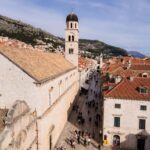
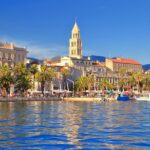
Finally, you’ll reach the Bell Tower. At 31 meters high, it’s a defining vertical landmark at the eastern end of Stradun. Originally built in 1444, it was reconstructed in 1928 after the original began to lean dangerously.
What I liked: the tour ends with scale. By the time you’re near the bell tower, you’ve walked from engineering and governance to faith, trade, and city signals.
How the Tastings Actually Work in Real Life
This tour includes four tasting moments tied to the first parts of the route: starter, then two main courses, then dessert. That sequencing helps you avoid the common food-tour problem where you only taste tiny samples and then feel hungry later.
Also, the drink plan is predictable: wine appears at scheduled tastings, bottled water shows up at multiple stops, and dessert ends with an extra local liqueur/spirit. For me, that makes the experience feel like a real hosted meal rather than snack sampling with drinks you hope to find.
If you want to get more out of the food, ask your guide how each dish relates to the region. The best guides here connect the “what” to the “why,” which turns food into a story you can carry with you after you leave.
Weather, Pace, and the Standing-Stories Tradeoff
This walk operates in all weather conditions, so you really do need to dress for rain or sun. The Old Town streets can be narrow and busy, and some moments are both standing and explanatory rather than sitting and tasting.
That matters if you prefer short explanations and lots of quiet tasting. One review-style complaint I took seriously is that the tour can feel a bit more like walking history with food breaks than a slow parade of bite-sized samples. If you’re the type who likes eating more than listening, plan to spend a few minutes at each stop actually focusing on the dish and the conversation you care about.
Dietary Options: What’s Available and What Isn’t
Here’s the practical truth based on the tour’s rules: vegetarian option is available if you request it at booking. Vegan option is not available, and the tour isn’t recommended for vegans.
If you have any dietary requirements, tell the operator in advance. Don’t wait until meeting time, because a tasting menu still needs planning.
Service animals are allowed, and the tour notes that most travelers can participate.
Who Should Book This Dubrovnik Food and Drink Tour
I’d book this if you want a combo of:
- Croatian food and wine paired with city context
- A small-group walk through the UNESCO Old Town core
- A route that covers famous places like Stradun, Sponza, the cathedral area, and the bell tower without feeling like a checklist grind
I’d think twice if:
- You’re vegan (no vegan option)
- You dislike standing during guided storytelling
- You expect lots of tiny bites instead of a more meal-like flow with two mains and dessert
Should You Book It or Skip It?
If you’re doing Dubrovnik for the first time and you want a guided way to understand what you’re looking at while you eat, I think this tour is an easy yes. The big selling point is the no-surprise value: food, coffee or tea, water, and wine are included, which lets you focus on enjoying the walk.
Book it early in your stay if you want restaurant ideas for later days, since guides often share where to go next. And if you’re sensitive to how much time you’ll spend standing, bring that mindset with you and treat the tasting stops as your checkpoints.
Bottom line: this is a well-paced Old Town experience where history and food actually talk to each other.
FAQ
FAQ
What is the duration of the Dubrovnik Food and Drink Walking Tour?
The tour lasts about 3 hours.
What’s the price per person?
The price is $175.35 per person.
Are drinks and food included in the tour price?
Yes. Food tastings and drinks are included, including wine at the scheduled stops, plus bottled water at three stops, and coffee and/or tea.
How many tastings are included?
You’ll have a starter tasting, two main course tastings, and a dessert tasting. Dessert includes a glass of wine and a local liqueur.
What dietary options are available?
A vegetarian option is available if you request it at booking. A vegan option is not available, and the tour isn’t recommended for vegans.
How big is the group?
The maximum group size is 12 travelers.
What language is the tour offered in?
The tour is offered in English.
Where does the tour start?
It starts at Poljana Paska Miličevića, 20000, Dubrovnik, Croatia.
What if weather is bad?
The tour operates in all weather conditions. If it’s canceled due to poor weather, you’ll be offered a different date or a full refund.