REVIEW · DUBROVNIK
Dubrovnik By Night Walking Tour
Book on Viator →Operated by Experience Dubrovnik · Bookable on Viator
Dubrovnik looks different after dark. This 90-minute Old Town walk turns the usual sightseeing into a calmer loop with fewer crowds and a guide who explains how the stones got their stories.
I love that the route stacks the main highlights—Pile Gate, Stradun, Luza Square, Rector’s Palace—so you get orientation fast. I also like the night-friendly pace and the way guides bring in real context, including straight talk about the 1990s conflict when it’s relevant.
One thing to consider: the tour is capped at 20 people, but if it ever runs as a bigger combined group, hearing the guide can be harder and the experience may feel less personal.
In This Review
- Key things to know before you go
- Why this night walk beats a daytime slog in Dubrovnik
- Price and pace: what makes $24.19 feel like good value
- Start at Brsalje and find the Amerling Fontana meeting point
- Stop 1 to 2: Amerling Fontana and Pile Gate (your city map lesson)
- Stop 3 to 4: Franciscan Church area, Onofrio Fountain, then Stradun
- Stop 5 to 7: Luza Square, Rector’s Palace, and the Cathedral
- Luza Square: the civic heart
- Rector’s Palace: the building that holds the city together
- Cathedral of the Assumption: size and treasure
- Stop 8 to 9: Poet Ivan Gundulic, Jezuits Stairs, then Prijeko Street
- What the guide adds: stories, war context, and small local angles
- Group size, timing, and comfort tips for a smooth night
- Where this tour fits best in your Dubrovnik itinerary
- Who should book this tour (and who can skip it)
- Should you book Dubrovnik By Night Walking Tour?
- FAQ
- Is Dubrovnik By Night Walking Tour actually outdoors?
- How long is the tour?
- What’s included in the price?
- Is it wheelchair-friendly or does it work for everyone?
- What language is the tour offered in?
- Where do I meet the guide?
- What if the weather is bad or the minimum group size isn’t met?
Key things to know before you go
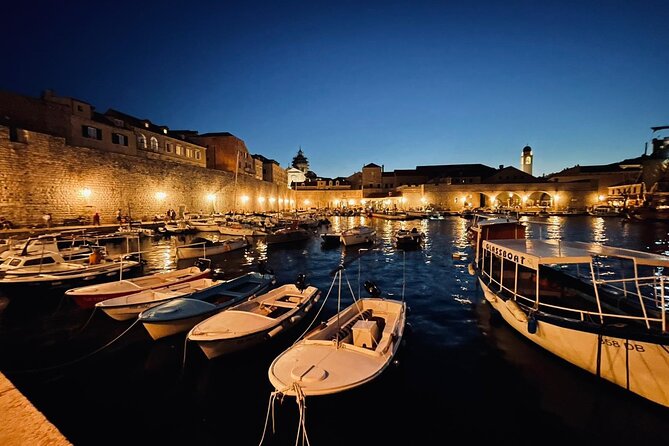
- A classic Old Town loop, but after dark: big sights with less heat and fewer bodies in your photos.
- You get orientation early: Pile Gate and the city map explain how Dubrovnik is laid out.
- History tied to what you see: the Onofrio Fountain and Dubrovnik’s water story come up near the Franciscan area.
- Luza Square to Rector’s Palace to the Cathedral: the “wow buildings” sequence is efficient.
- Side streets at the end: Prijeko Street gives you that labyrinth feel most people miss.
- Small-group feel: maximum 20 travelers, and guides are licensed.
Why this night walk beats a daytime slog in Dubrovnik
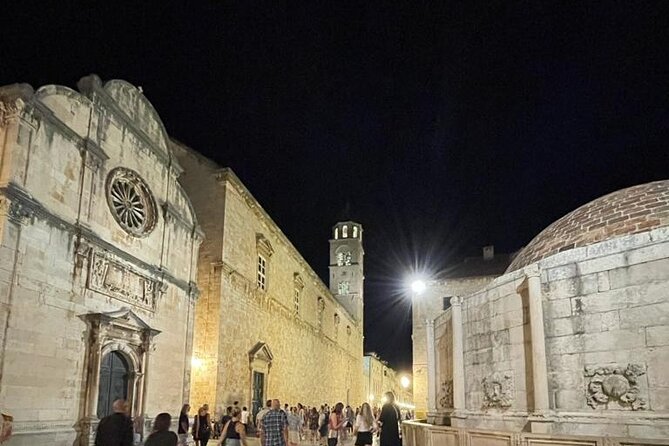
Daytime Dubrovnik can feel like a nonstop parade. The walls, Stradun, and the squares all look amazing—but the crowds and heat can steal your focus. This tour is built around the idea that the city becomes more walkable after dark, when the light softens and the pace changes.
You’ll also notice the difference in how you experience Old Town. In daylight, you zoom from one landmark to the next. At night, you actually slow down—because you’re standing in front of the buildings long enough to hear why they matter.
You can also read our reviews of more walking tours in Dubrovnik
Price and pace: what makes $24.19 feel like good value
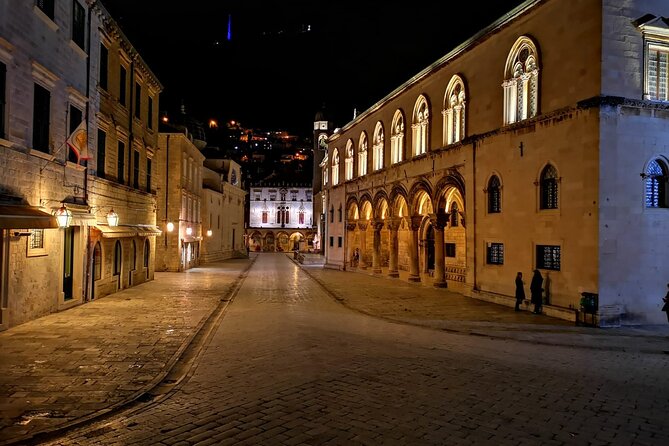
At $24.19 per person for about 1.5 hours, you’re paying for two things: a tight route through the key spots and a guide who connects them into a single storyline. That’s the value. You’re not buying tickets to attractions you might rush through on your own.
Also, most stops are described as ticket-free at the tour level, so you’re not stacking your day with extra entry fees just to hear the explanations. Add in that it’s a walking tour with local taxes and a licensed local guide included, plus a max of 20 people, and the price starts making sense.
What you’re really buying is time. If this is your first night in town (or you want a fast overview without committing to a full-day plan), this format is practical.
Start at Brsalje and find the Amerling Fontana meeting point
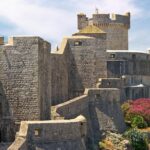
The tour meets near the old city approach, not deep inside a maze of lanes. Your first waypoint is Amerling Fontana at Pile Square, outside the walls area, with your guide waiting by the fountain with a blue umbrella.
This matters more than it sounds. Getting oriented on your first evening makes the rest of your trip easier, because you stop guessing which street leads where. And after dark, the streets look similar unless you have a quick mental map.
Stop 1 to 2: Amerling Fontana and Pile Gate (your city map lesson)
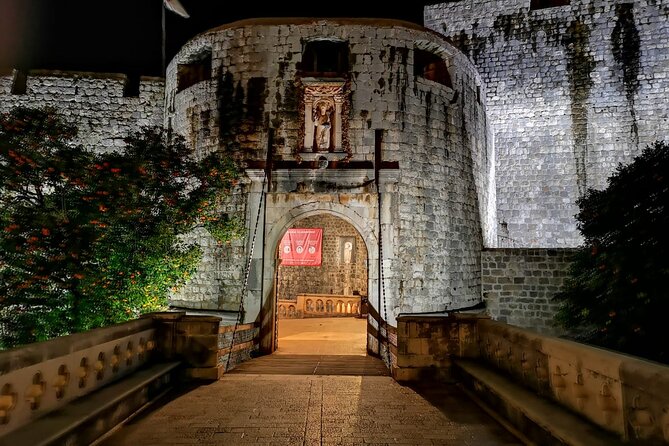
The tour opens at Amerling Fontana for a simple reason: it’s a natural “gateway” point. You’re right at the edge of the old city experience, so the guide can frame what you’re about to see.
Then comes Pile Gate, where you’ll pause at a city map and get an introduction to how Dubrovnik is structured. This is where you learn to read the place. Once you understand the layout, Stradun stops looking like just a famous street and starts looking like a backbone that connects the rest of the old town.
The vibe here is great at night. You’re standing under historic stone with fewer people cutting across your path, and your guide can point and explain without shouting over constant foot traffic.
Stop 3 to 4: Franciscan Church area, Onofrio Fountain, then Stradun
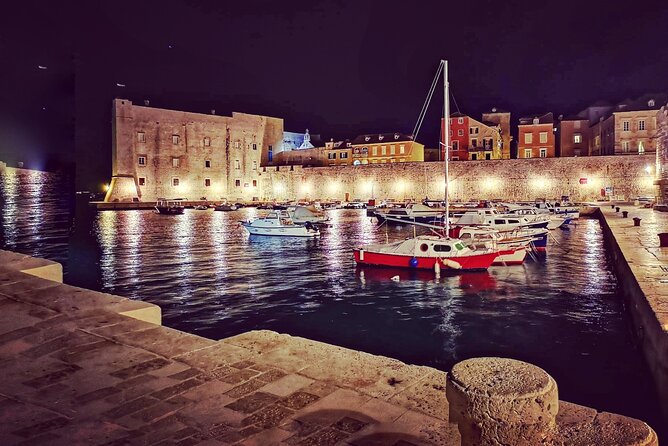
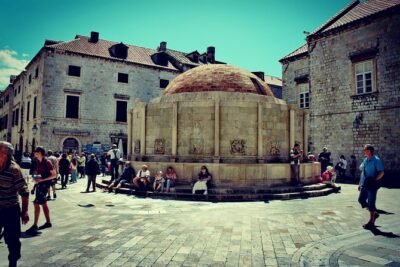
Next, you’ll head toward the Franciscan Church and Monastery area after you reach Stradun. This section is about layers. You’ll hear about the old pharmacy and how the area connects to Dubrovnik’s first water supply story—tying into what you’ll see from Onofrio Fountain.
Even if you’ve seen Onofrio Fountain in photos, hearing how the water system worked gives you a different way to look at it. You start noticing function, not just decoration.
Then you move onto Stradun, the main street. It’s Dubrovnik’s signature promenade—houses up close, a shopping strip vibe, and the classic view lines. At night, Stradun feels less like a rush and more like a walk you can actually enjoy. Your guide’s commentary turns it from scenery into a place with purpose.
You can also read our reviews of more evening experiences in Dubrovnik




Stop 5 to 7: Luza Square, Rector’s Palace, and the Cathedral
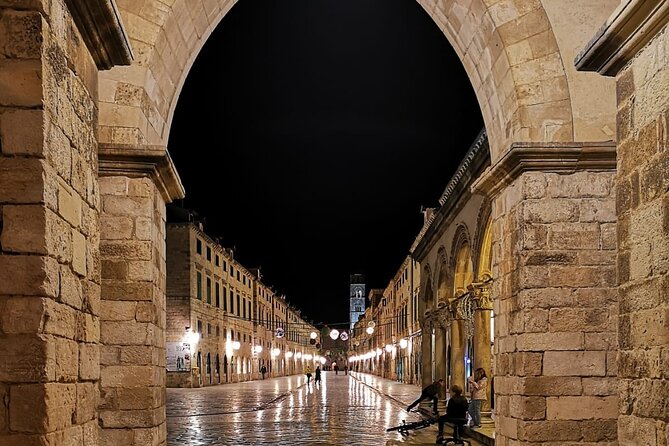
This is the “major sights in a row” stretch, and it’s efficient.
Luza Square: the civic heart
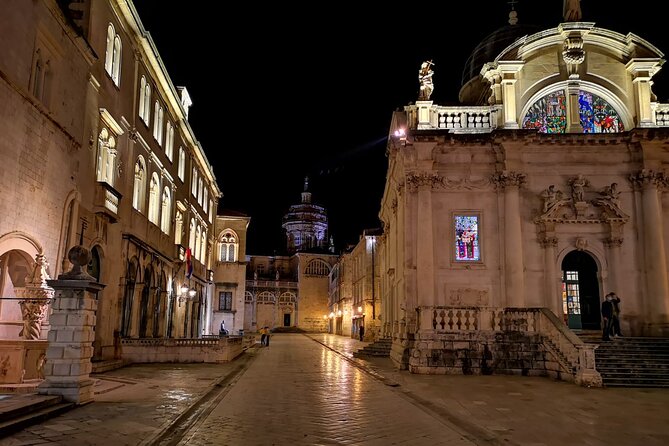
In Luza Square, you’ll get the lay of the land quickly. The patron church sits right in the middle, while the bell tower and Sponza Palace anchor the square’s identity. This is where your mental map finally clicks: you understand how the city organized itself around public space.
Rector’s Palace: the building that holds the city together
Then it’s Rector’s Palace, described as the standout building. You’ll get stories about its structure and history, plus what it’s used for today. This matters because many visitors only see the exterior. A good guide helps you understand why a government-building feels so powerful.
Cathedral of the Assumption: size and treasure
Finally, you’ll reach the Cathedral of the Assumption of the Virgin Mary, the biggest church of Dubrovnik, including mention of its treasury. Again, you may not be touring the inside like you would on a dedicated church visit. But the context helps you recognize the cathedral as more than a photo stop.
Stop 8 to 9: Poet Ivan Gundulic, Jezuits Stairs, then Prijeko Street
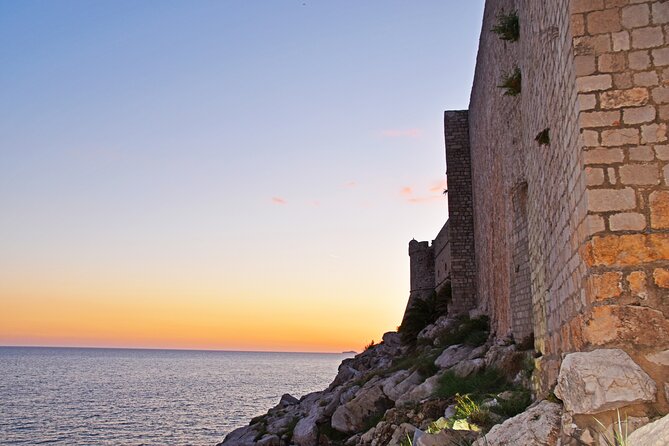
After the big monuments, the tour wisely switches gears into smaller streets.
You’ll see the Monument of Poet Ivan Gundulic, with Jezuits Stairs nearby. This is one of those moments where Dubrovnik stops being “just Old Town” and starts being a place with an intellectual and cultural personality. The guide keeps it tied to the layout so the stairs and viewpoints make sense rather than feeling random.
Then comes Prijeko Street, a maze of narrow side lanes. This is where you start experiencing Dubrovnik like a local walk—smaller streets, less obvious sightlines, and more feeling of everyday life within the fortress walls. It’s also a nice ending because the contrast from the main square makes the final stretch more memorable.
What the guide adds: stories, war context, and small local angles
The biggest strength here is the human part: the guide turns landmarks into a storyline. In particular, several guides associated with this tour get strong marks for pacing, clear English, and the way they weave in personal context.
You might hear names like Petra, Mihaela, Mikhaila, Danielle, Goran, Daniela, and Davor show up in praised performances. The common thread in those comments is delivery: the guide explains clearly while keeping things moving, and they connect what you’re seeing to bigger events.
One theme that comes up repeatedly is honesty about the 1990s war and its impact on the old town. You don’t need to make this heavy to learn from it. In fact, the best guides make it feel grounded—why the city looks the way it does, and how resilience shaped what you can still visit today.
Another helpful bonus: good guides often share practical tips for the rest of your evening—especially dinner ideas. Even when food isn’t the main point of the walk, these suggestions can help you eat like you’re living there for a couple days, not like you’re ticking boxes.
Group size, timing, and comfort tips for a smooth night
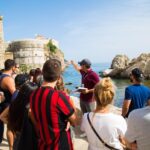
This is a walking tour with a maximum of 20 travelers. In a small group, you can actually listen and not constantly dodge people. It’s also scheduled for good weather, so plan for it like a flexible outdoor activity.
Timing helps too. Night tours are praised for avoiding the intense daytime heat, and one departure time starting around 8pm near sunset was noted as a smart move. If you can choose your slot, go later rather than earlier in summer.
Comfort tips:
- Wear shoes you trust. Old Town surfaces can be uneven.
- Bring a light layer. Even in summer evenings, stone streets can feel cooler than you expect.
- Use your phone wisely. You’ll want photos, but keep enough battery for navigation afterward.
Where this tour fits best in your Dubrovnik itinerary
This tour is best when you want a first-pass orientation. It’s also great if you already did a daytime walk and want a different angle—literally and emotionally.
You’ll benefit most if you:
- Are seeing Old Town for the first time and don’t want to get lost
- Want a guided overview without committing to longer museum-style visits
- Prefer history that’s tied directly to the streets in front of you
- Plan to spend the rest of your trip exploring on your own after dark
It might be less ideal if you want a super deep, academic-style lecture or lots of interior time. The format is a route and a story, not a full “step inside every building” experience.
Who should book this tour (and who can skip it)
Book it if:
- You love walking and want a guided route that covers the main landmarks
- You’re coming in hot (literally) and want to beat the heat with an evening plan
- You want a fast way to understand how Dubrovnik’s layout works
Skip it or consider an alternative if:
- You hate group pacing and want complete freedom to stop as long as you want
- You expect extensive building interiors as part of the standard experience
- You’re very sensitive to audio in crowded settings (rare issues can happen with larger group dynamics)
Should you book Dubrovnik By Night Walking Tour?
I’d book it if you’re trying to make your Dubrovnik days feel easier. For roughly 90 minutes, you get the key sights in a logical loop—Pile Gate to Stradun to Luza Square to Rector’s Palace and the Cathedral—then you finish in the maze-like streets of Prijeko. That combo is the real win.
At this price point, you’re not overpaying for the privilege of walking; you’re paying for guidance that helps you see the city in context. If the weather cooperates and your group stays small, this is one of those trips you’ll remember because it made the rest of Old Town feel solvable.
FAQ
Is Dubrovnik By Night Walking Tour actually outdoors?
Yes. It’s a walking tour through Old Town at night, so you should be ready for an outdoor experience.
How long is the tour?
It runs about 1 hour 30 minutes (approx.).
What’s included in the price?
You get a local experienced licensed tour guide, local taxes, and the walking tour itself. Admission ticket fees are listed as free at the stops on the route.
Is it wheelchair-friendly or does it work for everyone?
You’ll be walking through old streets and stairs, so it requires a normal walking level for most people. The tour indicates that most travelers can participate, but it doesn’t guarantee accessibility details.
What language is the tour offered in?
It’s offered in English.
Where do I meet the guide?
The start is Brsalje ul. 2, 20000, Dubrovnik, and the meeting point is at Amerling Fontana near Pile square. The tour ends at Luza Square (Luža ul., 20000, Dubrovnik).
What if the weather is bad or the minimum group size isn’t met?
The tour requires good weather. If it’s canceled due to poor weather, you’ll be offered a different date or a full refund. If the minimum number of travelers isn’t met, you’ll be offered a different date/experience or a full refund.