REVIEW · DUBROVNIK
Dubrovnik Old Town: Small-Group Walking Tour With A Local
Book on Viator →Operated by Dubrovnik Local Guides · Bookable on Viator
Old Town feels big without a guide. This walk keeps things personal with a small group of up to eight and a locally raised guide telling stories that make Dubrovnik’s landmarks click fast. Two things I really like: the tour focuses on the main sights without dragging, and it uses short stops plus real-life details (including trivia-style moments) so the place sticks in your head. One possible consideration: it’s a walking tour, and a few major stops are marked as ticketed, so you may only view those from the outside.
You’ll spend about 1.5–2 hours getting oriented in the UNESCO Old Town core, starting at Harbour Viewpoint (near Ul. Svetog Dominika) and finishing near Onofrio’s Large Fountain by Pile Gate. The booking includes a mobile ticket, and it runs in English with a professional licensed guide. If you want Dubrovnik’s highlights without getting stuck in a huge group, this is a solid way to start.
In This Review
- Key highlights at a glance
- From Ploče Gate to Pile Gate: a smart walking route
- Small-group comfort: what the eight-person cap changes
- The guided walk: stop-by-stop in Dubrovnik Old Town
- Ploče Gate: start at the eastern entrance
- Dominican Monastery: the oldest active monastery
- City Harbor: maritime trade and shipbuilding
- Cathedral of the Assumption: baroque, layered, and a little legend-friendly
- Church of St. Ignatius of Loyola: Jesuit arrival and a Moon story
- Ivan Gundulić Monument and the market square vibe
- Rector’s Palace: politics made visible
- Marin Držić and the golden-nose tradition
- Sponza Palace: customs house turned archive home
- Bell Tower: what makes this one special
- Church of Saint Blaise: patron saint legend
- Orlando Column: the knight behind the symbol
- Dubrovnik Synagogue: Jewish community history
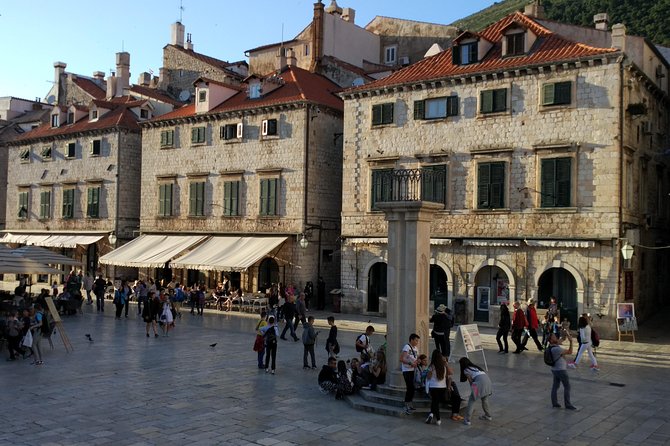
- Stradun: the famous shiny main street
- Church of St. Roch: old graffiti and a playful detail
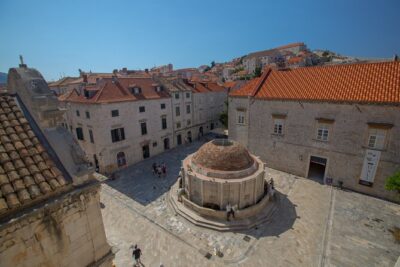
- Onophrian Fountain: terminus of the aqueduct
- Franciscan Church and Monastery: a long-running pharmacy thread
- End near Pile Gate: the fall of the Republic
- How the tour keeps you engaged (so you actually remember it)
- Price and value: what $34.59 buys you
- Weather, comfort, and who should book
- Should you book this Dubrovnik Old Town small-group walk?
- FAQ
- FAQ
- How long is the Dubrovnik Old Town small-group walking tour
- What’s the group size limit
- What language is it offered in
- Where does the tour start and end
- What’s included in the price
- Are entrance fees included for churches or museums
- Do I need good weather for this tour
- Can I cancel after booking
Key highlights at a glance
- Up to 8 people: enough space to hear your guide and ask questions.
- Local guide storytelling: history tied to what daily life in the Old Town feels like.
- From Ploče Gate to Pile Gate: you get a clean “east to west” orientation.
- Mostly outside-view stops: many sights are free to see, with a few marked as ticketed.
- Fun, interactive style: trivia questions and friendly competition keep attention up.
- Covers the essentials fast: cathedral, monasteries, palaces, fountains, and the Jewish quarter story.
From Ploče Gate to Pile Gate: a smart walking route
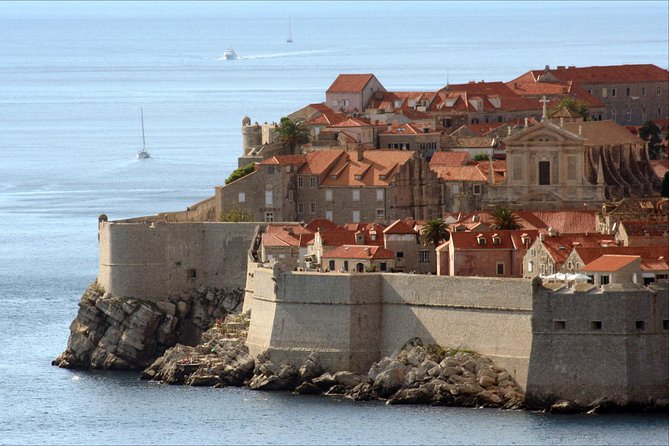
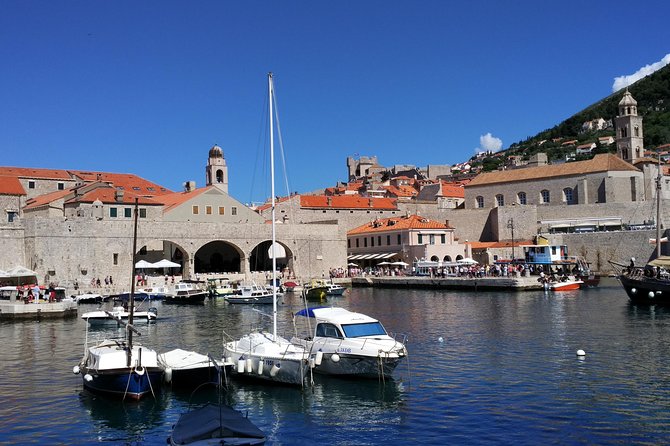
Dubrovnik Old Town is compact, but it can still feel maze-like when you arrive with zero context. This tour’s route is built for orientation: you start at Ploče Gate on the eastern side and finish near Pile Gate on the western side, with Stradun and the major civic spots on the way.
That matters because the Old Town’s layout is the story. You’ll move through the spaces where Dubrovnik’s government, religion, trade, and arts all touched each other. By the time you reach the end near Onofrio’s Large Fountain, you’re not just looking at pretty buildings. You’re also understanding why those buildings ended up exactly where they did.
You can also read our reviews of more walking tours in Dubrovnik
Small-group comfort: what the eight-person cap changes
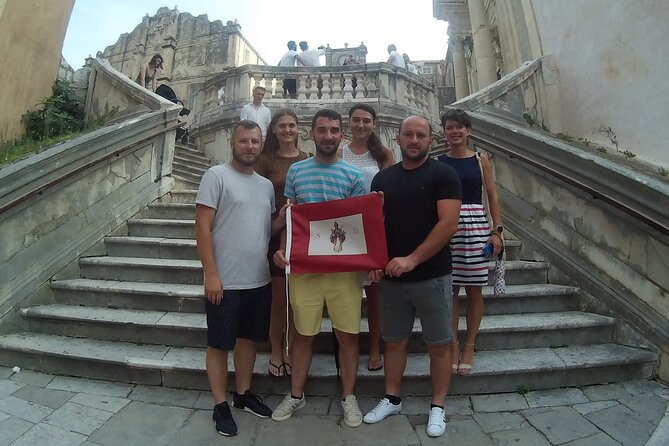
The best thing about capped groups is simple: you stop blending into the crowd. With a maximum of eight, the guide can keep the pacing human and still point out details you’d normally miss—carvings, symbols, and small architectural cues.
The guide style you’ll encounter is also a big part of the value. Names that come up often include Marko, Markus, Marco, and Lucy/Lucia, and the common thread is engagement. Expect questions, short challenges, and a habit of turning dry facts into memorable moments—like spotting specific Saint Blaise details or noticing small architectural clues while you walk.
One more practical note: the tour includes professional licensed guiding, which is useful in Dubrovnik because the Old Town looks uniform at first glance. A trained local guide helps you sort what’s important, what’s decorative, and what has a real backstory.
The guided walk: stop-by-stop in Dubrovnik Old Town
Here’s what you can expect as you move through the key stops, plus what to watch for. Plan for a steady walking pace over cobblestones and Old Town streets, with short breaks built into the route.
Ploče Gate: start at the eastern entrance
You begin at Ploče Gate, the eastern doorway into the Old Town. Your guide sets the stage with a short intro to Dubrovnik’s beginnings and why the city’s gates mattered beyond just entry and exit. This is a good first stop because it gives you a mental map right away.
If you’re arriving the same day you toured the walls or beaches, this is also the point where the Old Town stops feeling like scenery and starts feeling like a living system.
Dominican Monastery: the oldest active monastery
You’ll take a quick look at the Dominican Monastery, described as the oldest still active monastery in Dubrovnik. Even if you don’t go inside, monasteries like this are powerful anchors: they explain how religious life shaped the city’s routines, education, and public presence.
This stop is marked as ticketed (not included), so plan to enjoy what’s visible from where you stand. If you want to go deeper, you can always add a separate visit later.


City Harbor: maritime trade and shipbuilding
Next comes the City Harbor area—once the center of trade in the old Dubrovnik Republic. This is where your guide can connect Dubrovnik’s wealth and politics to the sea, including stories about wooden galleons being built there.
Look for the way the harbor area sets up the rest of your tour: Dubrovnik’s power didn’t come only from land control. It came from maritime connections, commerce, and the constant need to manage risk.
Cathedral of the Assumption: baroque, layered, and a little legend-friendly
You’ll pause at the Cathedral of the Assumption of the Virgin Mary. The tour frames it with a fun question—one cathedral or maybe three—then walks through the baroque architecture and the stories that surround it, including legends.
This is another stop labeled as ticketed (not included). So if you’re not entering, focus on architectural details and your guide’s explanations for what you’re seeing from outside.
Church of St. Ignatius of Loyola: Jesuit arrival and a Moon story
The Church of St. Ignatius of Loyola is the Jesuit church stop. Your guide will explain when the order came to Dubrovnik and why, and you’ll also hear a standout trivia detail: the Moon has a crater named after a famous Jesuit connected to Dubrovnik.
Even when you’re not an art-history person, these small “why this matters” notes help you remember the city’s intellectual and religious shifts over time. It also shows how international Dubrovnik felt, even when it was fiercely local in politics.
Ivan Gundulić Monument and the market square vibe
You’ll meet the Monument of poet Ivan Gundulić, then roam the market square area. This is a breather stop that still carries meaning: a city’s poets and civic figures tell you what people celebrated and argued about.
Watch how your guide ties literary culture to everyday public life. It’s one thing to read about authors. It’s another to see where their names live in the middle of daily crowds.
Rector’s Palace: politics made visible
Rector’s Palace is the stop that shifts your attention from churches and culture to government. The palace is described as the supreme political institution in the old Dubrovnik Republic, and the guide shares stories about aristocratic rule, political wisdom, and some stranger, curious details.
This stop is ticketed (not included). But even from outside, it helps you understand what kind of city Dubrovnik was: a place that ran like a careful system, not just a collection of monuments.
Marin Držić and the golden-nose tradition
Statue of Marin Držić is next—the Renaissance playwright often called the guy with the golden nose. You’ll hear why the nose is touched and what the symbol says about public memory.
This is the kind of moment that makes photos better later. When you know the story behind a tradition, you stop treating it like a tourist ritual and start treating it like a local habit.
Sponza Palace: customs house turned archive home
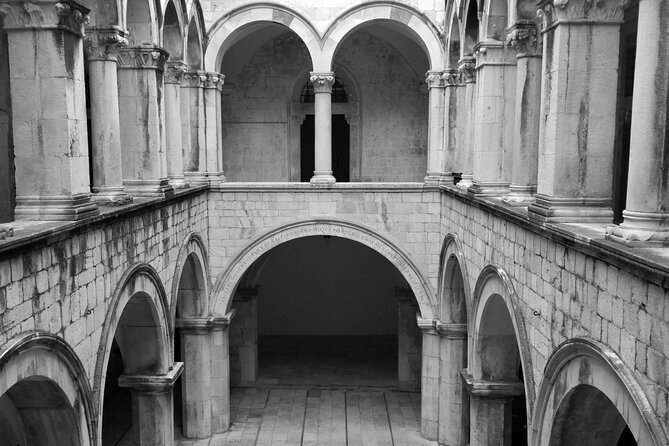
At Sponza Palace, you’ll learn it was once the customs house of the Dubrovnik Republic, and today it’s tied to historical archives. Your guide also shares Latin proverbs tied to the place, which is a nice touch because it shows how Dubrovnik’s identity was written into official spaces.
Sponza is marked as ticketed (not included). Still, the exterior viewpoint is useful, especially if you’ve ever wondered how a city stores its records—this explains the “paper trail” side of power.
Bell Tower: what makes this one special
You’ll stop by the Bell Tower, with your guide hinting that it has a couple of special features. This isn’t just a pass-by moment. It’s where the guide points out how local religious and civic timing worked—how the city marked daily rhythm.
Church of Saint Blaise: patron saint legend
Saint Blaise is one of Dubrovnik’s biggest names, and this stop is all about the patron saint and the legend (and the true story) behind the iconography. You’ll also get pointers for how Saint Blaise shows up around town, including carvings and statues.
This is where the tour’s interactive style really helps. If your guide asks you to spot Blaise details, you’re training your eyes to see what most first-timers miss.
Orlando Column: the knight behind the symbol
The Orlando Column is the stop dedicated to the knight Orlando and how he became a symbol of the old Dubrovnik Republic. These civic symbols matter because they show how a city promoted values—bravery, identity, and legitimacy—through statues and public monuments.
Again, it’s not just a picture point. It’s a “why this symbol exists” stop.
Dubrovnik Synagogue: Jewish community history
Next is Dubrovnik Synagogue, focused on the history of the Jewish community—from early days, through hardship, and into the present. This is a meaningful pause in the route because it broadens Dubrovnik’s story beyond the dominant Christian landmarks.
This stop is ticketed (not included), so plan to get the context from the outside. Even that context changes how you interpret the surrounding Old Town streets.
Stradun: the famous shiny main street
Stradun is the main street of the Old Town, described as shiny and central. Walking here with a guide is useful because you’re not just passing through—you’re learning what you’re looking at along the way.
If you’re hungry, this is a good mental landmark. You’ll know exactly where you can duck out later for coffee or a snack without getting lost.
Church of St. Roch: old graffiti and a playful detail
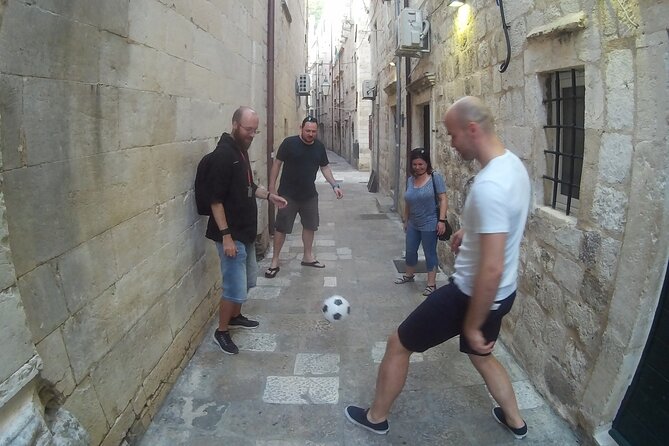
You’ll visit the Church of St. Roch, tucked away from Stradun. The tour includes a charming historical detail: kids in the 16th century used to play football in front of the church, and there are very old graffiti marks on the side wall.
This is one of those stops that makes the Old Town feel human. It’s not only about big institutions; it’s also about daily life and little spaces people claimed.
Onophrian Fountain: terminus of the aqueduct
Onophrian Fountain is built in the 15th century and described as the terminus of the old aqueduct. That’s the kind of engineering detail that’s easy to overlook when you only look at the stonework.
Here’s what I like about this moment: it connects luxury landmarks to basic survival needs. Water systems helped cities function, and that’s part of Dubrovnik’s story too.
Franciscan Church and Monastery: a long-running pharmacy thread
You’ll end your monument sequence with the Franciscan Church and Monastery. The tour highlights the church and its pharmacy connection, described as the third oldest pharmacy by continuity of work in Europe, and it notes the Franciscans’ role in Dubrovnik society.
This stop is ticketed (not included), so you’ll mainly take in the setting and the guide’s explanation from where you’re standing. Still, it gives you a “how knowledge and care lived in the city” lens.
End near Pile Gate: the fall of the Republic
The tour ends near Pile Gate, with the guide explaining the end of the Dubrovnik Republic so the earlier political stops feel more complete. This is a smart wrap-up: you leave with a timeline, not only a list of highlights.
When you understand that the Republic ended, the statues and palaces stop feeling frozen. They become evidence of a system that existed for a reason—and ended for reasons you now know.
How the tour keeps you engaged (so you actually remember it)
This tour doesn’t rely on long lectures. The guide format is designed to keep you looking up while still walking steadily.
In particular, the interactive style comes through in multiple guide mentions: trivia questions, friendly competition, and tasks like spotting Saint Blaise carvings and statues as you go. That’s not just fun. It’s a memory trick. You’re not passively collecting facts; you’re actively searching for them.
Also, pace gets praised as not rushed. That matters in Dubrovnik, where the Old Town can feel like an endurance test if you’re packed into a tight group. Here, the short stops make it easier to keep your bearings.
Price and value: what $34.59 buys you
At $34.59 per person, this isn’t a bargain tour, but it’s also not priced like an exclusive private experience. The value comes from three concrete things you get in the price:
- A professional licensed guide who can explain what you’re seeing and how it fits together.
- A small group cap of eight, which keeps the experience personal.
- Mostly free viewing stops, so you aren’t paying entrance fees for most of what you see.
Some stops are marked ticketed (not included), and the tour also indicates it doesn’t visit churches or museums that require entrance fees. So the tour is mainly for context and orientation, not for inside-the-museum time. If you want interior access, you’ll likely add that separately.
Given that it’s often booked about 50 days in advance, it’s also a safe bet to plan early during high season. Demand here tends to be real.
Weather, comfort, and who should book
This tour requires good weather. If skies are bad, it may be rescheduled or refunded depending on the provider’s approach, so build in flexibility.
As for who it suits: I think it’s ideal for first-timers who want a clear Old Town overview, couples who like conversation without being stuck in a crowd, and families who would rather do a short, engaging walk than a long museum slog. One more plus: service animals are allowed, and the tour notes that most travelers can participate.
If you’re dealing with mobility limits, a smaller group can help because it’s easier to adjust pace. Still, it’s a walking route, so you’ll want to be honest about your own comfort on uneven streets.
Should you book this Dubrovnik Old Town small-group walk?

I’d book it if you want your time in Dubrovnik’s Old Town to feel structured and memorable without paying for a stack of separate attractions. The strongest reason is the combination of small-group size and story-driven guiding—the route helps you understand the city, not just photograph it.
Skip it (or plan differently) if you specifically want lots of inside museum time, because ticketed stops aren’t included and the tour avoids attractions that require paid entry. In that case, pair this walk with a couple of targeted separate visits.
For most people landing in Dubrovnik with limited time, this is a smart, high-value starting move. You’ll leave with the city’s landmarks organized in your mind, which makes everything you do afterward feel easier.
FAQ
FAQ
How long is the Dubrovnik Old Town small-group walking tour
It runs about 1 hour 30 minutes to 2 hours.
What’s the group size limit
The tour has a maximum of 8 travelers.
What language is it offered in
It’s offered in English.
Where does the tour start and end
It starts at Harbour Viewpoint on Ul. Svetog Dominika bb, and it ends near Onofrio’s Large Fountain by Pile Gate.
What’s included in the price
The price includes a professional licensed tour guide, and you’ll receive a mobile ticket.
Are entrance fees included for churches or museums
No. The tour does not visit churches or museums that require entrance fees. Some listed stops are marked as not included, so plan on viewing those without paid entry.
Do I need good weather for this tour
Yes. The experience requires good weather, and you’ll be offered a different date or a full refund if it’s canceled due to poor weather.
Can I cancel after booking
Free cancellation is available up to 24 hours in advance for a full refund. If you cancel less than 24 hours before the start time, the amount paid won’t be refunded.