REVIEW · DUBROVNIK
Dubrovnik Old Town Walking Tour
Book on Viator →Operated by Elite Travel Ltd · Bookable on Viator
Dubrovnik clicks into focus on a short walk. This guided Old Town route strings together the big landmarks and the small details that make Stari Grad feel real, from Pile Gate to Dubrovnik Cathedral. It’s an easy morning plan that sets you up to explore the rest of the city with way more sense of what you’re looking at.
I especially like the way the guide connects sights to stories, from the aqueduct-fed Onofrio’s Fountain to the political power you can still read in the stone around Rector’s Palace. I also love the stops that reward close watching, like Orlando Column, with its Arabic and Latin numerals that change only every five minutes.
One possible drawback: the tour is outdoors and around busy streets, so if you end up farther back, you may miss some details—one or two people noted hearing issues. It’s also not a “sit and coast” activity, so comfortable walking shoes matter.
In This Review
- Key highlights
- Pile Gate to Onofrio’s Fountain: the water that built the city
- Franciscan Monastery and Church: Gothic cloisters and an ancient pharmacy
- Stradun stroll to Sponza Palace: the main street and the state’s paperwork
- Orlando Column, Rector’s Palace, and St Blaise: government and identity in one square
- Cathedral of the Assumption: Baroque after the earthquake
- The 90-minute pacing: morning timing and a small group feel
- Guides who turn stones into stories (and what you should listen for)
- Price and value: why $31.46 can be a smart first-day move
- Who should book this Dubrovnik Old Town walking tour?
- Should you book this Dubrovnik Old Town walk?
- FAQ
- Where does the Dubrovnik Old Town Walking Tour start?
- What time does the tour begin?
- How long is the tour?
- What language is the tour offered in?
- What does the tour cost?
- Is the group limited in size?
- What’s included in the price?
- What’s not included?
- Does the tour run in all weather?
- Can I cancel for a full refund?
Key highlights

- Pile Gate start gives you the western entrance perspective into Stari Grad
- Onofrio’s Fountain links the city to a spring about 7.5 miles (12 km) away
- Franciscan Monastery takes you into a 14th-century Gothic cloister and an old pharmacy tradition
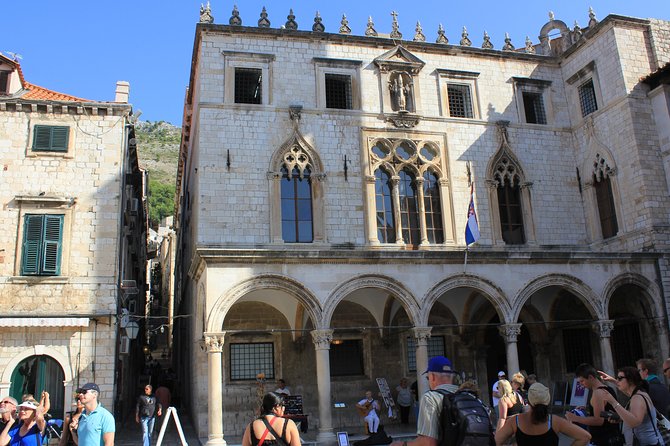
- Sponza Palace (State Archives) turns a beautiful Renaissance building into a lesson on governance
- Orlando Column shows time in both Arabic and Latin numerals, ticking over every five minutes
- Cathedral of the Assumption is a Baroque rebuild after an earthquake destroyed the original
Pile Gate to Onofrio’s Fountain: the water that built the city
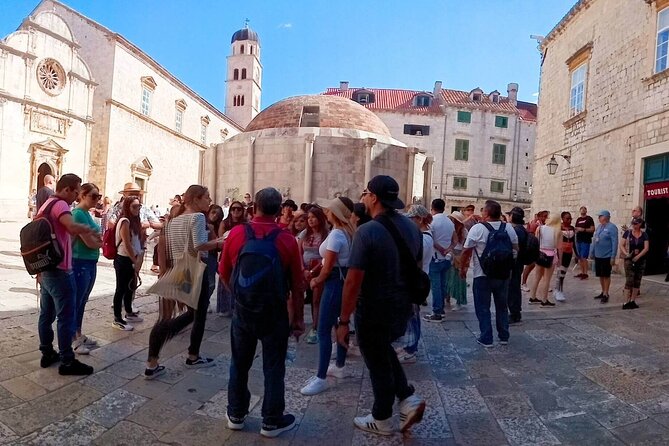
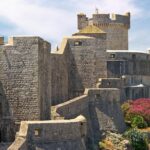
The tour begins at Pile Gate, one of three main entrances into the walled Old Town. Starting here matters because it frames Dubrovnik as something designed for control and defense, not just decoration. Once you’re through, the narrow streets start to feel less like a maze and more like a functioning layout that helped the city run.
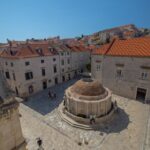
Very quickly, you reach Onofrio’s Fountain, the circular drinking fountain tied to an aqueduct bringing water from a spring roughly 7.5 miles (12 km) away. This stop is more than a photo-op. It’s a reminder that Dubrovnik’s survival wasn’t only military; it was also practical. Having clean water inside city walls is the kind of detail that changes how you read everything else you see.
The fountain’s multi-spout design also makes a great “reset” moment. It gives you a landmark to orient around before the guide moves you deeper into the Old Town’s story chain—monasteries, palaces, government buildings, and the big religious center ahead.
You can also read our reviews of more walking tours in Dubrovnik

Franciscan Monastery and Church: Gothic cloisters and an ancient pharmacy

From the gate area, the walk shifts into a quieter, more reflective part of the Old Town: the Franciscan Monastery and Franciscan Church. Here, you’re not just looking at old walls—you’re stepping into a space that has kept working over time. The monastery is home to one of the oldest still-functioning pharmacies in Europe, which makes this stop feel surprisingly modern in purpose.
A highlight is the 14th-century Gothic cloister, where you can slow down and actually see the geometry of the architecture. You’ll also hear about art inside the monastery spaces, including a restored sculpture of the Pietà. That combination—function, age, and art—helps the guide’s commentary land. Without a guide, it’s easy to treat this kind of building as simply scenic. With the explanation, it becomes evidence of how Dubrovnik’s religious and civic life overlapped.
There’s also a practical upside to this stop. The cloister area often feels like a short pause from the busiest streets, so it can be a relief if you’re trying to keep your energy for the cathedral square later.
Stradun stroll to Sponza Palace: the main street and the state’s paperwork
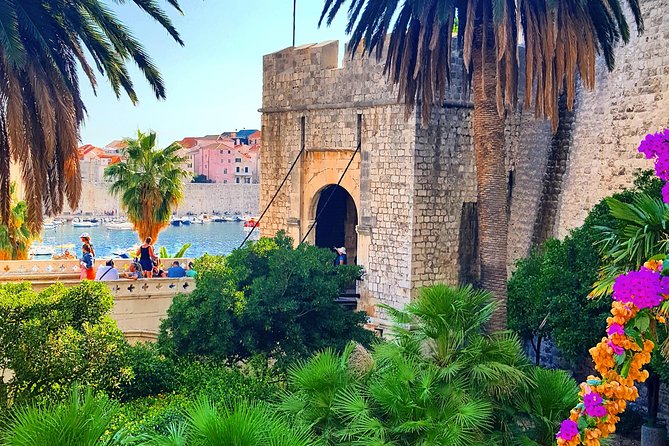
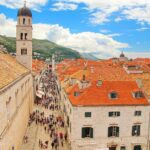
Next comes the Stradun, Dubrovnik’s main pedestrian street, paved in limestone. It’s one of those streets that instantly tells you the city was built for people to move through it—merchants, officials, visitors, and daily life. The guide’s job here is to help you read what you’d otherwise skate past, like why the street feels so central and how the surrounding buildings relate to power.
As you continue, the route includes Sponza Palace, a Renaissance highlight that now houses the State Archives. Seeing an archives building in a historic city square is a strong reminder: Dubrovnik cared about records. Paperwork, governance, trade documentation—these are not exciting on a postcard. But on a guided walk, Sponza connects the dots between architecture and administration.
This is also a good section for question time. The guide can point out architectural features and explain how the city rebuilt and reorganized after major damage—so when you later reach the cathedral, the story feels less random and more logical.
If you’re the type who likes “why does this look like that?” thinking, this is one of the best parts of the tour. You’re walking the spine of the Old Town while learning what that spine was for.
Orlando Column, Rector’s Palace, and St Blaise: government and identity in one square
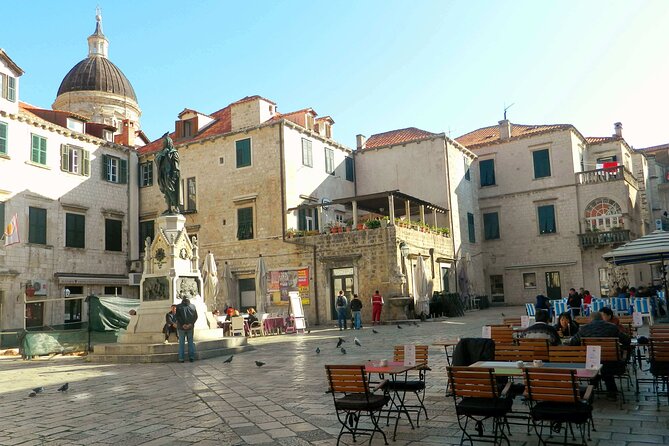
Around the square areas, the tour leans into identity and rule. You’ll see Orlando Column, Dubrovnik’s clock tower. What makes it memorable is the detail: it displays time in both Arabic and Latin numerals, and the time only changes every five minutes. It sounds like a trivia nugget, but it helps you slow down and actually notice how Dubrovnik’s culture absorbed outside influences over time.
The walk continues past the Rector’s Palace and the Bell Tower/City Bell Tower area. Together, these stops help you understand how the city’s leaders occupied space right in the public heart of Old Town, not hidden away. It’s a reminder that Dubrovnik’s governance was designed to be seen.
Then there’s the Church of St. Blaise, the patron saint of Dubrovnik. This stop brings the story back to religion and civic identity. St. Blaise isn’t just a saint statue you stroll by; the guide frames the church as part of what helped residents define themselves across generations.
One thing I like about this mid-to-late section is pacing. It gives you variety—clock tower quirks, governmental buildings, and then the patron saint—so the tour doesn’t feel like a single long history lecture.
Cathedral of the Assumption: Baroque after the earthquake

The tour’s big finish is at the Cathedral of the Assumption, a Baroque sanctuary. The key fact to listen for here is the rebuild story: the current cathedral was built in the 18th century after an earthquake destroyed the original. That matters because it explains why Baroque details dominate what you see today.
You’ll also come across the cathedral area including the Cathedral Treasury (part of the cathedral complex on the route). Even if you don’t go deep into every interior space, it helps to know that this isn’t only a church stop. It’s also part of the city’s cultural memory—what survived, what was replaced, and how Dubrovnik kept expressing itself after catastrophe.
This is a great moment to let the guide’s timeline settle in your brain. When you connect the archways, palaces, and public clocks to the cathedral’s rebuild, Dubrovnik feels less like a set of separate monuments and more like one continuous story interrupted by real events and then carried forward.





The 90-minute pacing: morning timing and a small group feel
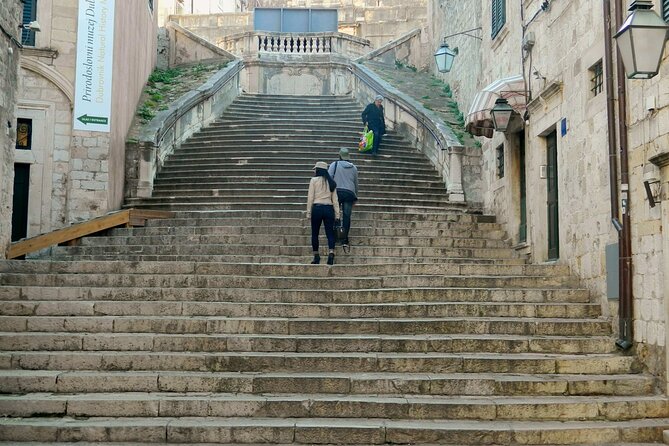
This walk is listed at about 1 hour 30 minutes (often described around two hours on the route description), and it moves at a comfortable “see a lot without sprinting” tempo. It’s short enough that you won’t feel stuck, but long enough to get context for what you’re looking at.
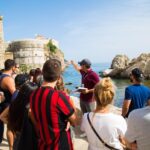
A big value point: the group size is capped at 16 people. That makes a difference with a walking tour. You’re close enough for the guide to keep an eye on the group, and you’re not lost in a sea of strangers during key stops.
The start time is 10:30 am, which is usually a win for day planning. You get your bearings early, then you still have the rest of the day free for the parts you personally want to linger on—whether that’s streets you noticed during the walk or the sites you want to revisit without the group moving you along.
Also note the tour requires good weather. That’s not a dramatic detail; it’s practical. If weather turns, you’ll be offered another date or a full refund, so check forecasts and dress for outdoor walking.
Guides who turn stones into stories (and what you should listen for)
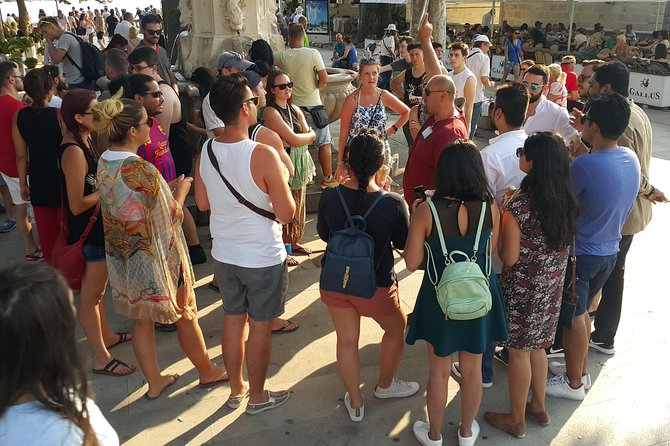
What repeatedly shows up in guide feedback is how well the commentary sticks to the details. You might hear strong guidance from names like Elvis, Toni, Kat, Sara, Natalia, or Tihomir—all of whom appear in recent experiences. The pattern is the same: stories plus architecture, with local context that makes Dubrovnik feel lived-in rather than staged.
In particular, listen for the way the guide handles transitions between themes:
- water and engineering at Onofrio’s Fountain
- religious life and the pharmacy tradition in the Franciscan spaces
- civic power around Sponza and Rector’s Palace
- time, identity, and civic symbols at Orlando Column and St. Blaise
- and then the earthquake-and-rebuild narrative at the cathedral
If you want the tour to work for you, plan to stand where you can hear clearly. One short negative comment in the feedback mentions hearing difficulty, so arriving early and staying near the front helps.
Another small practical note: one person expressed disappointment when tips weren’t left. It’s a gentle reminder that tipping guide effort is part of the social contract in many places, especially when the guide is actively shaping your experience.
Price and value: why $31.46 can be a smart first-day move
At $31.46 per person, this doesn’t feel like a “pay for a ticket, then fend for yourself” kind of deal. You’re paying for a local guide who gives structure to a site that’s otherwise easy to wander through randomly—especially in Old Town, where the streets are tight and the landmarks can blur together.
The tour also works as a value multiplier for the rest of your trip. Once you understand why Pile Gate matters, what Sponza Palace represents, and why the cathedral looks the way it does, you tend to get more out of self-guided time. This is the kind of tour that makes future visits cheaper in energy, because you’re no longer guessing what you’re seeing.
It’s also worth noting that local guide is included. Entry isn’t described as a separate add-on for this walking portion, and the route’s main stops are listed with admission ticket free notes for key parts of the experience. Still, if you’re the kind of person who plans around specific museum hours, double-check any extra paid interiors you care about.
Finally, the fact that it’s commonly booked about 21 days in advance is a quiet signal of demand. If you have set dates, booking earlier is a safe habit.
Who should book this Dubrovnik Old Town walking tour?
This tour fits best if you want:
- an overview of Old Town without doing the wall circuit
- an early-day plan that helps you choose what to revisit later
- a guide-led explanation of the city’s major symbols: fountain, monastery, palace, clock tower, and cathedral
- a manageable walking time that still feels like you saw “the important stuff”
It’s also a good match for people who don’t want to spend the day climbing and re-climbing. Some feedback specifically praises the idea of skipping a bigger stair-heavy option and focusing on a gentler route for understanding the city.
If you prefer museum-heavy afternoons, you may still want to do this walk first. It gives you a frame, so later when you step into collections or treasury rooms, the context is already in your head.
Should you book this Dubrovnik Old Town walk?
Yes—if you want a practical first-day orientation and you like your history with street-level details. Starting at Pile Gate, hitting Onofrio’s Fountain, and ending at the Cathedral of the Assumption gives you a logical arc: entry, water, faith, civic power, and rebuild.
Book it especially if you value a small group experience and plan to explore on your own right after. If you’re worried about hearing or want every word, arrive a bit early and position yourself where you can listen comfortably.
In short: for the price, this is one of the cleanest ways to get your bearings fast in Dubrovnik’s Old Town.
FAQ
Where does the Dubrovnik Old Town Walking Tour start?
The tour starts at Elite Travel Walking Tours, Brsalje ul. 1, 20000, Dubrovnik, Croatia.
What time does the tour begin?
The start time listed is 10:30 am.
How long is the tour?
It’s listed at about 1 hour 30 minutes, with the walking description also referencing around two hours.
What language is the tour offered in?
The tour is offered in English.
What does the tour cost?
The price is $31.46 per person.
Is the group limited in size?
Yes. The tour has a maximum group size of 16 travelers.
What’s included in the price?
The tour includes a local guide.
What’s not included?
Hotel pickup and drop off are not included, and food and drinks are not included unless specified.
Does the tour run in all weather?
It requires good weather. If it’s canceled due to poor weather, you’ll be offered a different date or a full refund.
Can I cancel for a full refund?
Yes. You can cancel up to 24 hours in advance for a full refund.