REVIEW · DUBROVNIK
Dubrovnik’s History with a Local: the Homeland War Stories Private Tour
Book on Viator →Operated by Withlocals · Bookable on Viator
Old stones can whisper hard truths. This private tour turns Dubrovnik Old Town into a living map of the Homeland War, with a local guide who makes the early 1990s siege feel immediate. You’ll move through Revelin Fortress and the streets inside the walls, not just for photos, but for context.
I especially liked the chance to hear first-hand storytelling from people such as Vesna, who lived in Old Town during the 1991 siege. I also like how the tour stops include both dramatic places and quiet ones, like the Memorial Room of the Defenders of Dubrovnik, where photographs put names and dates behind the walls you see today.
One consideration: this is a war-themed walk. If you want only light, scenic sightseeing, the tone can feel heavy, especially when you’re asked to picture impacts and damage that still show in the stonework.
In This Review
- Key things you’ll notice on this Homeland War tour
- What this tour is really about: the Homeland War in everyday streets
- Where you start and how the 2 hours flow inside the walls
- Revelin Fortress: the first attack you’ll picture
- Ploče Gate and the UNESCO Old Town: war inside the walls
- Luza Square: imagining the scale of grenades
- Memorial Room of the Defenders of Dubrovnik: photographs that stick
- Rector’s Palace: daily life, not just battle scenes
- Church of the Holy Annunciation: repairs and wartime connections
- Church of St. Salvation: scars you can still see
- Ending at Pile Gate with Fort Imperial in view
- Price and value: $83 for a private, 2-hour war story in the Old Town
- Who should book this tour, and who might want a lighter option
- How to get the most from your guide’s stories in 2 hours
- Should you book Dubrovnik’s History with a Local: Homeland War Stories Private Tour?
- FAQ
- How long is the Homeland War Stories private tour?
- Is this tour private or shared?
- Where does the tour start and end?
- What sites are included during the walk?
- Does the tour include admission tickets for the stops?
- What’s included in the price?
- What’s not included?
- Is the tour suitable if I have limited mobility?
- Is there free cancellation?
- How do I receive my ticket?
Key things you’ll notice on this Homeland War tour
- First-hand guide stories from locals like Vesna, who experienced the 1991 siege in Dubrovnik
- Fortress-to-church route that connects the big attack story to everyday life and places of worship
- Memorial Room photos that give faces and moments to the history you see around you
- Built-in “impact” stops like Luza Square, framed around the scale of attacks (over 5,000 grenades)
- Repair vs. damage moments, where you can see what was fixed and what still remains visible
What this tour is really about: the Homeland War in everyday streets
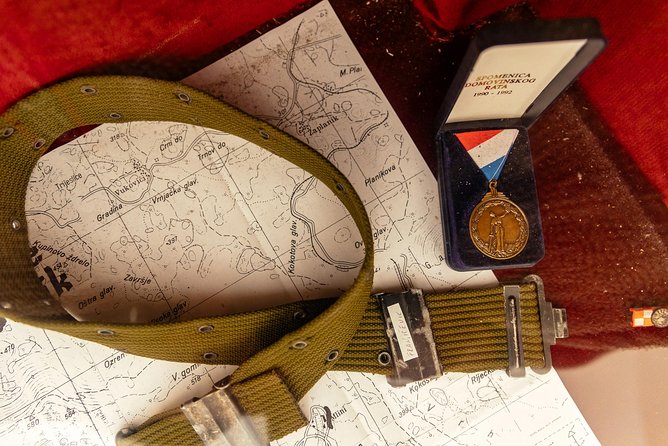
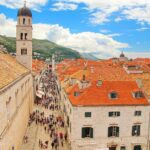
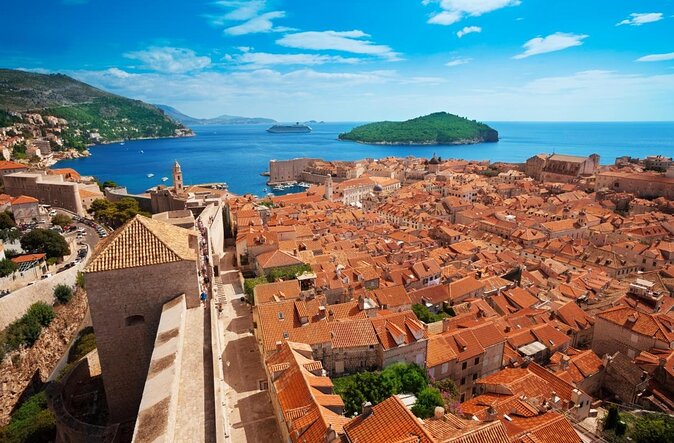
Dubrovnik looks perfect from far away. Up close, it’s not just pretty stone and views. This tour teaches you how the Croatian War of Independence, often called the Homeland War, shaped the city’s future and how the memory of the 1991 siege still sits in the Old Town.
What makes this work for your trip is the way the guide ties history to specific locations. Instead of one long lecture, you get a sequence: a fort, a gate, a square, a memorial room, then churches and palaces. Each stop gives you a different angle on the same time period.
You’re also not dealing with abstract dates. The story is about the breakdown of what had been Yugoslavia, the Croatian War of Independence, and the siege that hit Dubrovnik. That’s why the route includes both “defense” sites (like fortresses and walls) and “life” sites (palaces, churches, daily routines).
You can also read our reviews of more private tours in Dubrovnik


Where you start and how the 2 hours flow inside the walls
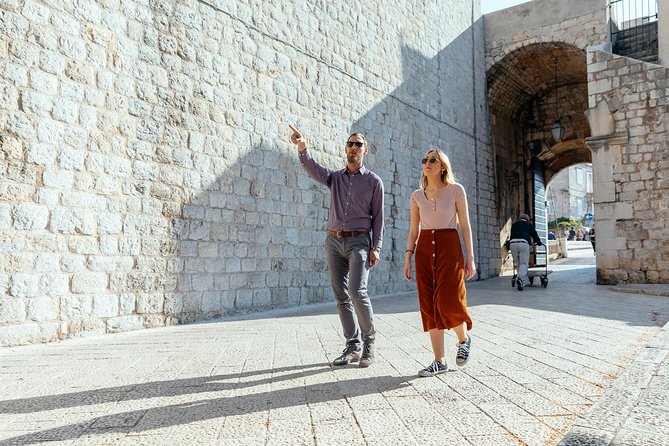
The tour starts at Ulica Vrata od Ploča, near the Old Town approach, and ends at Pile Gate. That matters because you’re not bouncing around the city. You’re staying inside a tight area where everything is walkable and photogenic.
It’s also a true private experience. Only your group participates, which means you can ask questions without feeling rushed. The pace is set for about 2 hours total, and each stop is short. That’s good if you’re on a cruise schedule or you only have a morning/afternoon to fit in a deeper experience.
Comfort-wise, plan for moderate physical fitness. Dubrovnik’s Old Town is made of stone streets, and you’ll be moving through gates and between key points. If your feet don’t love stairs or uneven pavement, consider bringing shoes you trust.
One small but useful detail: the tour uses a mobile ticket. That can save you time and hassle on a tight sightseeing day.
Revelin Fortress: the first attack you’ll picture
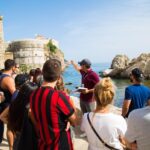
You begin with Revelin Fortress, framed around the moment Dubrovnik got attacked for the first time. This opening stop is a smart choice because it sets the tone fast. You go from the “before” mindset to the “how did the siege begin” mindset.
Fortress sites also help you understand geography. From a defensive position, it’s easier to imagine sightlines, approach routes, and why certain areas mattered. Even if you’re not a military history person, you’ll leave with a more grounded sense of how the city was targeted and defended.
In the tour plan, Revelin Fortress is marked as having admission ticket free. Translation: you can focus on the explanation and the building itself without needing to plan extra ticket steps for that stop.
Ploče Gate and the UNESCO Old Town: war inside the walls
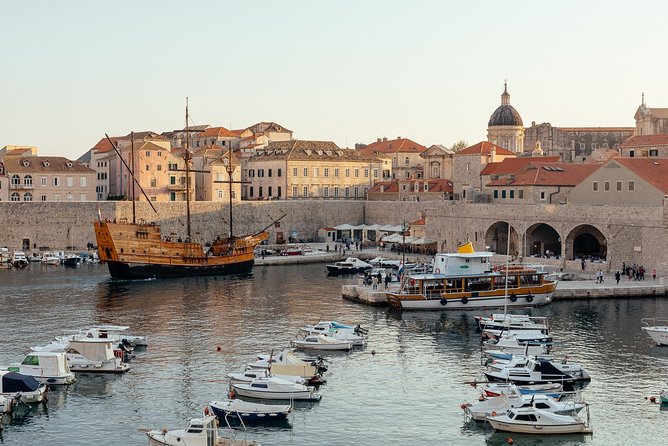
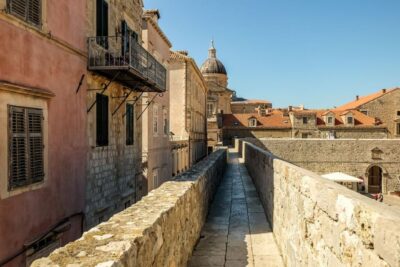
Next you head through Ploče Gate into Dubrovnik’s UNESCO-listed Old Town. Gate-to-gate travel is more than a scenic entry. Gates are political and defensive boundaries, and this tour uses that idea as you move deeper into the historic core.
As you stroll through the Old Town, you’ll connect what you see—historic buildings, streets, and walls—to what happened during the siege. The guide’s job here is to help you read the architecture with new eyes: not just as “pretty medieval,” but as structures affected by the Homeland War.
This part is also where photography can become meaningful. You’re not taking pictures just because they look classic. You’re taking pictures because the guide is pointing out where war left its mark, and because certain damage is part of Dubrovnik’s current identity.
Luza Square: imagining the scale of grenades
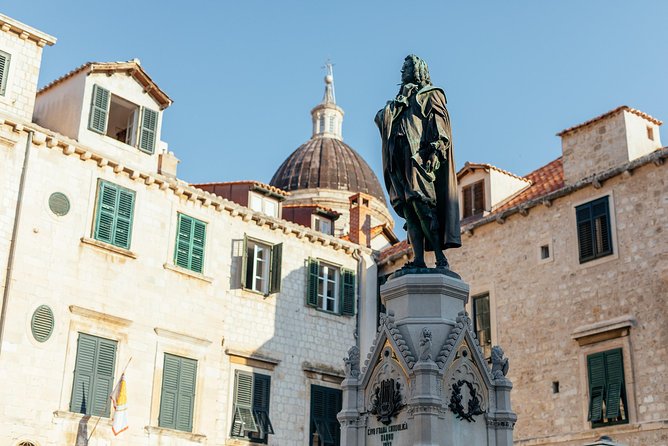
At Luza Square, the tour asks you to picture how the city got hit by over 5,000 grenades. That number sounds abstract until you stand in a real public space and imagine impacts hitting a dense, inhabited area.
This stop works well if you’re the kind of person who needs mental pictures to understand history. A square like this is where people gather, move through, and look around. It becomes a way to understand what “siege” means beyond maps.
Practical note: squares can get busy with foot traffic, and you’ll want a moment to slow down. Give yourself time to stand where the guide indicates and take in both the building lines and the open space.
You can also read our reviews of more historical tours in Dubrovnik


Memorial Room of the Defenders of Dubrovnik: photographs that stick

Then you move to the Memorial Room of the Defenders of Dubrovnik. This is one of the most emotionally direct stops on the route, because the tour focuses on photographs taken during the war.
Photos do something that text can’t always do. They compress time. They show real scenes, real people, and real conditions—things you can’t fully reconstruct from a street view. If you’re hoping to understand what the siege felt like for those defending the city, this room gives you a concentrated answer.
In the tour plan, this stop is marked as admission ticket free. That helps you keep the experience simple: you arrive, you take in the photos, and you move on with a clearer picture of what you’re seeing outside.
Rector’s Palace: daily life, not just battle scenes
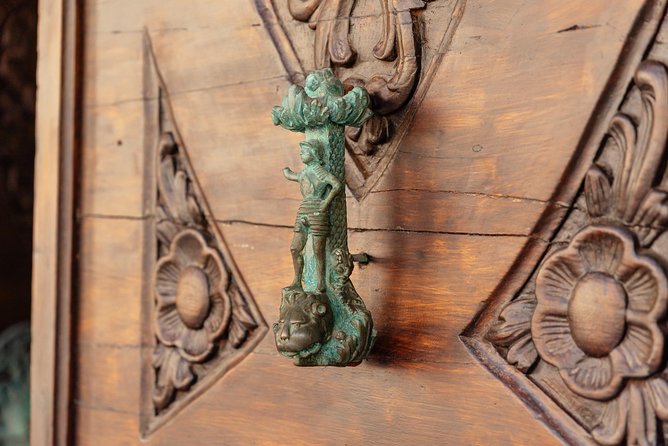
From memories of defense and war photography, the tour shifts to daily life with a stop at Rector’s Palace. The guide explains what life was like during the war while you look at a place that feels built for governance and leadership.
This contrast is valuable. Many war narratives focus only on attacks and strategies. Here, you get a reminder that people still had routines, responsibilities, and stress even while the city was under threat. When you understand daily life, the rest of the story becomes easier to believe.
Also, palaces and civic buildings help you visualize the administrative side of the siege. Even if you don’t read every detail in the stones, the setting tells you that Dubrovnik’s defenders and leaders weren’t just reacting. They were managing a crisis.
Church of the Holy Annunciation: repairs and wartime connections
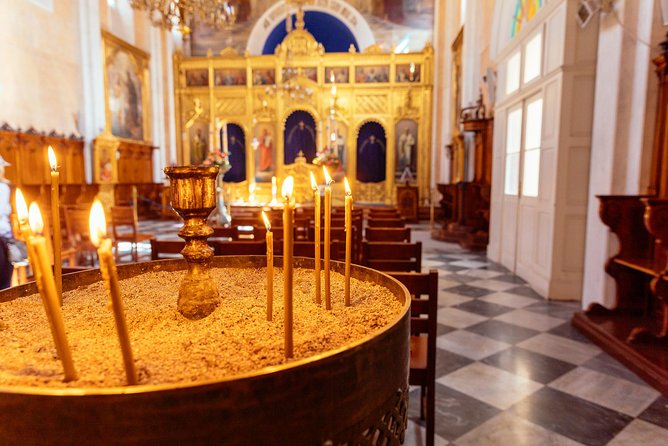
Next is the Church of the Holy Annunciation, an Orthodox church that was repaired after damage. This stop is about showing what changed after the impacts, and why repair mattered for community identity.
The guide also connects this church to the situation on the ferries during the war. That detail is important because it’s about movement and survival. When ferries change or stop, you feel it in supplies, travel, and the whole rhythm of the city.
If you’re trying to understand the siege beyond the physical attacks, this “connections and movement” angle helps. It turns the story from purely defensive into human logistics.
Church of St. Salvation: scars you can still see
Church of St. Salvation is another quiet stop with a clear purpose: it shows how some damages caused by the war are still visible in many places in the Old Town.
This is where you learn to look at damage without treating it like a tourist feature. The guide frames visible scars as part of Dubrovnik’s living memory. The city didn’t erase everything to return to normal. It kept traces as a reminder.
For your photo plan, this is a good place to slow down. Take fewer pictures, but take them carefully. Look from different angles and wait for a clean shot that doesn’t hide the marks the guide wants you to notice.
Ending at Pile Gate with Fort Imperial in view
The tour ends at Pile Gate, on the other side of the Old City. From there, you can also see Fort Imperial, which gives you an end-point with defensive context.
Ending at a gate is satisfying because it closes the loop: you started with fortress defense, then crossed the civic and religious spaces that shaped day-to-day life, then finish with another line of fortification.
This final viewpoint can also help you connect the story to the physical geography again. You’ve been hearing “where” and “why” in the guide’s explanations. By the last stop, you’re ready to read the city like a diagram.
Price and value: $83 for a private, 2-hour war story in the Old Town
At $83 for about 2 hours, this tour is priced like a mid-range private experience. The value comes from what you’re actually buying: a local guide’s stories tied to specific sites, plus a private format where you can ask questions as you walk.
A big plus for value is that you’re not paying for hotel transfers. The tour meets you near the Old Town and finishes at Pile Gate. If you’re already planning to walk the Old City anyway, that keeps your total cost under control.
Also, the itinerary is marked with stops that have admission ticket free at the key sites listed. That means fewer surprises in your budgeting during a tight sightseeing day. Still, if you’re the type who likes to confirm everything in advance, it’s smart to check what is and isn’t included on your final confirmation.
Finally, group discounts are mentioned, which can help if you’re traveling with friends or family who want the same guided perspective.
Who should book this tour, and who might want a lighter option
This is a great fit if you:
- Want a real-local perspective on the 1991 siege and the Homeland War
- Enjoy history that’s tied to real buildings and real streets
- Appreciate a tour where the guide points out what to notice, not just where to stand for a photo
- Like the idea of asking questions in a private setting
It may be less ideal if you:
- Want only scenic Dubrovnik views with no heavy historical tone
- Prefer quick photo stops without emotionally intense context
- Struggle with moderate walking around gates and old stone streets
If you’re traveling with kids, this is also a personal call. The tour is focused on war experiences and visible damage, so you’ll want to judge what your family can handle.
How to get the most from your guide’s stories in 2 hours
This tour is short, so your best move is to show up with comfortable shoes and a calm mindset. The Old Town is beautiful, but the guide will be directing your attention to details tied to war damage, repairs, and memorial photos.
A practical strategy:
- Ask one question early and then follow up at the next stop. War stories connect. The answer often leads to the next location.
- If photography matters to you, tell the guide what you’re hoping to capture. Some of the most useful pictures are the ones that show damage and context, not just skyline angles.
- Use the conversation for practical help after the tour. In one account, the guide helped with restaurant recommendations too. That’s the kind of local service that makes a guided walk pay off even more.
If you’re expecting a lecture, you might be surprised by how much you learn just by moving stop to stop. Each location becomes a prompt. That’s how the story sticks.
Should you book Dubrovnik’s History with a Local: Homeland War Stories Private Tour?
If you’re choosing between a standard Old Town walk and something more meaningful, this one is worth serious consideration. The strongest part is the human element: a local guide with first-hand connection to the 1991 siege, like Vesna, plus a route that ties forts, gates, squares, memorial photos, palaces, and churches into one coherent story.
Book it if you want Dubrovnik to feel real—scarred stone and all—and if you’re okay with the emotional weight that comes with war history. Skip it if you want a purely light, scenic afternoon and you’re not interested in seeing how that siege is still visible in the city.
FAQ
How long is the Homeland War Stories private tour?
It’s about 2 hours.
Is this tour private or shared?
It’s a private tour. Only your group participates.
Where does the tour start and end?
It starts at Ulica Vrata od Ploča (near the Old Town) and ends at Pile Gate in the Grad area of Dubrovnik.
What sites are included during the walk?
You’ll visit Revelin Fortress, Ploče Gate (Old Town entry), Luza Square, the Memorial Room of the Defenders of Dubrovnik, Rector’s Palace, the Church of the Holy Annunciation, the Church of St. Salvation, and finish at Pile Gate (with Fort Imperial visible).
Does the tour include admission tickets for the stops?
The itinerary marks the stops with admission ticket free for the scheduled locations.
What’s included in the price?
A private tour with a local guide.
What’s not included?
Hotel pickup and drop-off, plus food and beverages unless they’re listed as included in your booking.
Is the tour suitable if I have limited mobility?
It’s listed as requiring moderate physical fitness, so you should be comfortable walking through the Old Town area.
Is there free cancellation?
Yes. Free cancellation is available up to 24 hours in advance for a full refund.
How do I receive my ticket?
A mobile ticket is used.