REVIEW · DUBROVNIK
Old Town Secrets Walking Tour
Book on Viator →Operated by Majic Walk Tour Dubrovnik · Bookable on Viator
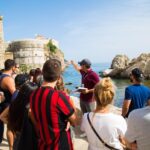
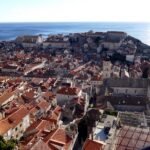
Secrets start at the Old Town gates. This guided Old Town Secrets walk strings together Dubrovnik’s major landmarks with human stories, from defenses to daily-life details, all in about an hour and with a small group. You’ll start at a central meeting point and finish on Stradun, which makes it easy to keep exploring afterward.
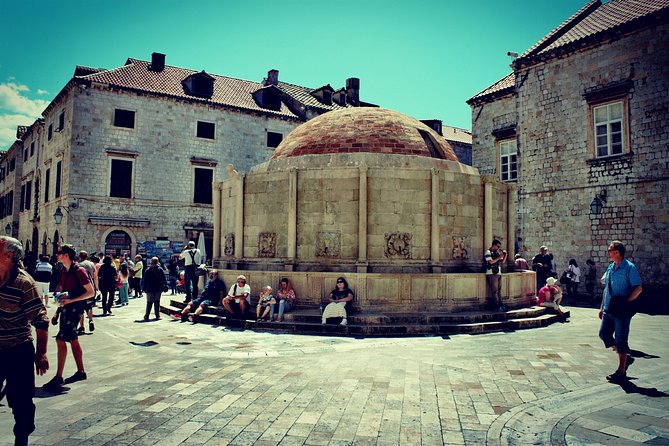
I especially like the way the tour turns heavy moments into something you can picture on the spot—starting at Pile Gate with discussion of the city’s fortifications and the siege damage map. I also enjoy how the route on Stradun and Luža points out what to notice in real buildings, including the Franciscan monastery pharmacy and Onofrio’s fountain.
One thing to consider: it’s a tight, one-hour loop with short stops, so if you want long time inside churches and palaces, you’ll still need a follow-up visit on your own.
In This Review
- Key highlights I’d put on your radar
- A 1-hour Old Town loop that actually makes sense
- Pile Gate: defenses, siege damage, and independence-war context
- Stradun’s main street: churches, pharmacies, and Onofrio’s engineering
- Luža Square: where government power meets public rivalry
- Rector’s Palace: power, prison, treasury, and a very strange origin story
- Dubrovnik Cathedral: statues that are not Mary and secrets in the walls
- When to go: beat the heat and keep your pace comfortable
- Price and value: $239.65 per group up to 10
- Should you book Old Town Secrets Walking Tour?
- FAQ
- How long is the Old Town Secrets Walking Tour?
- What is the price of the tour?
- What languages is the tour offered in?
- Where does the tour start and end?
- Is there a mobile ticket?
- What stops are included during the walk?
- Is this tour limited to a small group?
Key highlights I’d put on your radar
- A 1-hour route that hits the Old Town’s power points without dragging
- Pile Gate history with siege context, right where the city’s defenses begin
- Stradun storytelling that connects architecture to everyday customs and legends
- Luža Square civic life, from major buildings to rivalry and governance
- Rector’s Palace explained as power, prison, and treasury in one
- Dubrovnik Cathedral details that are weird enough to remember, like statues that aren’t Mary
A 1-hour Old Town loop that actually makes sense
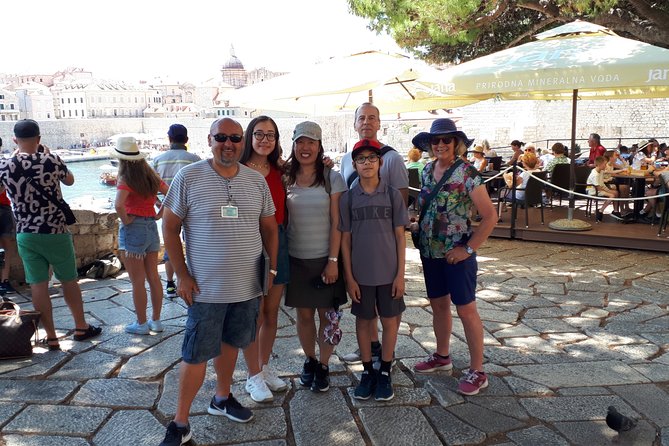
This is the kind of tour that helps you get your bearings fast. Dubrovnik’s Old Town can feel like a postcard maze, but the guide’s job is to connect places into a timeline you can follow. With the group capped at 10 people, you’re not just listening—you can ask questions and actually hear the answers.
You’ll meet at Amerling Fountain (Ul. Svetog Đurđa, 20000), then work your way through the Old Town and end on Stradun. The tour runs daily and is offered in English, so it’s a solid fit even if your schedule is tight. You also get a mobile ticket, which keeps things simple once you’re there.
Best of all, the pacing is designed for first-timers. You see the big structures, learn what they meant, and leave with a mental map—exactly what you need before you start wandering on your own.
You can also read our reviews of more walking tours in Dubrovnik

Pile Gate: defenses, siege damage, and independence-war context
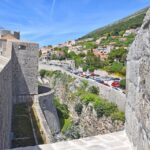
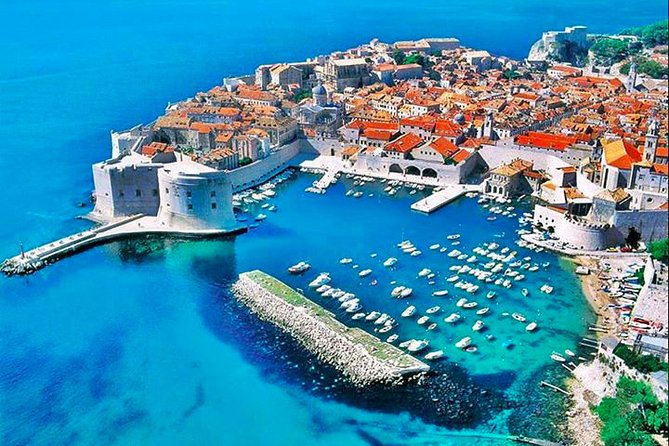
Your walk begins at Pile Gate, the Old Town entrance where the city’s defensive mindset becomes obvious. You’re in the area between two gates, and that location matters: it sets the tone for how Dubrovnik protected itself for centuries.
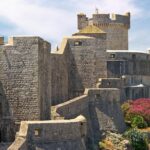
Here’s what I’d pay attention to: you’ll learn about the city being described as the most heavily fortified in Europe, and you’ll hear how the defenses were meant to work. Then the tour shifts from general defense talk to specific modern impact, with a look at a map showing damage done to the Old Town during the siege of the 1990s and a few words about the Croatian Independence War.
That combination is powerful because it’s not just “old buildings.” It ties the architecture you’re about to walk past to real human stakes. Even if you’ve read some history before, hearing it positioned at the gate gives you a clearer picture of why the Old Town feels so engineered.
Practical tip: since this part is information-heavy, take a moment to slow down your photos. Let the guide finish the context, then frame your shots after you understand what you’re seeing.
Stradun’s main street: churches, pharmacies, and Onofrio’s engineering
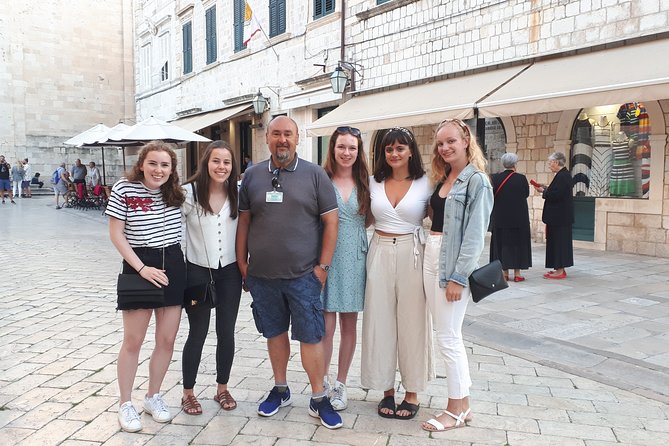
Next comes Stradun, Dubrovnik’s main street, where the guide uses landmark stop-by-stop storytelling to turn the architecture into something you can recognize later. This is where the tour starts feeling more like a guided walk-through of “how the city worked.”
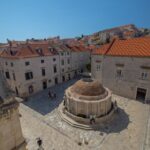
On Stradun, you’ll hear about St. Saviour’s church, the Franciscan monastery and its pharmacy—described as one of the oldest working pharmacies in the world—and you’ll get the story behind Onofrio’s fountain. The guide also explains why Onofrio’s fountain is often mentioned as a medieval engineering marvel.
What I like about this stop is that it mixes three types of detail:
- religious and civic landmarks (church and monastery),
- daily-life connections (the pharmacy),
- and technical ingenuity (the fountain).
Instead of just naming sights, the guide gives you a reason to look again. After the tour, when you see the same facades and streets, you’ll spot the connections the guide pointed out.
Possible drawback: the time here is short, so you may want to choose one or two places to return to later. If you’re the type who likes to linger inside, plan that follow-up while the stories are still fresh in your head.
Luža Square: where government power meets public rivalry
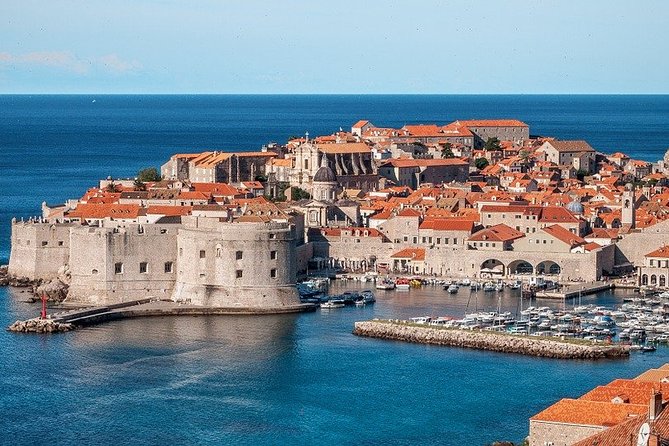
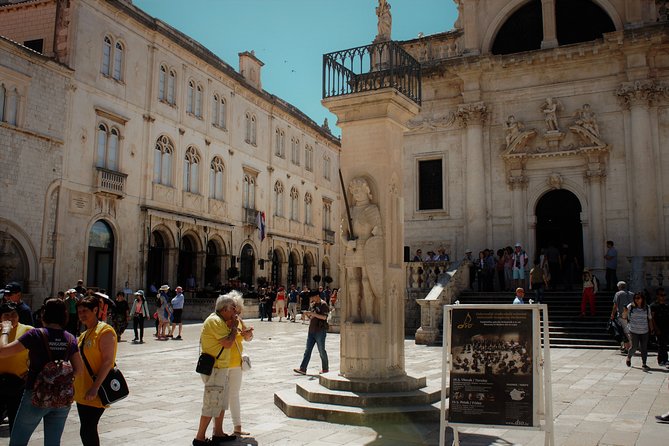
Luža Square is the Old Town’s center, and the tour treats it that way. You’ll hear how it witnessed many of Dubrovnik’s important events and how its architecture spans the 15th to 18th centuries. Even today, it’s still tied to the city’s government, which helps the square feel more “alive” than a static museum space.
This stop is also where the guide adds flavor: stories of rivalry, monuments to bribery, and other political drama connected to the city’s past. That kind of context is useful because Dubrovnik’s buildings can look similar at first glance. Hearing what the places were for makes the differences stand out.
You’ll pass by or get pointed toward major highlights such as Sponza Palace, the Clock Tower, St. Blasius Church, and the Old Parliament Building. The guide’s job is to connect these landmarks to the square’s political role, so you understand why they’re placed where they are.
If you want one takeaway from Luža Square, it’s this: Dubrovnik wasn’t only about walls and ships. It was also about governance, negotiation, and status—played out in stone.
Rector’s Palace: power, prison, treasury, and a very strange origin story
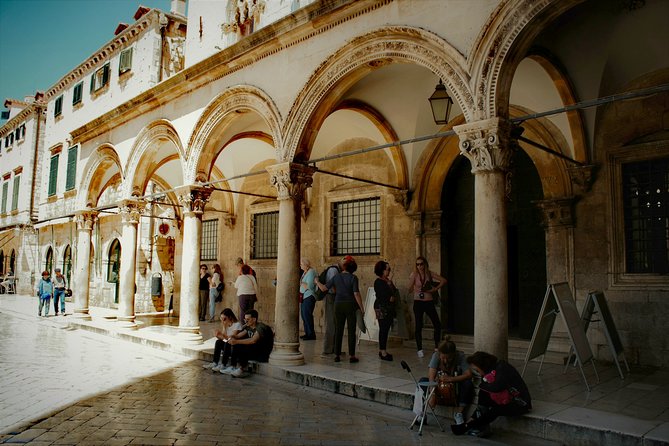
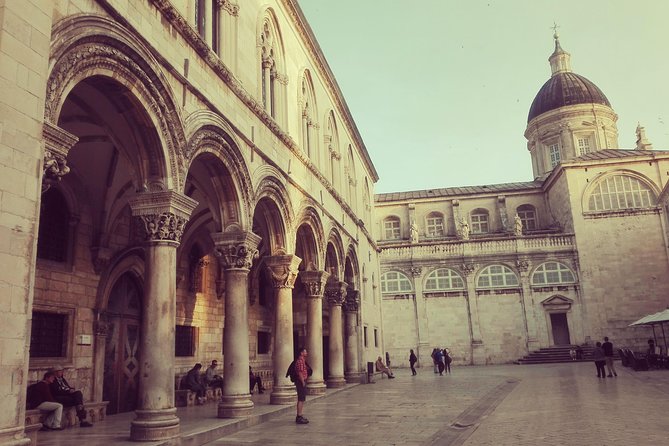
Then you move to Rector’s Palace, a building that functioned as the center of power. The tour describes it in the old-city way: not one purpose, but several—power, prison, and treasury all in one.
This is a good stop for visual learners. The palace is described as astonishingly beautiful, and the guide uses that beauty to set up the contrast: this wasn’t only a pleasant civic space. It was tied to authority and control, and that tension makes the architecture easier to remember.
You’ll also hear about a ridiculous inception story and an unlikely system of governing tied to the building. Even if you don’t catch every detail (one-hour tours move fast), the point lands: Dubrovnik’s rule wasn’t abstract. It was enforced, recorded, and administered by real people inside real rooms.
Tip for you: when you hear the governing story, look for cues the guide references—symbols, layout, or the way spaces relate. That’s how the palace stops being just “a pretty building” and becomes a clue to how the city ran.





Dubrovnik Cathedral: statues that are not Mary and secrets in the walls
The final major stop is the Cathedral of the Assumption of the Virgin Mary. This church comes with a built-in odd twist: it’s dedicated to Mary, yet it’s described as adorned with many statues, none of which is Mary.
That mismatch is exactly the kind of detail you want from a walking tour. It nudges you to look past the obvious and start noticing what’s unusual. You’ll also hear about priceless items still kept within the cathedral and a strange or unlikely purpose connected to them.
The guide also brings in Richard the Lionheart and other secrets tied to Dubrovnik’s origins, with the idea that these stories live in the cathedral walls waiting to be discovered. In other words, you leave the tour with a sense that the city’s meaning isn’t only outside—some of it is stored behind doors and carved into stone.
Good to know: you only get a short stop here, so don’t expect a full cathedral visit during the walk. Instead, treat it as a curated introduction that tells you what’s worth returning for.
When to go: beat the heat and keep your pace comfortable
Timing matters in Dubrovnik, and the tour includes a practical angle. If you’re trying to avoid the worst heat, go for an early start. One of the most helpful things you can do is book the first slot of the day, so you’re not roasting while you take notes.
This is also a walking tour. It’s about an hour, but you’ll still be on your feet through multiple spots in the Old Town. So plan a comfortable pace: water, a hat if you use one, and sunglasses help, especially if the sun is strong in mid-day.
If you’re visiting in busy season, getting your history orientation early is smart. You’ll understand what you’re seeing before the crowds blur the details.
Price and value: $239.65 per group up to 10
The price is $239.65 per group, with a maximum group size of up to 10. That’s the key point for value: your cost depends on how many people you bring.
Here’s the rough math:
- At 2 people, it’s about $120 per person.
- At 4 people, about $60 per person.
- At 10 people, about $24 per person.
So this tour tends to make the most sense when you’re traveling with a small group, family, or friends who want a shared orientation. If you’re solo or a couple with no extra people, it can still be worth it if you value a guided storytelling approach over reading signs.
Why I think it holds up at this price: you’re not just getting narration. You get a tight sequence of major Old Town locations—fortifications at the gate, civic life in Luža Square, governance in Rector’s Palace, and cathedral symbolism at the end—so you save time and avoid aimless wandering.
Also, the private-group structure matters. Since it’s set up for only your group, you’re not squeezed into a large crowd, which helps the experience feel more personal.
Should you book Old Town Secrets Walking Tour?
Book this if you want a smart, story-driven way to understand Dubrovnik’s Old Town in about an hour. It’s especially good for first-timers, history-minded walkers, and anyone who likes their sightseeing connected to meaning—defenses, civic power, and the kind of details that make buildings stick in your mind.
Skip it or adjust expectations if you want a slow museum-style visit. The stops are short, and that’s by design. You’ll get excellent orientation, then you’ll likely want to return on your own for extra time inside the places that catch your interest most.
My quick decision rule: if you’ll be exploring Dubrovnik afterward and you want the city to make sense from the start, this tour is a strong bet.
FAQ
How long is the Old Town Secrets Walking Tour?
The tour lasts about 1 hour.
What is the price of the tour?
It costs $239.65 per group, up to 10 people.
What languages is the tour offered in?
The tour is offered in English.
Where does the tour start and end?
It starts at Amerling Fountain (Ul. Svetog Đurđa, 20000, Dubrovnik) and ends on Stradun.
Is there a mobile ticket?
Yes, the tour includes a mobile ticket.
What stops are included during the walk?
You’ll visit Pile Gate, Stradun, Luža Square, Rector’s Palace, and the Cathedral of the Assumption of the Virgin Mary.
Is this tour limited to a small group?
Yes. It’s limited to a maximum of 10 people per booking, and it’s private for your group.