REVIEW · DUBROVNIK
Dubrovnik walking history tour
Book on Viator →Operated by INtours Dubrovnik · Bookable on Viator
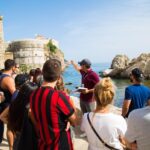
History walks here, one stone at a time. This 1.5-hour walk ties together the Republic of Dubrovnik with real, in-your-face places you can see and touch—especially the Sponza Palace area and the story of the city’s water. I love how the tour keeps moving while still giving you context, so the Old Town feels less like a photo spot and more like a living puzzle.
You also get the reassurance of a licensed guide working in English, and they point out the key monuments that explain how the city grew, defended itself, and rebuilt after disaster. One thing to plan for: City Walls tickets are not included (they cost 35 € per person), so you won’t walk the walls on this one.
In This Review
- Key highlights you’ll care about
- Pile Gate start: a smart way to get bearings fast
- Sponza Palace: where trade, government, and style meet
- Rector’s Palace area: civic power you can actually point to
- Onofrio’s Fountain: the aqueduct story that makes the city make sense
- Orlando’s Column: freedom written in stone
- Franciscan Monastery and the human side of the Old Town
- Cathedral of the Assumption: rebuilding after the 1667 earthquake
- What to watch for: pace, photos, and heat
- Price and the City Walls ticket reality
- Group size: small enough to feel human
- Licensed guides in action (and why it shows)
- Weather and last-minute changes: how to handle them
- Who this tour is best for
- Should you book this Dubrovnik walking history tour?
- FAQ
- How long is the Dubrovnik walking history tour?
- What language is the tour offered in?
- Where does the tour start?
- Is a mobile ticket included?
- Is the City Walls ticket included?
- What are the main sights you’ll see?
- How large is the group?
- Are service animals allowed?
- Is cancellation free?
Key highlights you’ll care about
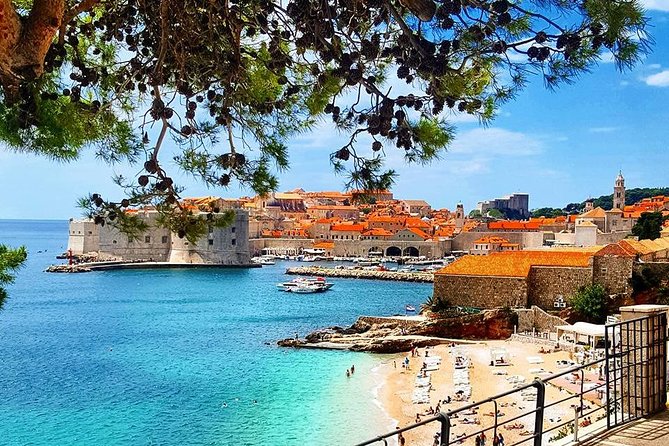
- You start at Pile Gate, then fall naturally into the heart of the Old Town.
- Sponza Palace is a centerpiece, not just a quick stop-photo-and-go.
- Onofrio’s Fountain connects water to power, with the 12 km aqueduct backstory.
- Orlando’s Column and the Rector’s area explain civic freedom and leadership in plain terms.
- The Franciscan Monastery and Cathedral of the Assumption add the religious and rebuilding angle after 1667.
- Small group size (max 30) keeps it easier to hear the guide and follow the route.
Pile Gate start: a smart way to get bearings fast
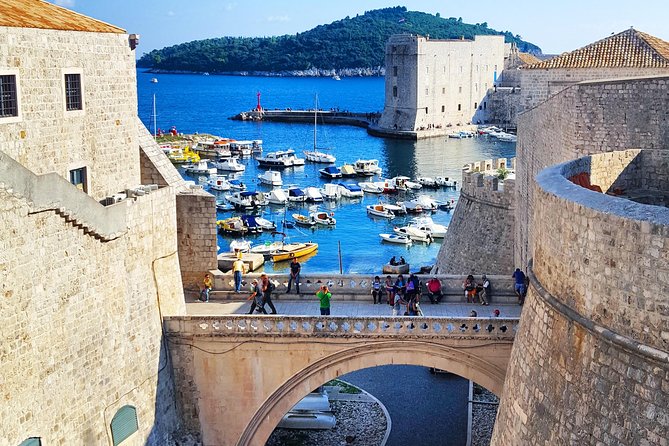
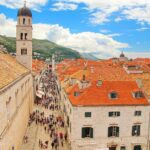
Dubrovnik’s Old Town can feel like it’s all one long street—until you have a guide who knows where the story changes. This tour meets at Art Go’den Brsalje ul. 1, Dubrovnik, and the walking portion begins around Pile Gate, which is a good choice. You’re positioned to walk into the city’s core without wasting time figuring out your first turns.
The whole tour runs about 1 hour 30 minutes, so it’s built for visitors who want the big ideas without committing to a full half-day plan. It’s also offered in English, and you’ll get a mobile ticket, which is handy when you’re juggling phones, maps, and heat.
Practical note: Dubrovnik can be brutally hot in peak season. The tour duration is short, but you are on your feet most of the time, so bring water and wear shoes you trust.
You can also read our reviews of more walking tours in Dubrovnik
Sponza Palace: where trade, government, and style meet
Your walk includes a stop at Sponza Palace, and this is more than an architectural detour. The area around Sponza is where Dubrovnik’s civic identity comes into focus—how the city presented itself, how authority showed up in public buildings, and why this part of town mattered day after day.
Sponza also works as a mental reset point. If you’re walking from street to street, it’s easy to miss what connects the spaces. With a guide directing your attention, you start noticing patterns: where people gathered, what buildings were used for official life, and how the Republic’s mindset shaped its built environment.
If you care about the “why” behind the streets, you’ll like how the tour uses Sponza Palace as one of the main anchors before moving on to other monuments.
Rector’s Palace area: civic power you can actually point to
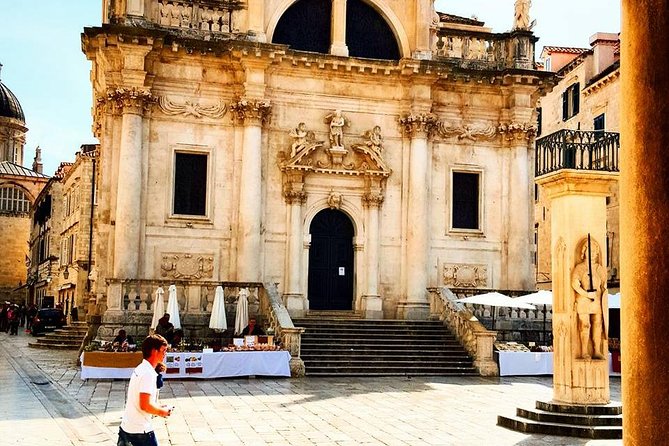
The highlights include exploring the Rector’s and Sponza Palace area, and that’s a strong pairing. The guide doesn’t just mention names of buildings; the point is to connect the Republic’s leadership system to visible landmarks.
This part of the walk helps you understand Dubrovnik as more than a pretty walled city. You start seeing it as a place where leadership, public life, and civic freedom were all constantly on display. Even if you’ve heard basic facts before, having them attached to specific stops makes it stick.
I also like that this section is paced so you don’t feel rushed while you’re trying to orient yourself. You’ll be walking, but you’ll also get moments where the guide’s explanations help you “read” the architecture instead of just passing it.
Onofrio’s Fountain: the aqueduct story that makes the city make sense
One of the best parts of this tour is the stop for Onofrio’s Fountain and the aqueduct explanation. This fountain is tied to the city’s water supply—built in the 15th century and fed by a 12 km aqueduct—and the guide connects that engineering to daily life.
Why this matters for you: Dubrovnik isn’t just stone and views. It’s logistics. Water was survival, and how the city sourced it shaped what was possible. When you learn that link, the fountain becomes a symbol, not just a place to refill your bottle.
You’ll also get a chance to refresh and drink water. That’s not a small detail in Dubrovnik. It keeps the tour realistic and comfortable, especially when you’re walking in direct sun.
Orlando’s Column: freedom written in stone
The route also includes Orlando’s Column, described as a monument connected to the city’s freedom. This is the type of stop that could be easy to skim past on your own—if you don’t know what you’re looking at.
With a guide, you get the context behind why a column in the public realm mattered. It’s civic messaging, built into a landmark you’ll see while moving through the Old Town. It helps you understand how the Republic used public spaces to signal identity and autonomy.
If you like history that you can interpret just by standing there and looking around, this is the kind of monument that clicks.
You can also read our reviews of more historical tours in Dubrovnik


Franciscan Monastery and the human side of the Old Town
Your walk includes the Franciscan Monastery, plus time in the broader Old Town. This section shifts the mood a bit. It adds the religious layer to the civic story—showing you Dubrovnik as a place where belief and public life overlapped.
Even though you’re not doing a long museum-style visit, you still get value from the stop. The guide’s job here is to point out what matters in the setting and how it fits into the city’s larger timeline.
This is also where the walk becomes more than a list of names. You’ll feel how the Old Town is built for pedestrians, with changing scenes as you pass through different kinds of spaces.
Cathedral of the Assumption: rebuilding after the 1667 earthquake
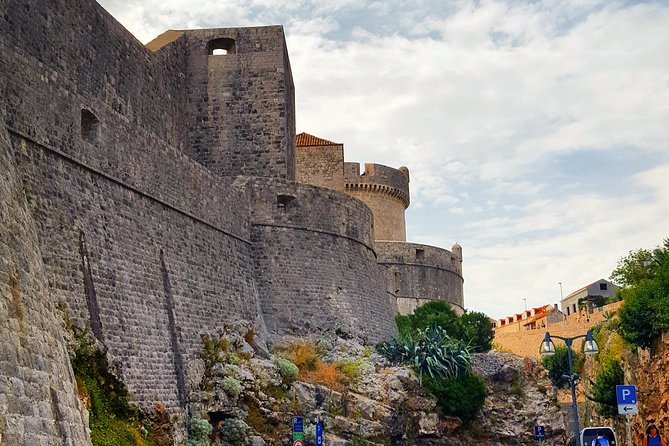
The tour includes a visit to the Cathedral of the Assumption, a Baroque church built after the devastating earthquake of 1667. That earthquake detail is key because it explains why Dubrovnik’s story is not just about growth, but also recovery.
In plain terms: you’re looking at a city that was forced to reset, then rebuild with intention. The guide’s explanations here help you understand why certain elements look the way they do, and why rebuilding became part of Dubrovnik’s identity.
If you’ve ever wondered how one city can hold layers of different eras, this stop is a good one. It connects architecture to a real turning point, so the Old Town feels chronological instead of random.
What to watch for: pace, photos, and heat

The walking tour is short, so you’ll cover a lot of ground without feeling like you’re sprinting. Still, it’s built for movement. Here’s what you should plan for:
- Bring water (even though there’s a fountain stop, you’ll still want your own bottle).
- Wear comfortable shoes with grip. Old Town surfaces can be slick or uneven.
- Be ready for midday sun if you’re there in high season.
The pacing is generally friendly. The guide has enough time to explain major themes, but not so much time that you feel stuck. It’s a good format when you want the city’s story compacted into 90 minutes, then keep exploring on your own.
Price and the City Walls ticket reality
The tour costs $33.61 per person for about 1 hour 30 minutes, with a licensed English-speaking guide and a route that hits multiple core monuments. For Dubrovnik, that’s solid value if your goal is to understand what you’re seeing.
Here’s the catch: tickets for the City Walls are NOT included. The price for those is listed as 35 € per person. That means you have two scenarios:
- If you want the walls experience, budget extra and plan to do them separately.
- If you mainly want history context, this tour still works well without the walls—because it focuses on key civic, religious, and engineering landmarks.
Bottom line: I’d call this a good “story tour.” If you’re also committed to walking the walls, treat this as a helpful warm-up so you know what you’re looking at from the street before you go up high.
Group size: small enough to feel human
The tour caps at 30 travelers, which matters more than you might think. In a city where streets funnel people quickly, smaller groups make it easier to hear the guide and keep your spot.
It’s also why the tour can include the explanation-heavy stops—Sponza Palace, the Rector’s area, Orlando’s Column, Onofrio’s Fountain, and the cathedral—without turning into a race.
Licensed guides in action (and why it shows)
The tour’s strongest selling point is the licensed tour guide. In practice, what you’ll feel is clarity. You’ll hear the stories tied directly to what you’re seeing—especially around the Republic’s civic identity and the big 1667 rebuilding moment.
In past tours, guides have included people such as Ines (often praised for balancing history with local knowledge and for being easygoing) and Ynez (praised for strong English). Names change, but the pattern is consistent: you should expect explanations that help you connect the city’s monuments into one coherent timeline.
Weather and last-minute changes: how to handle them
Short tours can be vulnerable to sudden issues, particularly in extreme heat. On one past departure, the guide became ill on the way to meet, and the experience did not go ahead; the payment was refunded in full.
So if you’re planning a tight itinerary, build in a little buffer. Dubrovnik days are intense. Even a small delay can ripple through your schedule.
Who this tour is best for
This walking history tour is a good fit if you want:
- A tight, 90-minute plan that hits major landmarks.
- A guide-led route that turns architecture into story.
- A practical stop for water during the walk.
You’ll probably enjoy it most if you like your history with place-based context—where the explanation comes from standing right next to the building. If you’re visiting for the first time and want a fast orientation before tackling longer activities (like the walls), this tour can set you up well.
If you’re someone who wants long indoor time, detailed museum pacing, or the full walls circuit included, you’ll need to pair this with other plans.
Should you book this Dubrovnik walking history tour?
Yes, if your priority is understanding the city’s main landmarks in a short amount of time, and you want a guide to connect civic life, water engineering, and the 1667 rebuilding story. The price feels fair for an English guided walk that covers multiple high-impact sights, and the water stop at Onofrio’s Fountain is genuinely useful.
I’d pass or rethink it if City Walls are your top must-do and you don’t want to manage extra tickets. Since the walls are 35 € per person and not included, plan for that cost and time separately.
FAQ
How long is the Dubrovnik walking history tour?
It’s approximately 1 hour 30 minutes.
What language is the tour offered in?
The tour is offered in English.
Where does the tour start?
You start at Art Go’den Brsalje ul. 1, 20000, Dubrovnik, Croatia, and the walk begins at Pile Gate.
Is a mobile ticket included?
Yes, the tour uses a mobile ticket.
Is the City Walls ticket included?
No. City Walls and other facilities are not included, and City Walls cost 35 € per person.
What are the main sights you’ll see?
You’ll explore the Old Town, visit Franciscan Monastery, see Orlando’s Column, stop at Onofrio’s Fountain, and visit Sponza Palace, the Rector’s Palace area, and the Cathedral of the Assumption.
How large is the group?
The tour has a maximum of 30 travelers.
Are service animals allowed?
Yes, service animals are allowed.
Is cancellation free?
Yes. You can cancel for a full refund up to 24 hours in advance. After that cutoff, the amount paid is not refunded.