REVIEW · DUBROVNIK
Private Self-Guided Audio Walking Tour in Dubrovnik Old Town
Book on Viator →Operated by Navicup experiences · Bookable on Viator
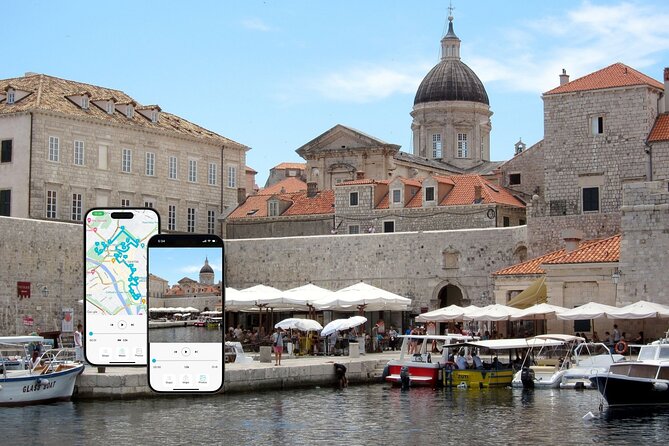
Dubrovnik Old Town, timed to your pace. This private self-guided audio walk uses GPS-guided cues so the narration starts when you reach each key sight, and it includes offline audio so your phone keeps working even if signal gets spotty. I like that the route is compact and built for real walking time, and I like the mix of major landmarks with quick, practical context. One drawback to plan for: the app experience can be glitchy for some people, including repeated audio or narration that doesn’t trigger on a spot.
For about $9.61 per person, you’re paying for a route and a phone-based guide, not for someone to shepherd you. It runs about 1 to 3 hours and is offered in English, with mobile ticket access and a downloadable audio-guide map. If you want a live voice that can answer questions on the fly, this isn’t that setup.
The walk starts and ends at Excelsa Nekretnine on Ul. Svetog Đurđa 1, Dubrovnik. You’ll get exterior viewing at several stops, but entrance tickets are not included—Saint Blaise is explicitly marked as not included—so you may need to decide on any ticketed sights separately. Also, you’ll need to bring your own smartphone, since it isn’t provided, and the same goes for headphones.
In This Review
- Key highlights worth caring about
- Dubrovnik Old Town, but on your schedule
- Price and value: what $9.61 actually buys
- Getting started at the right address on Ul. Svetog Đurđa
- Stop-by-stop: Saint Blaise, Rector’s Palace and Amerling Fountain
- Church of Saint Blaise: Venetian Baroque in Dubrovnik
- Rector’s Palace: where government met defense
- Amerling Fountain: a civic gift with a clear maker
- Poets, gates, and Stradun views: Gundulić, Pile Gate and Luža Square
- Monument of Poet Ivan Gundulić: Osman told in stone panels
- Pile Gate: the main entry built in 1537
- Luža Square tower: 31 metres at the end of Stradun
- Sponza Palace: why the rainwater story matters
- When the tech works, it’s great. When it doesn’t, you need a plan.
- Practical tips so your walk stays fun (not fiddly)
- Who should choose this Dubrovnik audio walk
- Should you book this Dubrovnik self-guided audio tour?
- FAQ
- How long does the Dubrovnik Old Town audio walking tour take?
- Is this tour private or shared with strangers?
- What language is the audio tour offered in?
- What should I bring since it’s not included?
- Are entrance tickets included for the stops?
- Do I need internet, or can I use it offline?
- Where do I meet, and are service animals allowed?
Key highlights worth caring about
- GPS-triggered narration that aims to start as you arrive at each stop
- Offline content designed to help you avoid roaming charges
- A tight Old Town loop that fits a short afternoon (about 1–3 hours)
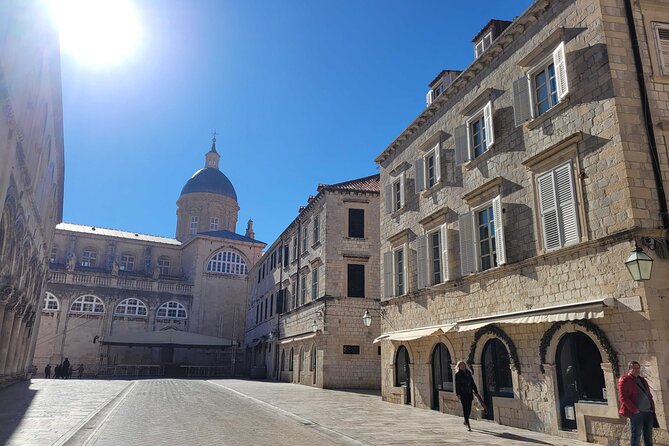
- Big-name sights on a small route: Pile Gate, Stradun-area views, and Sponza Palace
- Free-to-view stops mixed in with at least one ticketed highlight (Saint Blaise)
- Private-by-design: it’s only your group, even though it’s self-guided
Dubrovnik Old Town, but on your schedule
This is the kind of Dubrovnik experience I like most: you walk at your pace, stop when something catches your eye, and you don’t lose time waiting for a group to gather. Because it’s private for your party, you’re not stuck with a fixed pace that suits someone else’s legs.
The route is built around classic Old Town anchors, so even if you spend only a portion of the walk, you still get the feel of the place. And if you’re pairing this with walls, a beach break, or dinner reservations, the 1–3 hour length is practical.
You can also read our reviews of more walking tours in Dubrovnik
Price and value: what $9.61 actually buys
At roughly $9.61 per person, this sits in the budget-friendly category, but it’s important to be clear about the trade. You’re not paying for a live guide, and you’re not paying for museum entry—entrance tickets are not included for the route.
What you do get is the audio-guide map you download to your phone, an activation link, and offline content so you’re not constantly fighting data. You also get a mobile ticket, which keeps things simple once you’re standing at the start.
The best value shows up if:
- you like exploring in short bursts and starting/stopping freely
- you’re comfortable using your phone as your guide
- you want the ability to rewind or replay a small section if you missed something
The weakest value is if:
- you’re hoping for a teacher-like experience with lots of conversation
- you need guaranteed audio playback with no tech hiccups
Getting started at the right address on Ul. Svetog Đurđa
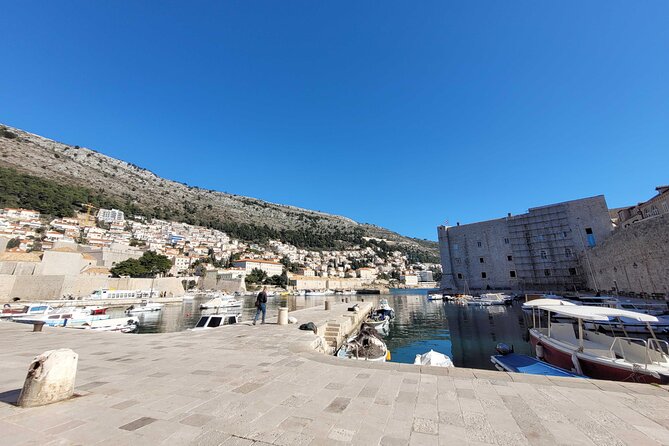
Your meeting point is Excelsa Nekretnine, Ul. Svetog Đurđa 1, 20000 Dubrovnik. The activity ends back at the meeting point, so it’s a loop you can plan around without needing a complicated end location.
It’s listed as available basically all day (opening hours show 12:00 AM to 11:59 PM, daily). That matters in Dubrovnik because the Old Town can shift from calm to crowded fast, and the option to go earlier or later can make a big difference.
One more practical thing: the directions note that you’ll need an internet connection to download the Navicup application and access the audio tour. After that, the audio content is designed to work offline, which is exactly what you want in Croatia where roaming costs can add up.
Stop-by-stop: Saint Blaise, Rector’s Palace and Amerling Fountain
This route is a smart mix of sacred architecture, power-bureaucracy buildings, and public art. It helps you see Dubrovnik as more than postcard views—it’s also about how the city functioned.
Church of Saint Blaise: Venetian Baroque in Dubrovnik
The first stop is the Church of Saint Blaise, described as built in 1715 in a luxurious Venetian Baroque style. That date alone gives you context: this is not medieval “oldest stone only” Dubrovnik. It’s later history, expressed through grand style.
The time at this stop is short, about 5 minutes. Plan to look at the building’s overall form and details, but don’t expect a deep inside visit unless you’re ready to pay a ticket separately—admission ticket is not included for this church.
You can also read our reviews of more guided tours in Dubrovnik

Rector’s Palace: where government met defense
Next up is the Rector’s Palace, which served as the seat of the Rector of the Republic of Ragusa from the 14th century until 1808. It also housed the smaller council and the state government, but here’s the key detail that makes it more than a pretty palace: it also functioned with military and security roles, including an armory, a powder magazine, a guard house, and a prison.
That combination changes how you look at the building. You’re not just seeing elegance—you’re seeing a civic system that had to defend itself and manage serious matters.
One thing to watch: the provided route notes don’t specify admission for this exact stop, so assume tickets may or may not be required if you want to go inside. If you’re staying outside, you’ll still get the main story framing.
Amerling Fountain: a civic gift with a clear maker
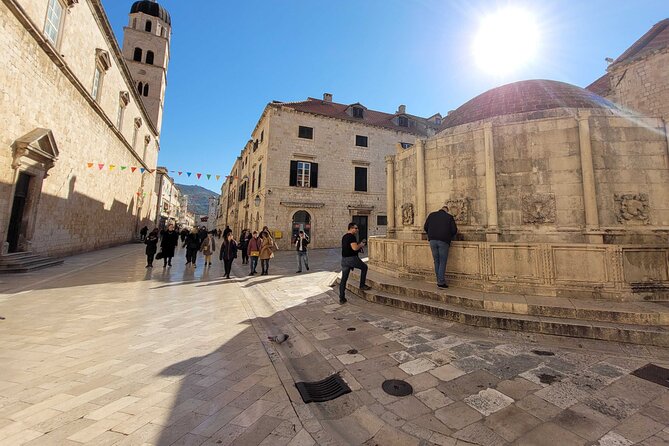
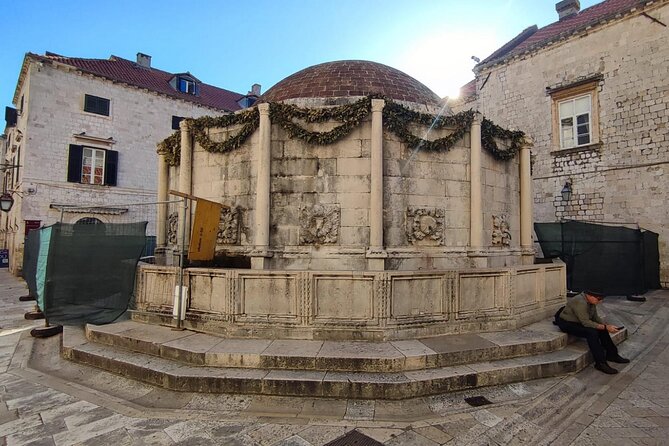
The Amerling Fountain is a quick stop (about 2 minutes), but it’s worth it because it’s tied to named people. The sculpture is by Croatian sculptor Ivan Renditchi, and it was installed in 1900 as a gift to the Amerling brothers’ hometown.
That “installed in 1900” detail helps you notice the city’s layers. Dubrovnik isn’t frozen in one era. It keeps adding art and meaning long after the medieval core.
Poets, gates, and Stradun views: Gundulić, Pile Gate and Luža Square
Then the route pivots back to identity symbols: the city’s literature and its entrances.
Monument of Poet Ivan Gundulić: Osman told in stone panels
The Monument of Poet Ivan Gundulić focuses on storytelling. The four low-relief panels at the base depict the main episodes of Gundulić’s epic Osman. Gundulić was born in 1589 in an old and respectable aristocratic family.
This is one of those stops where you get the most value by slowing down for a minute. Since the route calls out the panels, you’ll want to look for the relief scene structure rather than treating the monument like a quick photo block.
Pile Gate: the main entry built in 1537
Pile Gate is the natural starting point for visiting Dubrovnik Old Town, and it’s imposing for a reason. It was built in 1537, and the notes explain that originally there were only two entrances into the old town, with Pile Gate as the main one.
This stop is about 3 minutes. In that time, you can do two useful things:
1) orient yourself to the city’s main street system
2) get a feel for how the gate shapes movement into the core
If you’re new to Dubrovnik, this is a good checkpoint to start making sense of where you are.
Luža Square tower: 31 metres at the end of Stradun
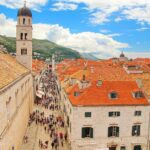
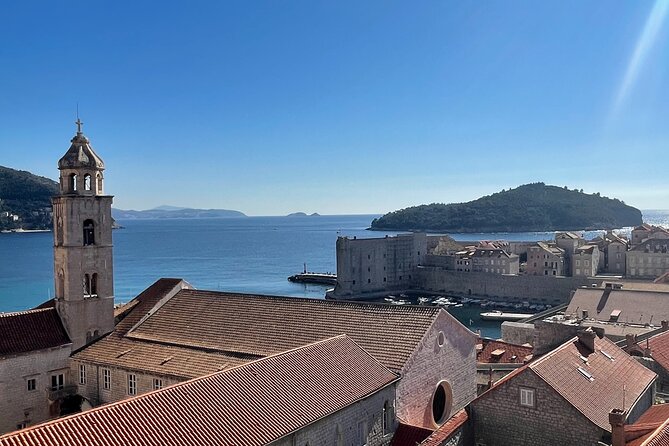
Near Luža Square at the end of Stradun, the route highlights a tower that’s 31 metres high. Even without a long stop, it helps you understand the classic Dubrovnik layout: Stradun is the spine, and the tower gives you a visual endpoint.
This is also a good moment to pause for photos if that’s your thing. Just remember the streets here are stone and often uneven—watch your step while you frame the shot.
Sponza Palace: why the rainwater story matters

Sponza Palace is one of the stops that gives the route its payoff. It’s described as one of Dubrovnik’s most beautiful palaces and one that has preserved its original form. It was built between 1516 and 1522, and its form is reminiscent of what Dubrovnik’s palaces might have looked like before the earthquake of 1667.
That “before the earthquake” context helps you read the building as a survival artifact, not just an aesthetic one. The route notes also explain the name: Sponza comes from the word for a place where rainwater was collected, tied to its former use.
Even if you’re mainly viewing from the outside, that explanation changes what you notice. You’ll start looking at the architecture with the idea of function as well as form. The stop is about 5 minutes, so you’ll get just enough context to connect details to the bigger picture.
When the tech works, it’s great. When it doesn’t, you need a plan.
The core promise is GPS-guided narration that starts automatically as you move through the points of interest. That’s the part that can make this feel much smoother than many self-guided audio options.
But it’s also where issues can crop up. Some users reported things like audio repeating, narration overlapping with the next stop, or audio not playing at certain sites. If that happens, don’t panic—use a simple reset approach:
- pause and give the app a moment to catch up
- move a few steps away and back to the point so GPS locks properly
- if tracks behave weirdly, try restarting the audio sequence rather than forcing it
Another tech detail: there can be irrelevant map objects showing up as you walk, which may cause distraction. The guidance notes suggest you can filter out irrelevant objects on the map. If you’re sensitive to interruptions, take that filter step seriously before you begin.
Also, voice style can vary. The content may be recorded with professional human voices in some cases, while other languages may use higher-quality AI voices. If you’re picky about narration tone, stick with English and expect it to be more straightforward than some translated, tech-heavy audio scripts.
Finally, if activation doesn’t happen right away, you may need to activate your code manually. That’s rare, but it’s worth building a small buffer into your timing so you aren’t starting the walk stressed.
Practical tips so your walk stays fun (not fiddly)
Since the experience requires your own smartphone, treat battery like a critical supply. Use a charger or at least verify your phone is well above 50% before you start. Stone streets and hot afternoons in Dubrovnik can drain a phone faster than you expect.
Bring headphones. They aren’t included, and listening on speaker can make it harder to focus in a crowded Old Town.
Try this simple pacing strategy:
- walk until you reach a stop, then listen fully before moving on
- if you miss a section, don’t rush—stay near the spot long enough for the GPS-triggered narration to finish
It also helps to set your expectations. This is not a long museum tour. The stops are short by design, which is great if you want to keep moving and still learn. It’s less great if you want deep, long-form commentary for every building.
If you’re combining this with a human guide later (for walls, specific museums, or dinner reservations), the name Branko came up in the guide context in the materials I received. That suggests the human side of Dubrovnik guiding can be excellent when you want it.
Who should choose this Dubrovnik audio walk
This is a strong fit if you:
- want a private experience without paying for a live guide
- like self-paced wandering and don’t mind holding a phone
- can use an app and troubleshoot minor issues calmly
- want a short route that hits major Old Town anchors, fast
It’s not the best fit if:
- you rely on flawless tech to enjoy anything
- you need someone to answer questions and adjust on the spot
- you hate dry, short audio segments and prefer richer human storytelling
Also, if you’re the type who detests any phone-based navigation, you might find it distracting. Dubrovnik is stunning enough that a simple map and a slower walk can sometimes be more satisfying than audio narration that constantly nudges you forward.
Should you book this Dubrovnik self-guided audio tour?
If you’re comfortable using your smartphone as a guide and you want a low-cost way to connect dots in Dubrovnik Old Town, I’d say it’s worth booking—especially because the route is compact and the offline support is built into the experience. When the GPS triggers correctly, it’s the right blend of structure and freedom.
If you’re tech-shy or you’ve had bad luck with GPS-based audio tours in the past, I’d hesitate or at least go in with a backup plan (manual navigation, printed notes, or pairing with a different tour component). The potential downside isn’t the Dubrovnik sights. It’s the app behavior.
My recommendation: book it if you’re flexible and want value. Skip it if you need guaranteed audio perfection and live guidance.
FAQ
How long does the Dubrovnik Old Town audio walking tour take?
The duration is approximately 1 to 3 hours.
Is this tour private or shared with strangers?
It’s private. Only your group participates.
What language is the audio tour offered in?
The tour is offered in English.
What should I bring since it’s not included?
You’ll need your own smartphone. Headphones are not included either.
Are entrance tickets included for the stops?
Entrance tickets are not included. The Church of Saint Blaise is listed as not included, while several other stops on the route are marked free to visit.
Do I need internet, or can I use it offline?
You’ll need an internet connection to download the Navicup application and to access your tour using the activation link. After that, the tour includes offline content to help avoid roaming charges.
Where do I meet, and are service animals allowed?
The tour starts at EXCELSA NEKRETNINE D.D.Ul. Svetog Đurđa 1, 20000, Dubrovnik, Croatia, and it ends back at the same meeting point. Service animals are allowed.